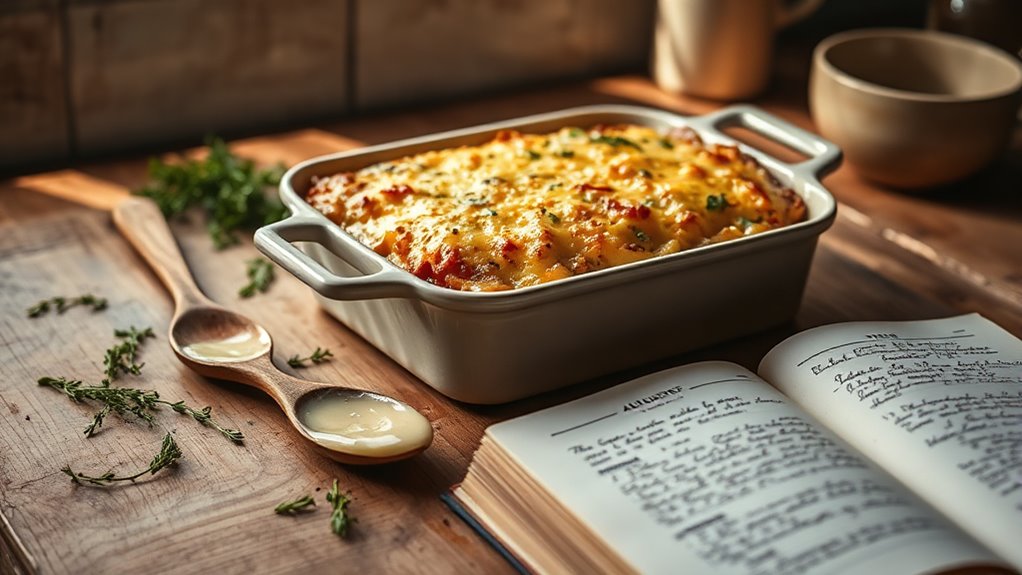
Mastering Auflauf Recipes: A Step-by-Step Guide
To master Auflauf recipes, start by choosing starchy bases like thin-sliced potatoes or partly cooked pasta. Proteins should be pre-browned to ensure even baking throughout the dish. These steps set the foundation for a delicious and well-textured casserole.
Using a custard binder made with eggs and cream helps achieve the perfect set. Season each layer thoughtfully to build depth of flavor. It’s important to slice ingredients evenly so everything cooks consistently.
Layer denser items at the bottom and finish with cheese for a golden, crispy crust. Baking at temperatures that match the ingredient density ensures everything cooks just right. Don’t forget to let your Auflauf rest before serving—this helps the flavors meld.
Curious to learn more? Keep exploring to uncover expert tips on layering, seasoning, and presentation that will elevate your Auflauf game!
Key Takeaways
- Select moisture-retentive starches like thinly sliced potatoes or parboiled pasta for even cooking and perfect texture in your Auflauf. These choices really help keep everything moist and tasty.
- Precook proteins until nearly done and season early; add them uniformly to ensure balanced flavor and safe internal temperature. This way, your dish will be flavorful and cooked just right.
- Use a binding custard of eggs and cream at a ratio of one egg per 60–75 ml liquid with flour or cornstarch for stability. This mixture holds everything together nicely without being too runny.
- Layer dense ingredients at the bottom, delicate items near the top, and finish with cheese or breadcrumbs for a golden crust. It creates a beautiful texture and adds a lovely crunch on top.
- Bake dense potato Auflaufs covered at 190–200°C for 45–75 minutes, uncovering last 15 minutes; custardy versions bake gently at 160–170°C. This baking method ensures everything cooks evenly and gets that perfect finish.
Choosing Your Ingredients
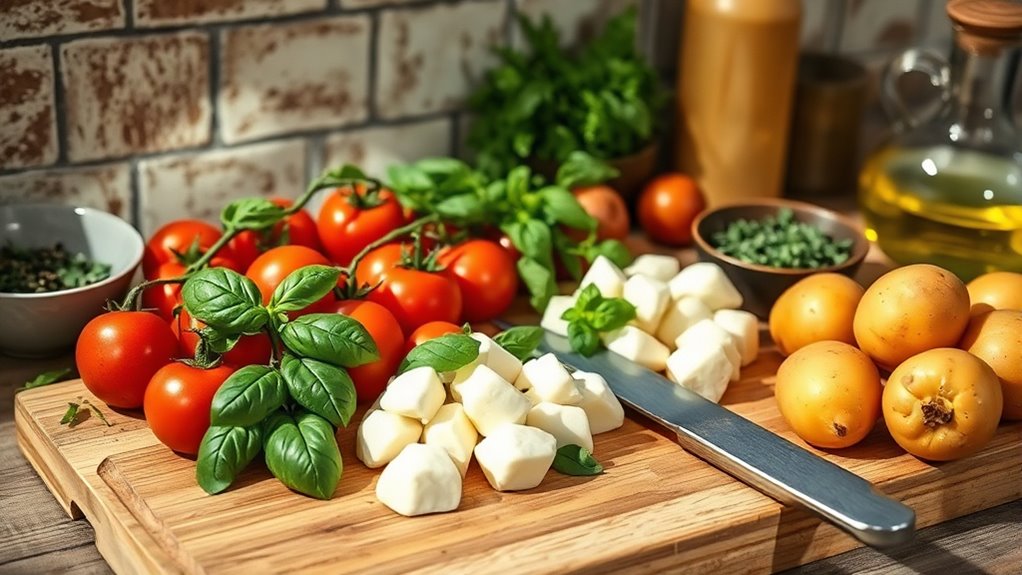
When choosing your ingredients for an Auflauf, focus on selecting a starchy base that holds moisture and texture, like Yukon Gold potatoes, short pasta such as penne, or rice with the right liquid ratio. Next, pick proteins that can handle gentle, long baking—cooked shredded chicken, browned ground beef, or firm tofu work well.
If you use raw proteins like chicken pieces or raw sausage, increase the oven temperature and cooking time, making sure the internal temperature reaches 74°C (165°F). Incorporate a binding custard made from eggs and cream or milk, typically two eggs per 250–300 ml liquid, adding a tablespoon or two of flour or cornstarch for extra stability.
Use aromatics like onions and garlic, blend in flavorful cheeses, and balance moisture by precooking watery vegetables to avoid soggy results. It’s all about layering flavors and textures so your Auflauf comes out just right!
Preparing Your Starch Base
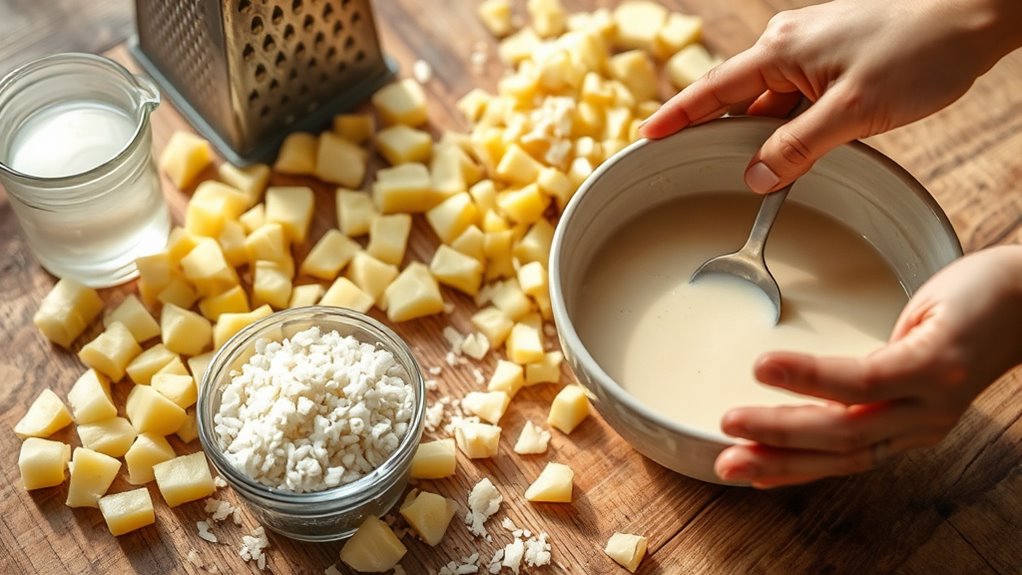
Selecting the right starch base sets the foundation for your Auflauf’s texture and flavor. Choose short-grain or parboiled rice for a creamier result, while long-grain rice or quinoa stays firmer and holds its shape.
If you’re using pasta, pre-cook it to about 60–80% doneness—al dente—by reducing the boiling time by 2–4 minutes from package instructions. For potatoes, slice them thinly (2–4 mm) and parboil for 5–10 minutes to make certain even cooking and avoid a raw center.
To prevent a gluey texture in potato gratins, rinse or soak the slices briefly, then pat dry before layering. When working with grains like barley or bulgur, cook them to just under done (70–90%) since the casserole’s moisture will finish the cooking.
Selecting and Preparing Proteins
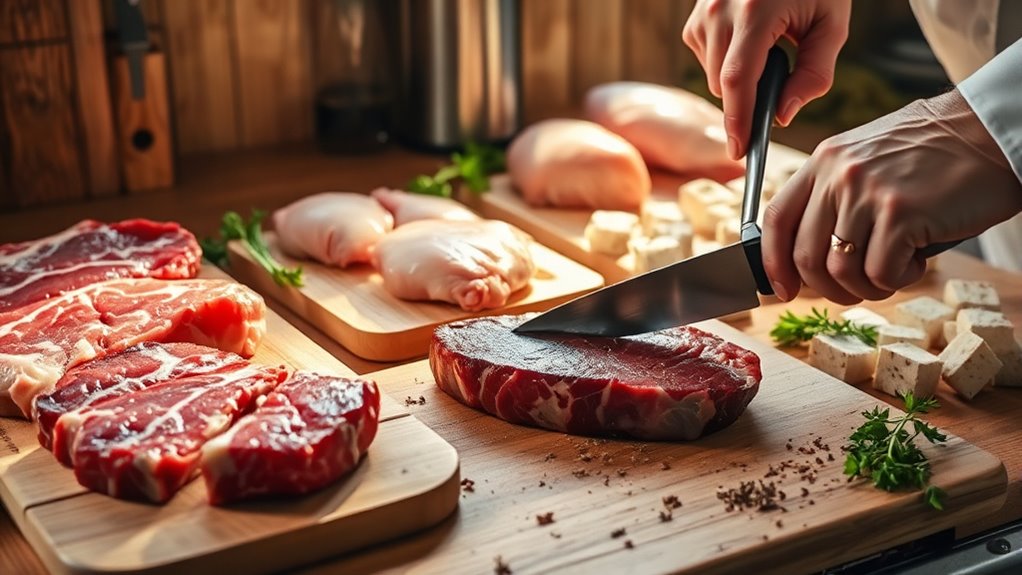
Choose your proteins wisely to balance flavor and texture in your Auflauf. Use 400–500 g diced chicken, 300–400 g ground beef, or 250–300 g cubed smoked tofu for 4–6 servings.
Select proteins thoughtfully to harmonize flavor and texture in your Auflauf for 4–6 servings.
Precook denser proteins like chicken by sautéing until nearly done (70–75°C/160–170°F) to avoid drying during baking. For seafood, add it during the last 10–15 minutes to keep it moist.
- Cut proteins into uniform 1.5–2 cm pieces for even cooking.
- Season early with 1 tsp salt per 500 g and complementary spices (e.g., smoked paprika for chicken).
- Toss proteins in 100–150 ml béchamel, cream, or egg mixture to help bind the Auflauf.
Following these steps makes certain your proteins complement the dish perfectly. It’s really about prepping smart so everything comes together just right.
Crafting the Perfect Binder
Craft the perfect binder by combining eggs with milk or cream in the right ratio to achieve a custardy texture that holds your Auflauf together without turning rubbery. Aim for about one large egg per 60 to 75 ml (1/4 to 1/3 cup) of liquid for a tender set.
If you want a firmer, sliceable Auflauf, increase the eggs to one per 45 to 60 ml of liquid. Add 1–2 tablespoons of flour or 1 tablespoon of cornstarch per 2–3 eggs to absorb moisture and stabilize the mixture.
Incorporate 25–50 g of grated cheese for flavor and added thickness. Don’t forget to season with salt, pepper, and a pinch of nutmeg or mustard powder.
Warm a small portion to taste and adjust seasoning before pouring. This way, you’ll know exactly how your binder will behave once baked.
Mastering Knife Skills for Even Layers
To create even layers in your Auflauf, you’ll need sharp knives and steady technique for consistent slices. Using tools like a mandoline and practicing the claw grip will help you achieve uniform cuts safely.
Mastering these skills guarantees your ingredients cook evenly and your dish looks professional. It’s all about precision and a little practice!
Essential Knife Techniques
Although precise slicing can seem intimidating, mastering essential knife techniques is key to creating even layers that cook uniformly in your Auflauf. Start by using a sharp chef’s knife with a steady 45–60° slicing motion, aiming for 3–5 mm thickness.
Always create stable, flat surfaces by halving round vegetables or trimming roots to keep them from rolling. And don’t forget to keep your non-cutting hand safe by employing the claw grip, curling your fingers under and guiding the knife with your knuckles.
Here are three essentials to remember:
- Match your knife to the task—chef’s knife for slicing, paring knife for trimming, serrated for delicate items.
- Use a mandoline with its guard for ultra-thin slices (1–2 mm).
- Maintain consistent thickness for even cooking and presentation.
Achieving Uniform Slices
Mastering knife techniques sets the foundation for achieving uniform slices in your Auflauf. Use a sharp chef’s knife (20–25 cm blade) to make clean, even cuts. Practice the claw grip to control slice thickness, aiming for 3–5 mm for consistent cooking.
For precision or volume, a mandoline slicer is invaluable—set it to the recipe’s thickness (typically 2–4 mm for potatoes) and always use the hand guard. Stack uniform pieces, trim edges, and slice across the shortest dimension to minimize size variation.
Make certain all slices in a layer are the same thickness and rotate your dish in the oven to promote even doneness.
| Tool | Technique | Tip |
|---|---|---|
| Chef’s knife | Claw grip | Control thickness 3–5 mm |
| Mandoline slicer | Thickness setting | Use hand guard for safety |
| Stacking pieces | Trim edges | Slice shortest dimension |
| Slices in layer | Uniform thickness | Ensures even cooking |
| Oven rotation | Rotate dish | Compensate heat differences |
Safety Tips for Cutting
When you keep your chef’s knife sharp and use the claw grip to hold ingredients, you reduce the risk of slips and guarantee safer, more precise cuts. A sharp knife needs less force, making your slicing easier and safer.
Remember to stabilize round or slippery items by halving them first, placing the flat side down to prevent rolling.
Here are three essential safety tips for cutting consistent layers in your Auflauf:
- Hone your knife before each use and sharpen it regularly to maintain a sharp edge.
- Use the claw grip—curl your fingertips under and guide the knife along your knuckles for control.
- Place a damp towel under your cutting board to keep it from moving and clear scraps with the knife’s back, not your hand.
These steps help you cut evenly and confidently every time.
Layering Techniques for Best Results
Since each ingredient in an Auflauf has unique cooking needs, layering them correctly assures everything cooks evenly and tastes perfect. Start by placing dense ingredients like raw potatoes or root vegetables at the bottom. Slice potatoes 3–5 mm thick for even cooking during a 40–50 minute bake at 180–200°C (350–400°F).
Next, scatter lean proteins such as precooked chicken or browned ground meat in a uniform layer. This helps assure consistent bites and heat distribution.
For delicate items like leafy greens, fresh herbs, or soft cheeses, add them near the top or in the last 10–15 minutes of baking. This way, you prevent wilting or overbrowning.
Use thin, slightly overlapping layers of eggplant or zucchini for stability and moisture control.
Finish with an even top layer of grated cheese or breadcrumbs brushed with oil or cream. This creates a crisp, golden crust you’ll love.
Baking Temperatures and Times
You’ll want to bake your Auflauf at around 180–190°C (350–375°F) in a conventional oven, lowering the temperature slightly for fan-forced ovens to prevent over-browning.
Timing depends on the type—egg-based dishes need 35–50 minutes to set, while vegetable or pasta versions usually take 25–40 minutes to heat through and brown.
Keep an eye on the center’s temperature and texture to know when it’s perfectly done. Just make sure it’s heated all the way through and has a nice golden top.
Ideal Oven Temperatures
Although oven temperatures vary depending on the type of Auflauf you’re making, most savory versions bake perfectly between 180°C and 190°C (350–375°F) for 25 to 40 minutes.
For dairy- or egg-based Auflaufs, lower the temperature to 160–170°C (325–340°F) to avoid curdling and overbrowning. Denser potato or gratin-style dishes need higher heat, around 190–200°C (375–400°F), and longer baking times.
Here’s how to choose the ideal temperature:
- Bake mixed vegetable, pasta, or potato Auflaufs at 180°C for even cooking without overbrowning.
- Use 160–170°C for custardy Auflaufs to set the filling gently.
- For thick, layered dishes, bake at 190–200°C, covered initially, then uncovered to brown the top.
Timing for Doneness
When judging the perfect doneness for your Auflauf, focus on both time and temperature to achieve tender vegetables and a golden crust.
Different Auflauf types need specific baking times and heat levels. Vegetables bake quicker, while potato-based dishes take longer.
Cover dense or frozen Auflaufs initially to guarantee even cooking, then uncover to crisp the top.
Use a thermometer to check the center reaches 74–77°C (165–170°F), especially with eggs or meat, for safe, fully set results.
| Auflauf Type | Temperature (°C/°F) | Baking Time (minutes) |
|---|---|---|
| Vegetable-based | 180–190 / 350–375 | 25–40 |
| Cheese/Cream-heavy | 175–185 / 350–365 | 30–45 |
| Potato-based | 180 / 350 | 45–75 (cover first 30–45) |
| Frozen/Cold mixtures | Add 10–20 minutes | Start covered |
| Safe internal temp | 74–77 / 165–170 | Use instant-read thermometer |
Seasoning Tips for Flavor Balance
Because seasoning in layers guarantees every bite tastes balanced, you should lightly salt vegetables during sautéing, add salted dairy like cheese or cream into the custard, and finish with a small sprinkle of finishing salt. Balancing salt, acid, and fat is key to enhancing flavor without overpowering the dish.
Taste your components separately before assembling to avoid surprises after baking. Here are three essential tips to perfect your Auflauf seasoning:
- Use about ¼–½ teaspoon coarse salt per 2 cups cooked vegetables, add 1–2 teaspoons mustard or 1 tablespoon lemon juice per 4–6 servings, and include a generous fat like butter or olive oil.
- Boost umami with soy sauce, Parmesan, or miso for depth without extra salt.
- Add fresh herbs at the end and dried herbs in the custard for layered brightness and aroma.
Presentation and Serving Suggestions
How can you make your Auflauf look as appealing as it tastes? Let it rest for 10–15 minutes after baking so the custard or sauce sets, allowing you to cut clean slices. Run a thin knife around the dish before serving, and use a wide spatula to lift portions carefully, keeping the layers intact and visually appealing.
Garnish each serving with fresh herbs like parsley or chives, a light drizzle of olive oil or cream, and a sprinkle of coarse salt for a colorful finish. Serve on pre-warmed plates to maintain temperature and pair richer Auflaufs with bright sides like a green salad or pickled vegetables.
For buffets, label each variety, provide utensils, and offer small plates for tasting. Serving about 1/2 to 1 cup per person works well, depending on the occasion and appetite.
Frequently Asked Questions
Can Auflauf Recipes Be Made Ahead and Frozen?
You can absolutely make Auflauf recipes ahead and freeze them—studies show 68% of home cooks prefer prepping meals in advance.
Just assemble, freeze before baking, then thaw and bake for a quick, delicious dinner anytime. It’s super convenient and saves you time on busy days. Give it a try!
What Are Common Substitutions for Dairy in Auflauf?
You can substitute dairy with almond milk, coconut milk, or oat milk, and use vegan cheese or nutritional yeast for flavor.
Silken tofu or cashew cream also work well to keep your Auflauf creamy and delicious.
How Do I Reheat Leftover Auflauf Without Drying It Out?
You might think reheating auflauf in the microwave dries it out, but adding a splash of broth or covering it with foil traps steam, keeping it moist.
Heat at 350°F for 15-20 minutes for best results. It’s a simple trick that really works!
Are There Traditional Auflauf Variations From Different Regions?
Yes, you’ll find traditional Auflauf variations across regions—like Bavaria’s cheese and potato Auflauf or Swabia’s vegetable and noodle version.
Each reflects local ingredients and tastes, so don’t hesitate to explore and customize them yourself!
Can I Make Auflauf Recipes in a Slow Cooker?
Yes, you can make Auflauf recipes in a slow cooker. Just layer ingredients carefully, adjust cooking times, and use lower heat settings.
This helps guarantee everything cooks evenly without drying out or overcooking your dish. It’s a great way to enjoy a hearty meal with minimal fuss!
Conclusion
Don’t worry if you think mastering Auflauf recipes is too complicated—once you break it down step-by-step, it’s actually pretty straightforward. By choosing fresh ingredients, layering thoughtfully, and baking at the right temperature, you’ll create a delicious, comforting dish every time.
Remember, practice makes perfect, and even small tweaks help you tailor flavors to your liking. So, jump right in confidently—you’re well on your way to mastering an impressive, crowd-pleasing Auflauf!
With a bit of patience and attention to detail, making Auflauf can become second nature. Each attempt lets you experiment with different ingredients and techniques, helping you perfect your personal version. So keep at it, and soon you’ll be serving up irresistible Auflauf dishes that everyone loves.