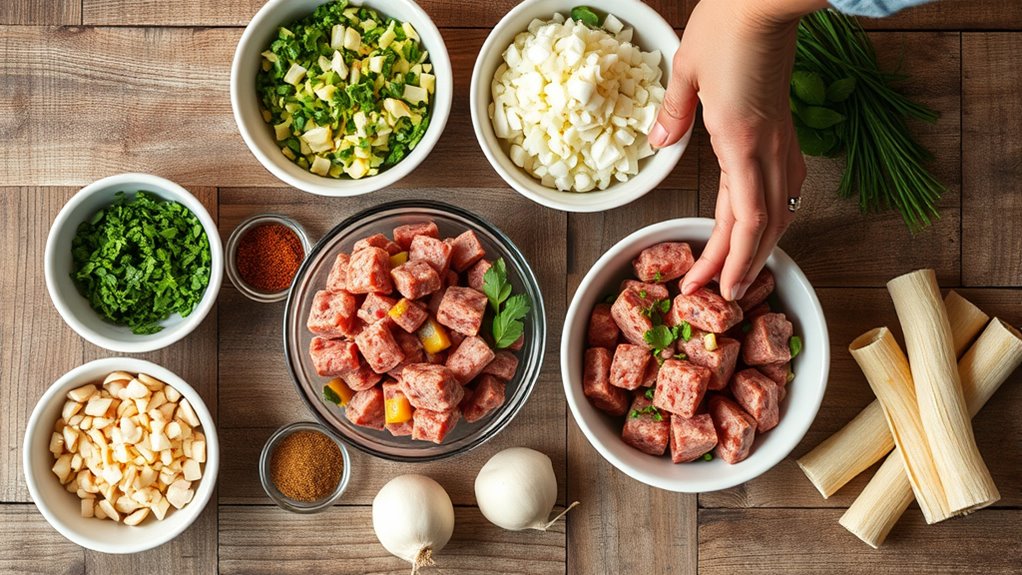
7 Easy Steps to Make Alligator Sausage
Choose fresh alligator tail or leg meat, and trim off the fat and silver skin. Grinding the meat with chilled pork fat gives the sausage a nice balance of flavor and moisture. Season it well with salt, spices, and a splash of vinegar to brighten things up.
Once everything is mixed, chill the mixture for a few hours. This step helps the flavors meld together nicely.
Next, stuff the mixture into soaked casings or form patties if you prefer. Then, smoke the sausage gently at 225–250°F until it reaches an internal temperature of 160°F for safety.
After smoking, let the sausage rest to lock in the juices before serving. Keep going to discover tips for achieving the perfect texture and flavor in your alligator sausage!
Key Takeaways
– Select fresh alligator tail or leg meat, trim excess fat and connective tissue, then cut into cubes and partially freeze for grinding.
This helps make sure your meat is the perfect texture when you grind it.
– Mix ground alligator with chilled pork fat (70:30 ratio), kosher salt, spices, cold water, and a splash of vinegar for emulsification.
The vinegar helps bind everything together and adds a little tang.
– Chill the mixture for 2–4 hours, then stuff into soaked natural hog casings, twisting into 3/4–1 inch links with even filling pressure.
Try to keep the links uniform so they cook evenly.
– Smoke sausages at 225–250°F for 1.5–2.5 hours until internal temperature reaches 160°F, or grill/pan-fry with gentle, even cooking.
Just keep an eye on the heat so they don’t dry out.
– Rest cooked sausages for 10–15 minutes loosely wrapped, then slice against the grain and serve with jasmine rice or white beans.
This resting step keeps them juicy and tender. Enjoy!
Choose and Trim Fresh Alligator Meat
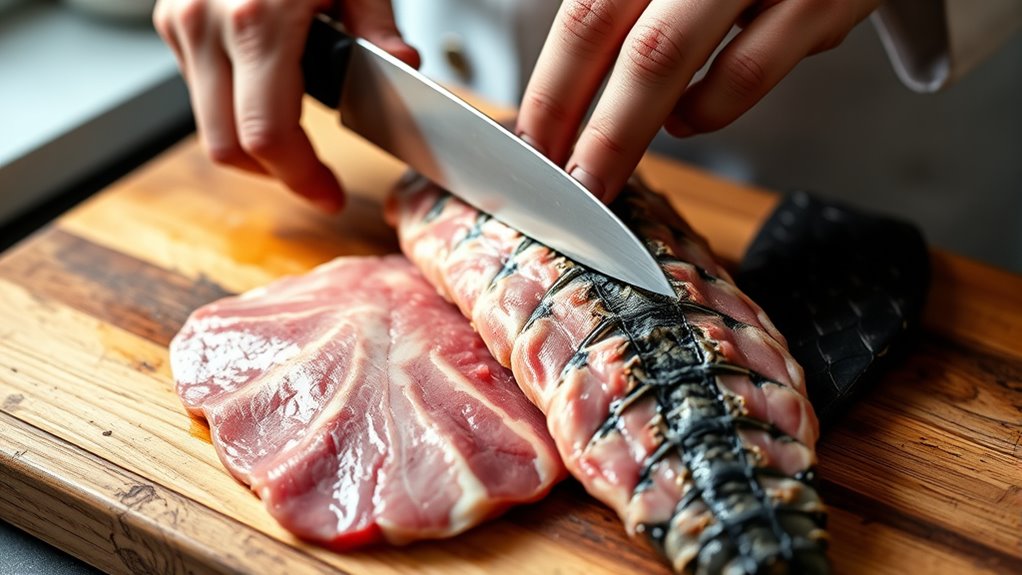
Start by selecting fresh alligator tail or leg meat, which offers the best tenderness for your Alligator Sausage. This white meat is ideal because it’s lean and mild-flavored.
Choose fresh alligator tail or leg meat for tender, lean, and mild-flavored sausage perfection.
Keep the meat refrigerated at 32–40°F until you’re ready to trim. Use a sharp boning knife to remove excess fat, silver skin, and connective tissue—this helps reduce heat during cooking and prevents chewy bits.
Trim away any dark or discolored muscle, then rinse briefly in cold water and pat dry to guarantee seasonings stick well and the casing fills smoothly.
Cut the meat into 1–2 inch cubes and partially freeze for 30–45 minutes to firm up the fibers. This step makes grinding cleaner and more consistent, setting you up for perfect Alligator Sausage.
Mix Ground Alligator for Sausage With Pork Fat and Seasonings
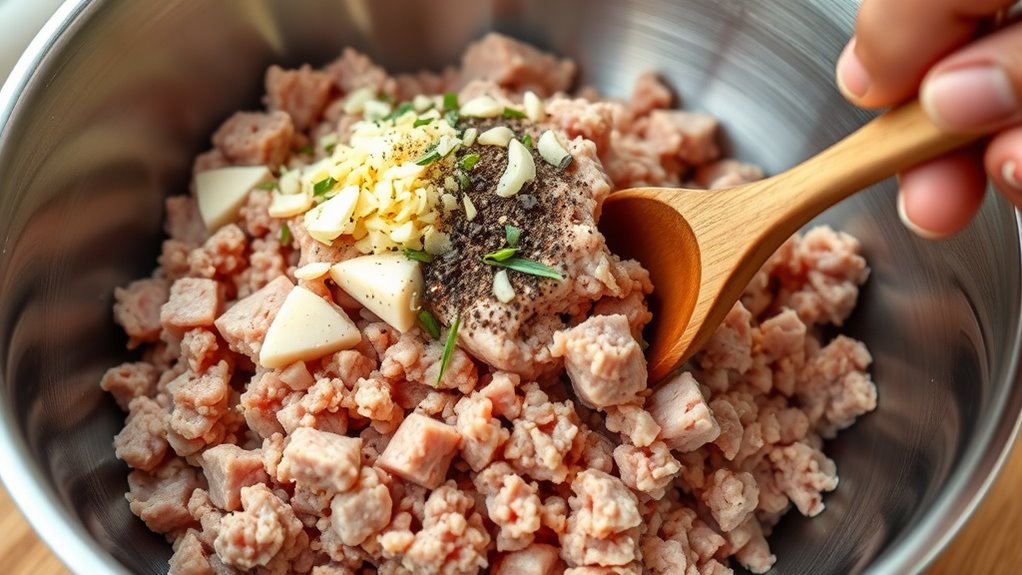
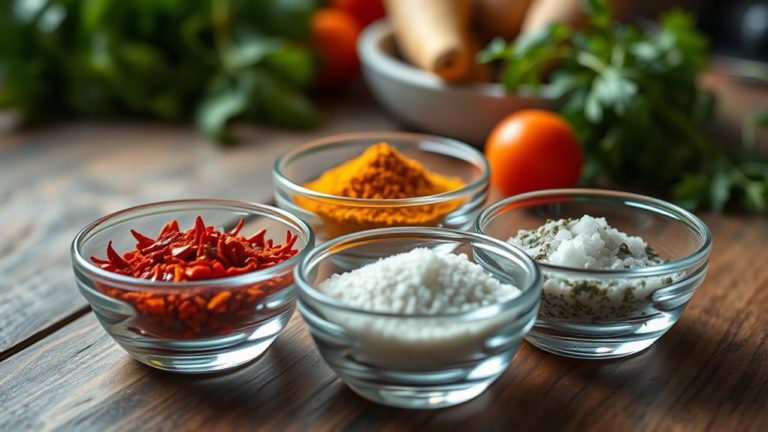
Combine the ground alligator meat with chilled pork fat in a ratio of about 70:30, or 60:40 if you prefer juicier sausage. Place the mixture in a large bowl and add your seasonings—kosher salt, black pepper, smoked paprika, garlic powder, cayenne, sugar, and a couple of bay leaves for subtle aroma.
Pour in cold water and a splash of vinegar or lemon juice to help with emulsification. Use a wooden spoon to mix everything thoroughly, stirring occasionally to make certain the fat and spices distribute evenly.
Keep mixing until the mixture feels tacky and holds together well. Removing the bay leaves afterward will leave you with a perfectly seasoned base, ready for the next step in crafting your alligator sausage.
Chill Sausage Mixture to Develop Flavor
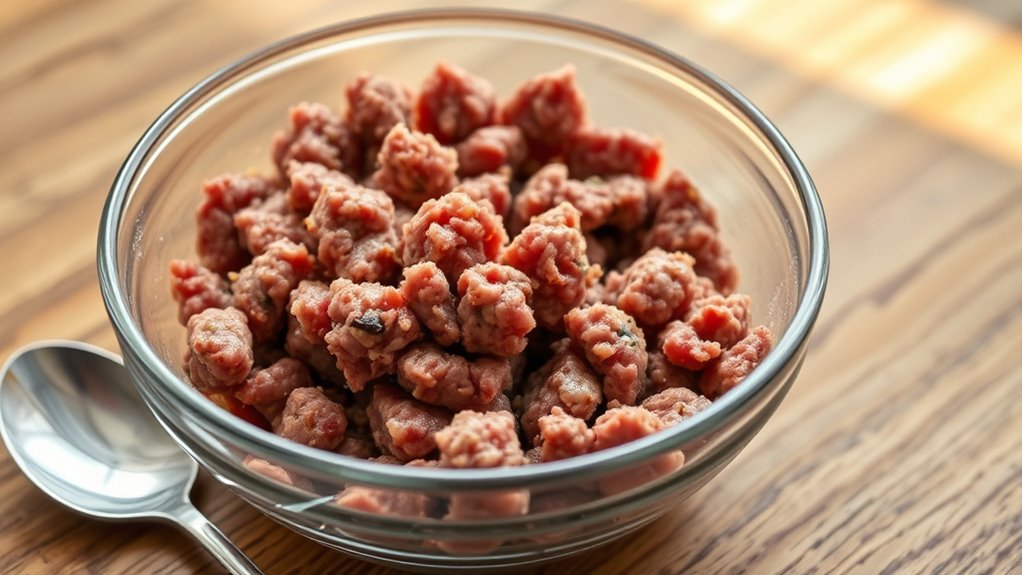
You’ll want to chill the sausage mixture for at least 2 to 4 hours to let the flavors fully infuse and the spices hydrate. Keeping it cold also firms up the meat, making it easier to stuff without tearing the casings.
For even better texture and taste, consider freezing the mixture before thawing and stuffing. It really helps bring everything together and makes the whole process smoother.
Flavor Infusion Time
When you chill the stuffed sausage mixture for at least four hours, preferably overnight, you let the salts, spices, and curing agents fully penetrate the alligator-and-pork blend. This step is essential to infuse flavors deeply, ensuring every bite bursts with complexity.
Keeping the mixture at 35–40°F prevents bacterial growth while allowing the hot sauce and other seasonings to meld perfectly. Avoid rushing this process by applying medium-high heat prematurely; the flavor needs time to develop.
Extended chilling further binds proteins and harmonizes smoky, spicy, and herb notes, enhancing the sausage’s character. Before stuffing or smoking, bring the mixture to 50–60°F for about 30–60 minutes to ease handling and promote even smoke absorption.
Trust me, this patience pays off in a rich, balanced alligator sausage flavor.
Optimal Chilling Duration
Although chilling the sausage mixture for just 2 to 4 hours allows the salts and spices to start melding, letting it rest in the refrigerator for 12 to 24 hours delivers the prime flavor development.
This resting time helps proteins relax and flavors fully blend, enhancing the final taste. Avoid exceeding 48 hours to prevent microbial risk and texture degradation.
| Chilling Time | Effect | Temperature Range |
|---|---|---|
| 2–4 hours | Initial flavor melding | Refrigerated (≤40°F) |
| 12–24 hours | Prime flavor development | Refrigerated (≤40°F) |
| Over 48 hours | Risk of spoilage & texture decline | Avoid unless cured |
Stick to these guidelines to maximize flavor safely before stuffing and cooking your alligator sausage.
Sausage Texture Benefits
Chilling the sausage mixture for at least a few hours lets the fats solidify and proteins hydrate, which creates a firmer, snappier texture once cooked. When you keep the mixture cold—ideally below 40°F—you allow seasonings and curing agents to diffuse evenly, enhancing consistent flavor and preventing grittiness.
Refrigeration also stabilizes the emulsion of lean alligator meat and pork fat, stopping fat from separating during cooking and resulting in a moist, cohesive sausage. Grinding and stuffing at near-freezing temperatures minimize heat buildup, avoiding melted fat and smeared proteins that cause a pasty texture.
Finally, a brief post-stuff chill helps casings relax and proteins set, reducing splitting during cooking and ensuring clean slices. Following these steps guarantees a delicious, well-textured alligator sausage every time.
Stuff the Sausage Blend Into Casings or Form Patties
Before you start stuffing, make sure your sausage blend is chilled below 40°F (4°C). This helps it feed smoothly into the stuffer and hold together well inside the casing.
Rinse and soak natural hog casings for at least 30 minutes. Then, slide them onto the stuffer tube with a 2–3 inch overhang.
Fill casings slowly, applying even pressure to avoid air pockets. Twist every 6–8 inches for 3/4–1 inch links.
If you choose patties, portion the blend into 3–4 oz rounds. Press them to 1/2–3/4 inch thick, then chill for 30 minutes before cooking.
| Step | Tip | Result |
|---|---|---|
| Chill blend | Below 40°F (4°C) | Smooth stuffing |
| Fill casings | Even pressure | No air pockets |
| Form patties | Uniform size/thickness | Holds shape when cooked |
Smoke the Alligator Sausages Low and Slow for Tenderness
You’ll want to smoke your alligator sausages low and slow, keeping the temperature between 180–225°F. This helps gently break down the connective tissue without drying out the meat.
Use indirect heat with hardwoods like pecan or hickory for steady, flavorful smoke. It really adds a nice touch.
Make sure to check the sausages regularly. Aim for an internal temperature of 155–160°F before resting them to lock in that tenderness.
Low Temperature Benefits
Smoking alligator sausages low and slow at 180–225°F (82–107°C) for 2–4 hours breaks down the tough connective tissue in the lean tail meat without overcooking the casing. This gentle heat keeps the sausage tender and juicy, especially since alligator meat is naturally low in fat.
To maintain moisture, keep your smoker’s temperature steady with minimal swings, ideally within ±10°F. Using mild fruitwoods like apple or pecan enhances flavor subtly without overpowering the delicate alligator taste.
You want to reach an internal temperature of 155–160°F (68–71°C) for safety, then let the sausages rest to redistribute juices. Adding 10–15% pork fat or some oil before stuffing also helps retain tenderness during this low-and-slow process, preventing dryness or a mealy texture.
Slow Smoking Techniques
Keeping the temperature steady between 200–225°F (93–107°C) lets you gently break down the tough connective tissue in alligator sausages without drying them out. Slow smoking guarantees tenderness while preserving juiciness and flavor.
Follow these steps for perfect smoked alligator sausages:
- Use indirect heat and smoke for 2–3 hours until the internal temperature hits 155–160°F (68–71°C).
- Choose mild woods like fruitwood or pecan, and use stronger woods like hickory sparingly.
- Keep sausages moist by placing a water pan in the smoker and spritzing with apple juice or a water-vinegar mix every 45–60 minutes.
- Rest sausages wrapped loosely in foil for 10–15 minutes to let juices redistribute before serving.
This method guarantees tender, flavorful alligator sausages every time. Give it a try—you won’t be disappointed!
Make Sure Your Sausage Hits the Right Temperature
Although cooking times vary by method, you must guarantee your alligator sausage reaches an internal temperature of 160°F (71°C) for safe consumption. Use an instant-read thermometer inserted into the thickest part to check.
If grilling, sear over medium-high heat, then move sausages to indirect heat and cook for 12–20 minutes until they hit 160°F. When smoking, keep your smoker at 225–250°F and smoke for 1.5–2.5 hours until the sausages reach the right temperature.
For pan-frying or baking, start in a cold pan or oven set to 350°F. Turn the sausages often to cook gently and avoid drying out the lean meat.
Hitting 160°F guarantees safety while preserving flavor and texture. So, take your time and enjoy the process!
Rest and Serve Your Homemade Alligator Sausage
Once your alligator sausage finishes cooking, let it rest uncovered at room temperature for 10 to 15 minutes. This helps the juices redistribute and the casing to firm up, making for cleaner, more tender slices.
After resting, transfer the sausages to a cutting board and slice against the grain into 1/4–1/2-inch pieces. If you’re not serving right away, loosely tent the slices with foil and keep them warm in a low oven at 140–150°F (60–65°C) for up to an hour.
Serve your sausage over hot jasmine rice or with white beans. Garnish with chopped parsley and a few dashes of hot sauce to really bring out the flavor.
Here’s what to do next:
- Slice the sausage against the grain for tenderness.
- Keep leftovers warm if serving later.
- Serve with rice, beans, and garnish.
- Refrigerate leftovers within 2 hours; freeze for longer storage.
Frequently Asked Questions
Why Add Water When Making Sausage?
You add water to hydrate meat proteins, improving binding and juiciness. It helps distribute salt evenly, lubricates stuffing for smooth texture, and keeps the mix cold to prevent fat smearing and create a firm, tasty sausage.
What Temperature Do You Cook an Alligator At?
You’ll want to cook alligator meat to a safe 160°F, like chasing perfect sunshine on a grill or pan. Use a meat thermometer to catch that sweet spot, then let it rest before diving in.
It’s all about getting that juicy, tender bite without overcooking. Just keep an eye on the temp, and you’ll be good to go!
Can You Give Me a Recipe for Alligator Stew?
Brown cubed alligator tail meat, sweat onions, celery, peppers, and garlic.
Then add wine, stock, ham hocks, and herbs. Let it all simmer for about an hour.
After that, stir in beans or okra, season it up, and serve over rice with some fresh parsley. Easy and delicious!
How to Make Sausage Recipes From Scratch?
You’ll craft sausage like a painter blends colors—grind meat and fat, season thoughtfully, mix until sticky, then stuff into casings.
Cook to 160°F, ensuring safety and flavor, transforming raw ingredients into savory art.
It’s all about balancing flavors and textures so every bite feels just right. Give it a try—you’ll love the process and the delicious results!
Conclusion
By following these steps, you’re not just crafting sausage—you’re weaving tradition and flavor into every bite. Like a river carving its path, your alligator sausage blends boldness and patience, turning simple ingredients into a masterpiece.
As you rest and serve, you honor the journey from raw to ready. You get to savor the smoky whispers and tender heart beneath the casing. This sausage isn’t just food; it’s a story you bring to life with every taste.
Making alligator sausage is more than a recipe—it’s an experience. Each step adds layers of flavor and character, creating a dish that’s uniquely satisfying. So, roll up your sleeves and enjoy the process, because the best alligator sausage is made with care and a bit of love.