Americas Test Kitchen Pasta Alla Gricia Recipe in 3 Easy Steps
Start by rendering chilled pancetta in olive oil over medium-low heat until crispy and golden. This step is crucial as it releases the fat that will flavor the entire dish.
Then, bloom black pepper in the rendered fat to build a deep, aromatic flavor base for your Pasta Alla Gricia.
Next, cook rigatoni in salted water until al dente. Be sure to reserve some pasta water before draining—it’s key to making a silky, cohesive sauce.
Finish the pasta in the skillet with the pancetta fat. Stir in Pecorino Romano cheese and the reserved pasta water to create that perfectly creamy texture.
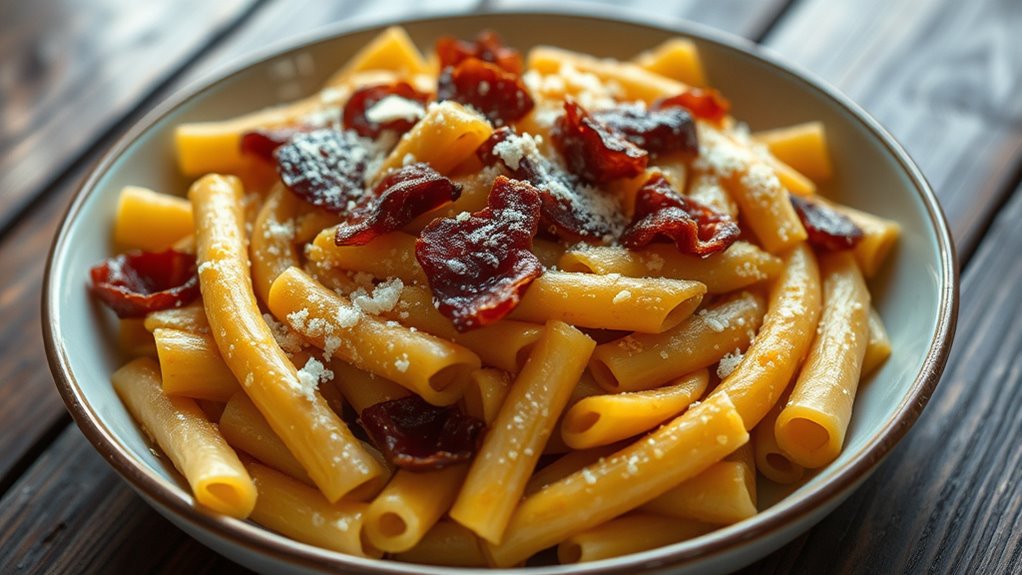
Toss the crispy pancetta back in, season to taste, and serve hot for a classic, comforting meal.
Keep going to uncover tips for achieving the perfect texture and seasoning every time you make this delicious Pasta Alla Gricia!
Key Takeaways
- Chill and slice pancetta into lardons, then cook in olive oil over medium-low until crisp and fat renders fully.
- Cook rigatoni in salted boiling water, reserving 2 cups pasta water before draining.
- Bloom black pepper in rendered fat, emulsify with reserved pasta water to form sauce base.
- Finish cooking rigatoni in skillet with sauce, stirring to emulsify before adding half Pecorino Romano.
- Toss in crispy pancetta, add remaining cheese, adjust sauce thickness with pasta water, and season to taste.
Rendering Pancetta and Preparing the Sauce Base
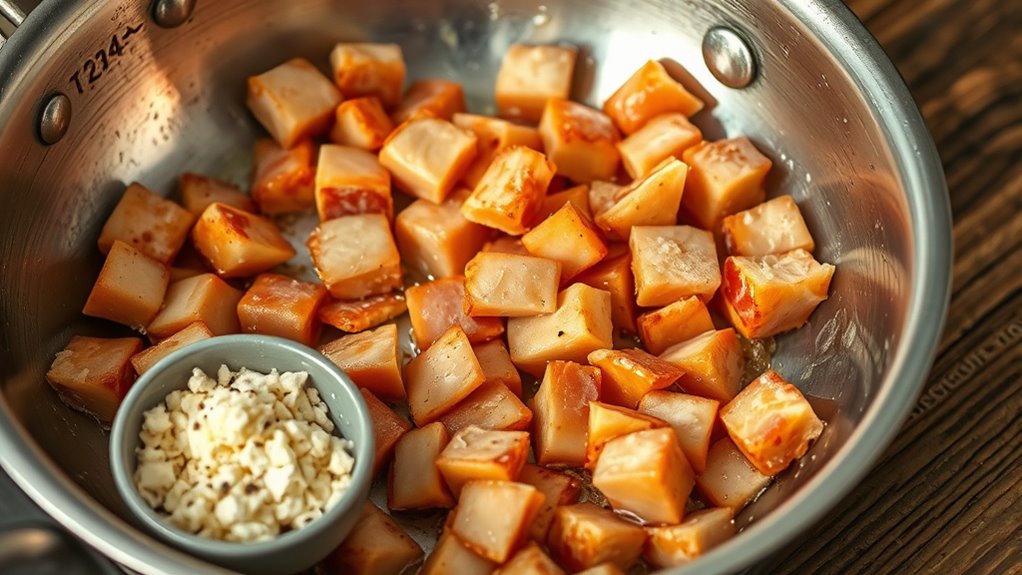
Before you start cooking, chill the pancetta for at least 15 minutes to firm it up. Then, slice it into 1/4-inch planks and cut those into batons (lardons) so they render evenly.
Chill pancetta for 15 minutes, then slice into uniform 1/4-inch lardons for even rendering.
Heat a tablespoon of extra-virgin olive oil in a large skillet over medium-low heat until shimmering. Add the pancetta and cook, stirring occasionally, until its rendered fat fully releases and the pieces turn golden and crisp. This should take about 12–15 minutes.
Use a slotted spoon to transfer the pancetta to a plate, leaving the rendered fat in the skillet. Now, reduce the heat to low.
Bloom freshly ground black pepper in the warm fat until it foams and becomes aromatic, which takes about one minute. Finally, emulsify the rendered fat with starchy pasta water to create a glossy, flavorful sauce base.
Cooking Rigatoni and Emulsifying the Sauce
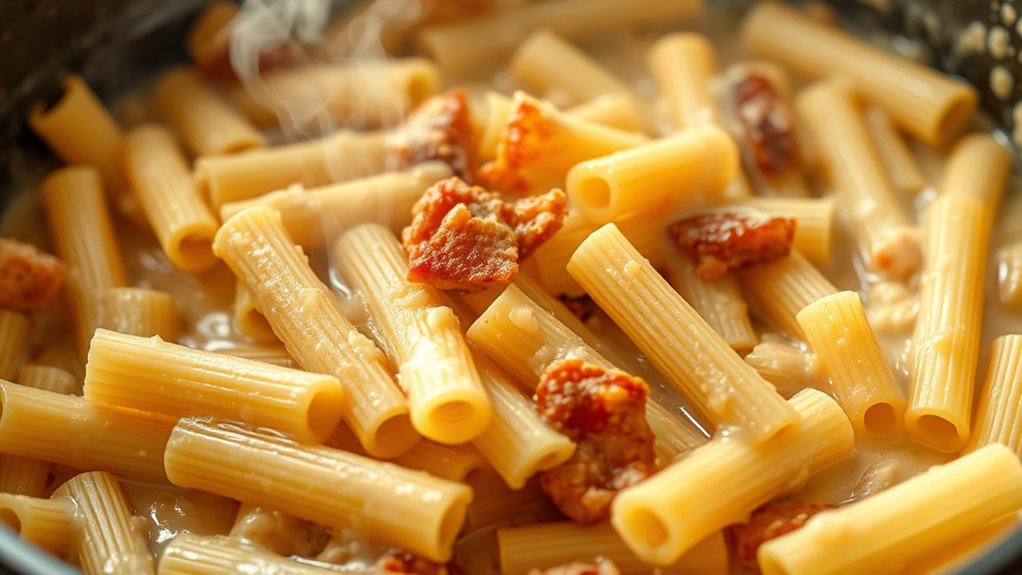
With 3 quarts of salted boiling water ready, add the rigatoni and stir frequently during the first minute to prevent sticking. Begin timing so you can transfer the rigatoni to the skillet when it has about 1 minute left of its al dente cooking time, roughly 4 minutes and 30 seconds.
Before draining, reserve 2 cups of the starchy pasta water — this will be key for emulsifying the sauce. Transfer the rigatoni to the skillet with the rendered fat and continue cooking on high heat, swirling and gently stirring so the pasta finishes cooking in the sauce and releases starches that thicken it.
Remove the skillet from heat and toss quickly with half the Pecorino Romano, adding reserved pasta water as needed to create a glossy, emulsified sauce. It’s all about getting that sauce nice and smooth, so don’t be shy with the pasta water!
Combining Ingredients and Final Seasoning
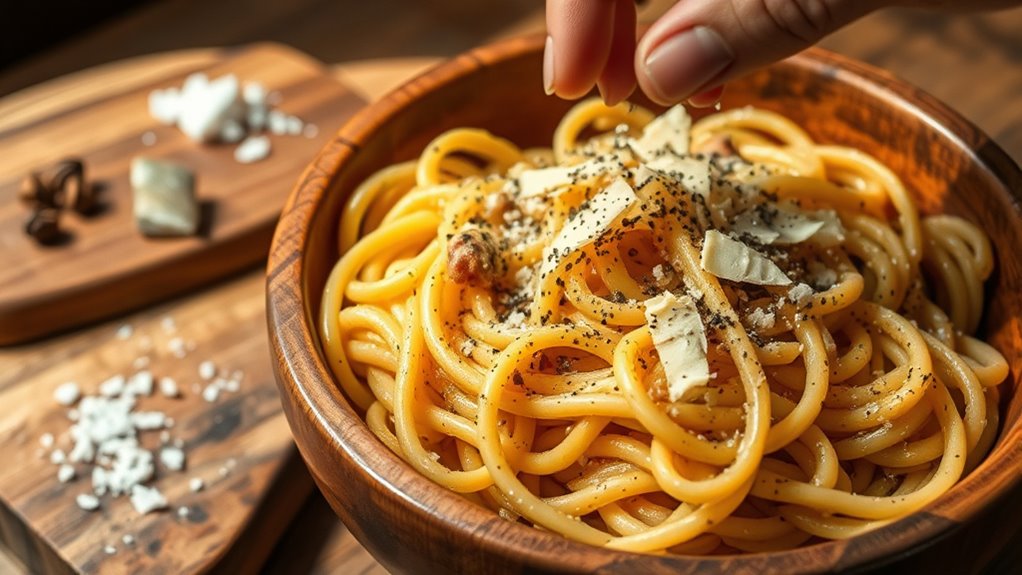
Once the rigatoni is nearly al dente and you’ve added the starchy pasta water to the skillet, toss the pasta in the rendered guanciale fat and black pepper. Keep tossing until it finishes cooking and the sauce starts to emulsify.
Next, add the crispy guanciale back into the skillet. Gently toss everything to distribute the guanciale evenly.
Now, remove the skillet from the heat and quickly toss in half of the finely grated Pecorino Romano. Stir it well so it emulsifies into the sauce.
Then, add the remaining cheese and toss again for a creamy finish. If the sauce feels too thick, just adjust the consistency by adding reserved pasta water in small increments.
Finally, season with kosher salt and freshly ground black pepper to taste. Serve it up immediately, and don’t forget to offer extra Pecorino Romano at the table for anyone who wants a little more flavor.
Frequently Asked Questions
How to Cook Pasta the Italian Way?
You cook pasta Italian-style by boiling it in plenty of salted water, stirring often, reserving some cooking water.
Then, finish the pasta in the sauce’s skillet. Toss it with cheese off heat to create a rich, glossy coating.
It’s a simple trick that really makes the dish come together beautifully. Just a little patience and you’re set!
Can You Get America’s Test Kitchen Recipes for Free?
You can’t get all America’s Test Kitchen recipes free, but you can access some on their public YouTube channel, social media, or through library cookbooks.
Occasionally, they offer free trials or sample recipes on atk.com. So, while not everything is free, there are definitely some ways to enjoy their recipes without paying right away.
What Is the Difference Between Pasta Alla Gricia and Cacio E Pepe?
You’ll notice pasta alla Gricia uses guanciale cooked in its fat, adding savory depth and crispy texture.
Meanwhile, cacio e pepe relies solely on Pecorino Romano, black pepper, and starchy pasta water for a smooth, cheesy sauce.
What Is the Holy Trinity of Italian Pasta?
The holy trinity of Italian pasta is fat, cheese, and pasta water.
You’ll use rendered pork fat like guanciale, Pecorino Romano cheese, and starchy pasta water to create a glossy, perfectly emulsified sauce.
It’s all about balancing those elements to get that rich, silky texture that makes the dish shine.
Conclusion
Now that you’ve mastered this simple Pasta alla Gricia, you’re in good company—did you know Italians consume over 60 pounds of pasta per person each year?
This classic dish proves that with just a few quality ingredients and easy steps, you can create authentic Italian flavors at home. Keep practicing, and you’ll impress everyone at your table with a meal that’s both rich in taste and tradition.
Pasta alla Gricia is a fantastic example of how minimal ingredients can yield maximum flavor. So, next time you want to enjoy genuine Italian cuisine, remember this easy recipe. Buon appetito!