
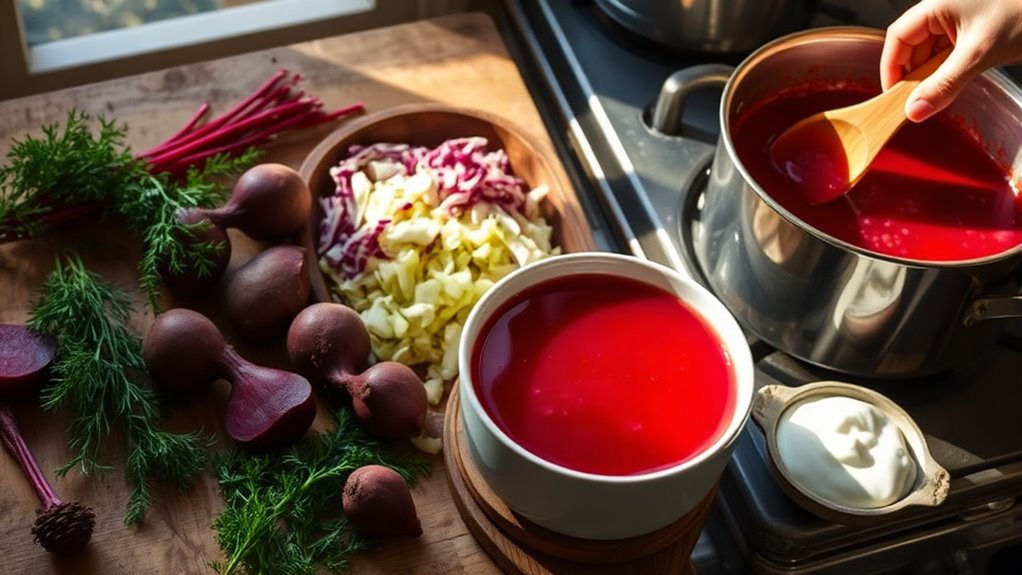
10 Easy Steps for Babas’ Borscht Recipe You’ll Love
Start by gathering fresh beets, cabbage, carrots, onion, garlic, and broth. These ingredients are the heart of a delicious Baba’s Borscht recipe you’ll love. Peel and shred your beets, then chop the other veggies into bite-sized pieces.
Next, sauté onions and garlic in oil until fragrant, then add the beets and root vegetables to the pan. Pour in the broth and let everything simmer gently so the flavors meld together beautifully.
Add the cabbage and any greens last, cooking until tender but still vibrant. If you like, toss in some cooked meat or beans for added protein and richness.
Serve your borscht with a dollop of sour cream and a sprinkle of fresh dill for that classic, comforting touch. Keep going to uncover tips that bring out borscht’s vibrant flavor and color every time!
Key Takeaways
- Select fresh, firm beets about 2–3 inches in diameter and peel them just before cooking to preserve vibrant color.
- Sauté diced onion and garlic in neutral oil until translucent. Then add tomato paste for deep umami flavor.
- Simmer beets and other root vegetables gently in homemade beef or vegetable broth for 30–45 minutes. This helps meld all those lovely flavors together.
- Add vinegar and sugar near the end to brighten the color and balance the acidity. Finish it off with fresh dill and a dollop of sour cream.
- Optional proteins include beef chuck, pork shoulder, or chicken thighs. Simmer until tender and shred before serving—you’ll love how it adds richness!
Gather Your Ingredients
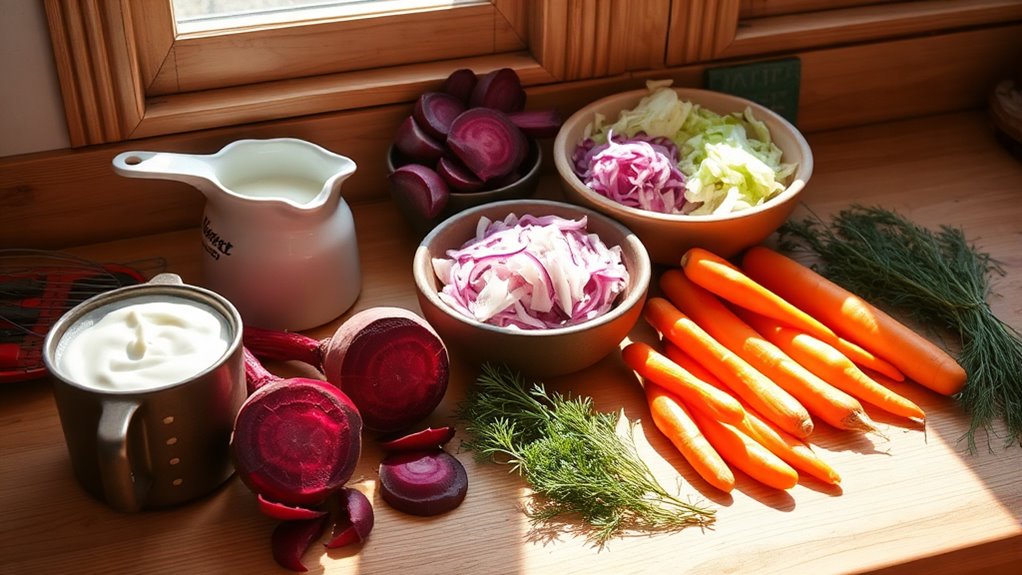
Where do you begin when making Baba’s borscht? Start by gathering all your ingredients to avoid last-minute scrambles. Think of it like opening a new account—you want everything ready and organized before you jump in.
Begin Baba’s borscht by gathering all ingredients, just like organizing before opening a new account.
For this classic soup, grab 3–4 medium beets, a small head of green cabbage, and a large onion. Add 2–3 carrots and 1–2 parsnips or potatoes for extra root-vegetable goodness.
Choose your protein base: either 1–1.5 lb of beef chuck, bone broth for richness, or vegetable broth if you prefer vegetarian. Don’t forget 2–3 tablespoons of tomato paste or fresh tomatoes, 2 tablespoons of vinegar or lemon juice, and 1–2 teaspoons of sugar to balance flavors.
Finally, have salt, black pepper, fresh dill, and sour cream ready for finishing touches.
Prepare the Beets and Vegetables
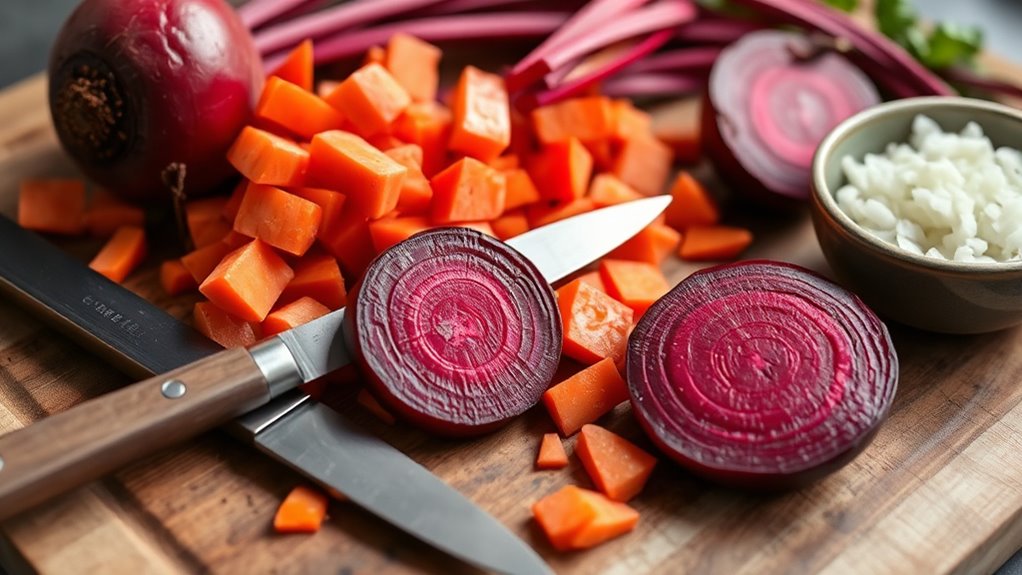
Start by choosing fresh, firm beets with smooth skin for the best flavor and color. Peel and chop them according to your texture preference.
Then, prepare the other vegetables like cabbage, onions, and carrots. These steps set the foundation for a rich and vibrant borscht.
Selecting Fresh Beets
Selecting fresh beets is essential for a vibrant and flavorful borscht. Look for firm beets with smooth skin, about 2 to 3 inches in diameter. This size helps them cook evenly and have consistent sweetness.
Avoid any beets that feel soft, shriveled, or show cuts. When you get them home, wash the beets thoroughly under cold water. Trim the stems, leaving about an inch to prevent bleeding during cooking.
Remember, peeling should wait until just before you cook or roast them to maintain freshness. Choosing fresh, uniform vegetables like carrots, onions, cabbage, and potatoes also helps your borscht cook evenly.
Peeling and Chopping
Peel the beets carefully with a vegetable peeler or paring knife, then trim the roots and stems before cutting them into 1/4 to 1/2 inch matchsticks or thin wedges. This size helps them cook evenly and release their vibrant color.
Next, wash and core the cabbage, slicing it into 1/4 to 1/2 inch ribbons—green cabbage works best for that classic texture. For the carrots, cut them into uniform julienne strips or 1/4-inch dice, and slice onions into thin half-moons to guarantee consistent sautéing.
Peel the potatoes and chop them into 1-inch cubes; if you’re not adding them right away, soak them briefly in cold water to prevent discoloration. These simple steps set the stage for a flavorful, well-textured borscht.
Preparing Additional Vegetables
Once you’ve prepared the base vegetables, it’s time to give the beets and additional ingredients their turn. Peel and scrub 3 to 4 medium beets, then cut them into thin matchsticks or grate to help release their vibrant color and guarantee even cooking within 10 to 15 minutes.
Toss the beet pieces with 1 to 2 tablespoons of vinegar or lemon juice to preserve their bright red hue and balance sweetness. Next, finely chop 1 medium carrot and 1 onion, then sauté them in 2 tablespoons of oil until soft—about 5 to 7 minutes—to build rich flavor before adding the beets.
Shred half a small head of cabbage and add it to the pot during the last 15 to 20 minutes of simmering, preserving its tender-crisp texture. Don’t forget to reserve the beet cooking liquid or a splash of beet pickle brine to enhance color and depth when stirring the soup.
Sauté Onions and Garlic
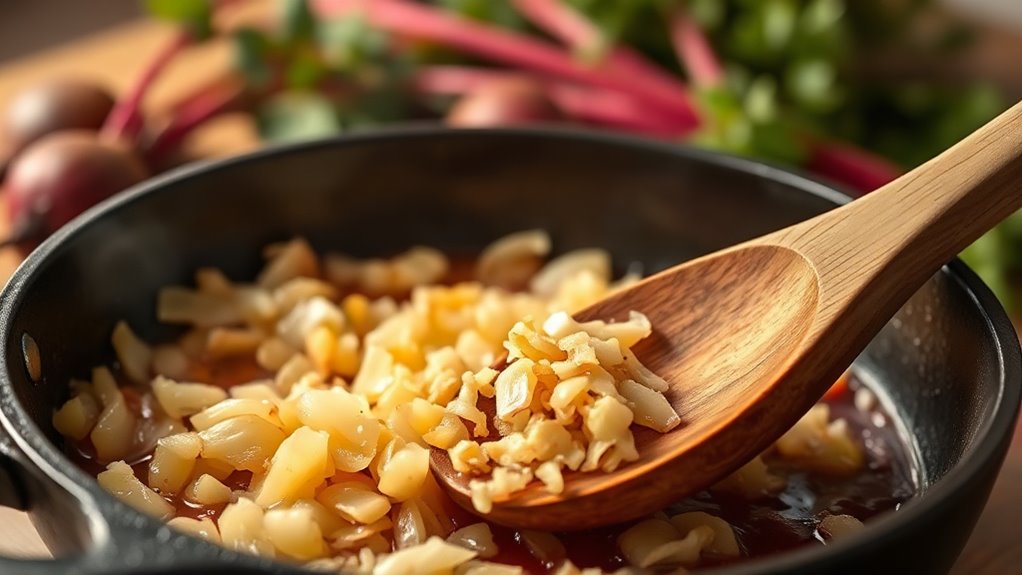
Start by gently sautéing diced onions over medium heat until they’re translucent and just turning golden. Add minced garlic near the end to bring out its aroma without burning it.
Remember to keep the heat steady and stir often to enhance flavors without bitterness. It really helps to keep an eye on things so nothing gets too dark.
Onion Preparation Tips
While sautéing onions for your borscht, slice one large yellow onion into thin half-moons. Cook them in 2 tablespoons of neutral oil over medium heat for 6–8 minutes until they turn translucent and just begin to brown. This helps develop a sweet, rich flavor.
To perfect your onion prep:
- Dice carrots or bell peppers finely and sauté with onions for 4–5 minutes to soften and sweeten.
- Add minced garlic cloves only in the last 60–90 seconds to avoid burning and keep garlic vibrant.
- Deglaze the pan with red wine vinegar or beet cooking liquid after onions brown to lift fond and add mild acidity.
- Cook onions until deep golden, about 10 minutes total, to build caramelized depth.
- Transfer the sautéed mixture to your stock pot to infuse the soup with rich flavor.
Garlic Flavor Enhancement
Enhance your borscht’s depth by sautéing finely chopped onions and garlic just right—cook the onions until translucent to mellow their sharpness, then add the garlic in the last minute or two to keep its bright, aromatic flavor intact. Use 2–3 tablespoons of oil to sauté 1 medium onion and 3–4 minced garlic cloves for 5–7 minutes.
For a deeper, sweeter garlic note, caramelize the onions over medium-low heat for 10–12 minutes before stirring in garlic. If you’re using roasted beets, adding a tablespoon of tomato paste with the garlic and onions for 2–3 minutes will boost umami richness.
Alternatively, smash 2–3 garlic cloves and steep them in oil while cooking onions, then remove for a mild garlic background without bits. This way, you get that garlic aroma without the garlic pieces floating around. It’s a neat little trick that works wonders!
Sautéing Techniques Guide
Sauté onions and garlic over medium-high heat in a wide skillet to coax out their natural sweetness and achieve golden edges without steaming. Use a neutral oil like sunflower or light olive oil combined with a tablespoon of butter for richness.
Here’s how to master this step: use medium-high heat to quickly release moisture and brown onions in 6–8 minutes. Add finely chopped garlic only in the last 30–60 seconds to avoid bitterness.
Use about 1–2 tablespoons of oil per medium onion. Deglaze the pan with a splash of beet or vegetable broth or vinegar to lift browned bits.
Keep onions and garlic separate until the beet mixture is ready, then stir them in during simmering. These techniques deepen flavor and perfect your borscht’s base.
Add Beets and Root Vegetables to Pot
Start by peeling and coarsely grating 2 to 3 medium beets, then add them to the pot early so their natural sugars and vibrant color infuse the broth.
Next, cube 1 large carrot and 1/2 to 1 pound of rutabaga or parsnip. Sauté these root vegetables briefly in oil until they soften slightly—this step helps develop their sweetness.
Add 1 small diced onion and 2 cloves of minced garlic to the pot with the roots. Cook everything until the onion turns translucent to build savory depth.
This combination of beets and root vegetables forms the hearty base of your borscht, setting up rich, earthy flavors.
Once the roots start to soften, you’ll be ready for the next step in the recipe.
Pour in Broth and Simmer
Pour in enough beef or vegetable broth to cover the vegetables by a couple of inches, giving the soup a rich base. Bring it to a gentle boil, then lower the heat to let it simmer slowly—this helps the flavors meld without breaking down the ingredients.
Keep an eye on the pot, skimming any foam to maintain a clear, vibrant broth. It’s worth the little extra effort to get that perfect, clean taste. Just take it easy and let the soup do its thing!
Choosing the Right Broth
When you choose the right broth, you set the foundation for your borscht’s flavor. Whether you want a rich, hearty soup or a lighter, vibrant one, your broth choice makes all the difference.
Here’s what to ponder: Use homemade beef or bone broth for deep, savory umami that complements beets. Or, choose vegetable broth with carrot, onion, celery, and bay leaf for a lighter, fresh taste.
Pour hot broth over sautéed veggies to deglaze and enhance flavor melding. Keep a gentle simmer (180–200°F) to protect beet texture and keep broth clear.
After simmering, adjust acidity with a splash of vinegar or lemon juice to brighten flavors. Picking the right broth helps you craft a perfectly balanced borscht every time.
Simmering for Flavor
Although the sautéed vegetables and shredded beets are ready, you’ll need to add enough broth—about 6 to 8 cups—to cover them by 1 to 2 inches so the flavors can meld fully during simmering. Bring the pot to a gentle boil, then immediately reduce to a low simmer and cook uncovered for 30–45 minutes.
This softens the cabbage and blends the beet and tomato flavors without over-reducing the liquid. Skim any foam or excess fat during the first 10 minutes to keep the broth clear and fresh.
Add diced potatoes and chopped dill within the first 20–25 minutes, then finish with vinegar, sugar, and sour cream in the last 5–10 minutes to preserve brightness. Taste and adjust seasoning after 30 minutes for the perfect balance.
Season With Vinegar and Spices
Since the beet flavors can mellow during cooking, adding a splash of good-quality vinegar near the end brightens the soup and keeps its vibrant red color. You can use distilled or apple cider vinegar, about 1–2 tablespoons, or opt for white wine vinegar or fermented beet kvass for a subtler tang.
A splash of quality vinegar brightens borscht and preserves its vibrant red hue perfectly.
Season carefully to maintain balance. Here’s what to keep in mind:
- Add 1–2 teaspoons kosher salt per liter of broth, tasting as you go.
- Use ¼–½ teaspoon freshly ground black pepper for warmth.
- Simmer with a bay leaf or two to deepen flavor.
- Include a pinch of sugar (½–1 teaspoon) to balance acidity if needed.
- Finish with fresh dill and sour cream, plus a final splash of vinegar if you like.
This approach guarantees your borscht is perfectly seasoned and vibrant.
Incorporate Cabbage and Other Greens
To keep your borscht vibrant and textured, add shredded cabbage during the last 15–20 minutes of simmering so it stays tender-crisp. Shred about half a small head (3–4 cups) and avoid mushiness by adding it after beets and potatoes cook.
For extra color and nutrition, toss in 1–2 cups of thinly sliced beet greens or spinach in the final 5 minutes. If you like a tangy Odessa-style twist, briefly rinse and add 1 cup of sauerkraut during the last 10 minutes, then adjust salt and vinegar.
Finally, sprinkle chopped fresh dill, parsley, or green onions just before serving to keep their bright aroma.
| Ingredient | When to Add |
|---|---|
| Shredded cabbage | Last 15–20 minutes |
| Beet greens/spinach | Final 5 minutes |
| Sauerkraut | Last 10 minutes |
| Fresh herbs | Just before serving |
| Simmer style | Gentle, not rolling |
Cook Until Vegetables Are Tender
After adding your cabbage and greens at the right moments, the next step is to cook all the vegetables until they reach the perfect tenderness. Start by simmering root vegetables and potatoes until they’re fork-tender.
Beets should be cooked separately to preserve their vibrant color and shredded before adding. Briefly sauté the shredded cabbage to soften it without turning mushy.
Then, simmer the assembled soup gently to meld the flavors and check tenderness regularly. Finally, let the borscht rest off the heat to finish softening the vegetables and deepen the taste.
- Simmer root veggies and potatoes 15–20 minutes
- Cook beets separately for 30–45 minutes, then shred
- Sauté cabbage 5–7 minutes before adding
- Simmer complete soup 20–30 minutes, checking tenderness
- Rest soup 10–15 minutes off heat before serving
Add Meat or Protein (Optional)
When you’re ready to add protein, you can choose from a variety of options depending on your preference and cooking time. For a traditional, hearty borscht, simmer 1 to 1.5 pounds of beef shank or chuck for 1.5 to 2 hours until tender, then shred and return it to the pot.
If you prefer pork, cook 1 to 1.2 pounds of pork shoulder until fork-tender, remove excess fat, slice thin, and add back. For a quicker meal, brown 1 pound of ground beef or turkey first, then add vegetables and broth, cutting cooking time to 30–40 minutes.
To keep it lighter, simmer 2–3 boneless chicken thighs, shred, and stir in before serving. Vegetarians can add cooked white beans or lentils near the end for extra protein and texture. Easy, right? Just pick whatever suits your mood and enjoy!
Serve With Sour Cream and Fresh Herbs
You’ll often find that a generous dollop of full-fat sour cream transforms borscht, adding creamy richness that perfectly balances the earthy sweetness of the beets. When serving, complement this with fresh herbs and traditional accompaniments to elevate every bowl.
Here’s how to serve your borscht like Baba would:
- Add 1–2 tablespoons of sour cream per bowl for smoothness.
- Sprinkle 1–2 teaspoons of finely chopped fresh dill for a bright, anise-like aroma.
- Offer lemon wedges or apple cider vinegar on the side to brighten flavors.
- Serve with crusty rye or sourdough bread, or pampushky, for soaking up the broth.
- Garnish with thinly sliced raw onions or scallions and a dash of black pepper for a subtle bite.
These touches bring out the best in your borscht’s flavor and texture. Trust me, it makes all the difference!
Frequently Asked Questions
Can I Freeze Baba’s Borscht for Later Use?
Yes, you can freeze Baba’s borscht for later. Just make sure to cool it completely before storing.
Use airtight containers to keep it fresh. Then, pop it in the freezer.
When you’re ready to eat, thaw it in the fridge. Reheat gently to enjoy all those rich flavors. Easy!
What’s the Best Type of Vinegar to Use?
Like a cherry on top, apple cider vinegar brings the best zing to your borscht. It balances sweetness and acidity perfectly, making your soup taste bright and fresh.
Don’t hesitate to adjust it to your liking!
How Long Does Baba’s Borscht Keep in the Refrigerator?
Baba’s borscht keeps in the refrigerator for about 4 to 5 days. Make sure you store it in an airtight container to keep it fresh and flavorful.
You’ll want to reheat it gently before serving. That way, it tastes just as good as when you first made it!
Can I Make Baba’s Borscht Vegan or Vegetarian?
Of course, you can make baba’s borscht vegan or vegetarian—unless you think beets scream for bacon!
Just swap meat broth for veggie stock and skip sour cream or use a plant-based alternative.
Easy, tasty, guilt-free!
What Side Dishes Pair Well With Baba’s Borscht?
You’ll love pairing Baba’s borscht with rye bread, sour cream, or garlic dill pickles. These sides really bring out the rich, tangy flavors of the soup.
Fresh salads or boiled potatoes also complement it perfectly. They help make your meal balanced and satisfying every time you serve it.
Conclusion
As you savor each spoonful of Baba’s borscht, remember it’s more than just a meal—it’s a warm embrace from generations past. It’s a vibrant tapestry of love and tradition simmered slowly in your kitchen.
Like the beets that color the broth, your efforts add richness to life’s simple moments. So, enjoy this hearty soup not just for its taste, but as a reminder that nurturing others nourishes your soul, too.
Baba’s borscht recipe you’ll love brings comfort and connection with every bite. It’s easy to make, packed with wholesome ingredients, and perfect for sharing. When you cook this classic dish, you’re not just making soup—you’re creating memories and celebrating heritage. So dive into this delicious bowl of borscht, and let it warm both your heart and home.