7 Steps to Make the Ultimate 40 Spice Hummus Recipe
To make the ultimate 40-spice hummus, start by gently infusing smashed garlic in sesame oil. Then, pulse your chickpeas in short bursts for that perfect, creamy texture.
Next, add lemon juice gradually while blending to create a smooth base. Slowly emulsify the warm garlic oil into the mix for an extra layer of flavor.
After that, blend in your signature 40-spice blend carefully. Season with salt and pepper to taste. Finally, fold in room-temperature olive oil for a silky, rich finish.
Follow these steps, and you’ll discover even more tips for flawless flavor and texture. Trust me, this method brings out the best in every ingredient!
Key Takeaways
- Pulse garbanzo beans in short bursts, scraping down the bowl to maintain texture without over-pureeing. This way, you keep a nice, slightly chunky consistency.
- Add lemon juice gradually while processing to emulsify and create a smooth, creamy base. It helps bring everything together beautifully.
- Slowly incorporate garlic-infused sesame oil into the running processor for rich flavor and glossy texture. This step really amps up the taste.
- Sprinkle the 40-spice blend gradually during processing, tasting frequently to balance spices without clumping. Keep an eye on the flavor so it doesn’t get overwhelming.
- Fold in room-temperature olive oil gently by hand with broad strokes to preserve airiness and prevent greasiness. Be gentle here to keep that light, fluffy feel.
Preparing Garlic and Oil for the Hummus Base
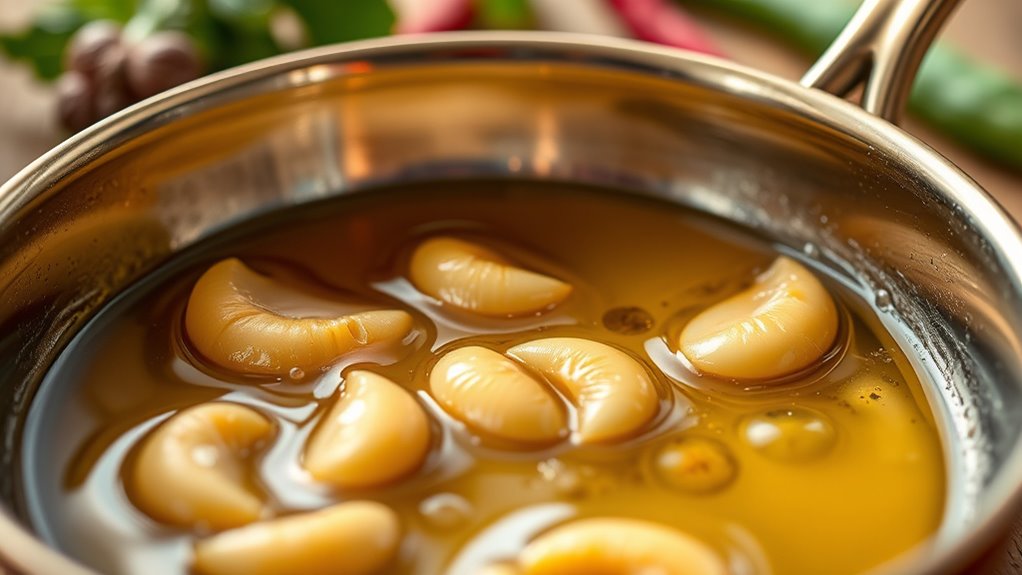
Begin by smashing your garlic cloves and gently cooking them in a few tablespoons of sesame oil over very low heat. Use enough oil—about 2 to 4 tablespoons for 2 to 4 cloves—to fully submerge the smashed garlic. This helps the oil evenly absorb the garlic’s mellow, nutty flavor.
Keep the heat low and stir occasionally, aiming for soft, light golden garlic in 6 to 8 minutes. Avoid browning or burning, as it can create bitter notes. Once ready, pour the warm garlic-infused oil directly into the food processor with your garbanzo base while it’s running.
This emulsifies flavors and helps smooth the hummus. For an extra glossy, garlicky touch, reserve a tablespoon of the oil to fold in by hand after processing.
Pulsing Garbanzo Beans for Perfect Hummus Texture
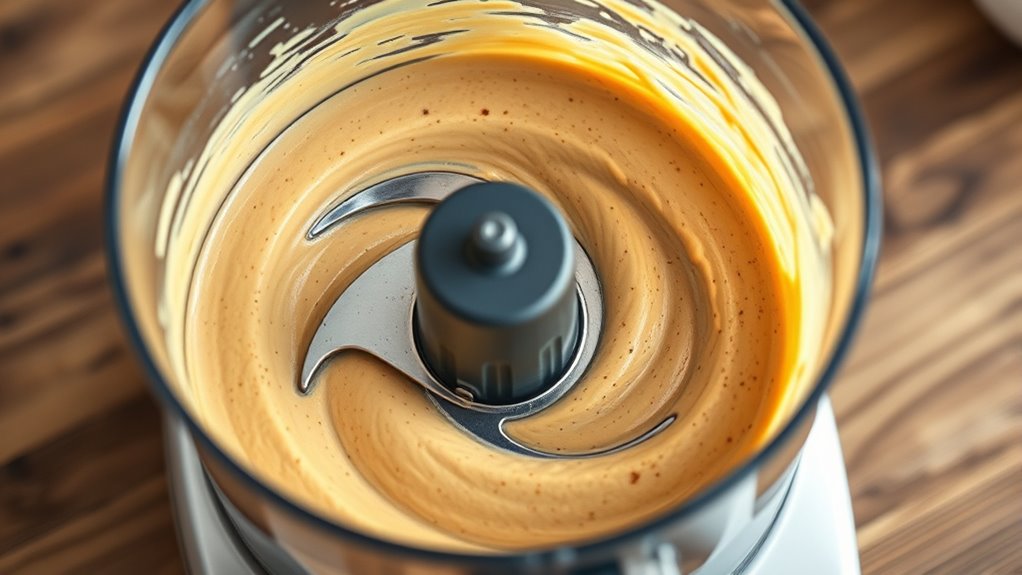
Pulse the garbanzo beans in short 1–2 second bursts to break them up while keeping some texture intact. Aim for about 8–12 pulses, depending on how firm your beans are.
Start with drained, room-temperature or slightly warm garbanzos to guarantee even processing and reduce the number of pulses needed. Every 10–12 pulses, scrape down the sides of the bowl to prevent the beans from packing and to achieve a uniform grind.
This method helps you control the texture precisely—whether you want it a bit rustic or smoother. Remember, pulsing gently keeps some bite, so your hummus won’t turn into a paste too soon.
This step sets the perfect base for the flavors to blend beautifully in later stages.
Adding Lemon Juice to Emulsify the Hummus
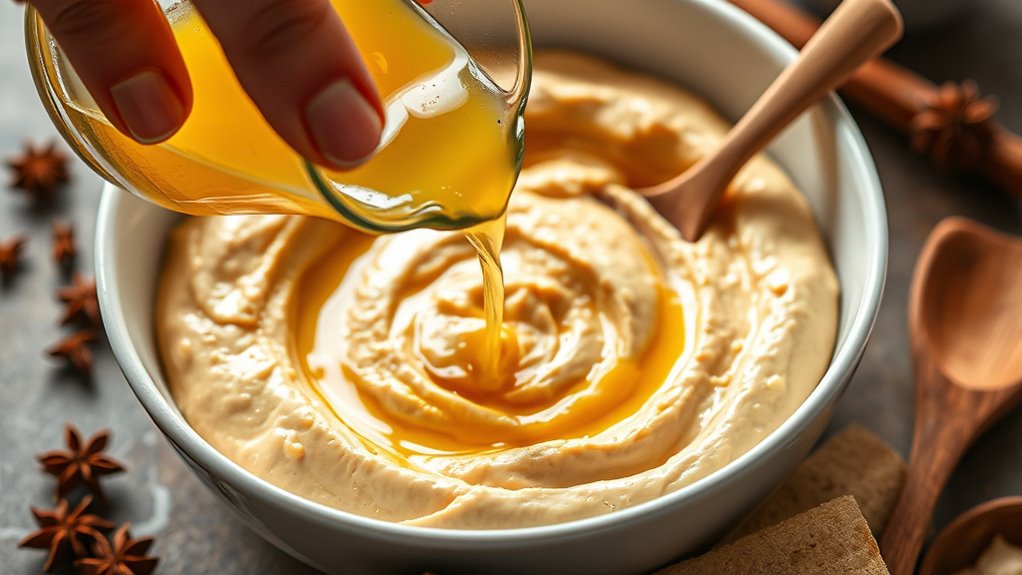
When you add lemon juice while the processor runs, it helps break down the beans and creates an emulsion that blends the oil and water for a smoother texture. This acidic boost not only brightens the flavor but also improves the hummus’s creaminess.
Keep the processor running as you pour to make sure everything combines evenly and achieves that perfect, silky consistency. It’s all about that smooth, dreamy hummus we’re after!
Role Of Lemon Juice
How does lemon juice transform your hummus from grainy to silky smooth? When you add lemon juice while the food processor runs, it breaks down bean starches and proteins, helping the oil and water-based ingredients bind evenly.
This creates a stable, glossy emulsion that’s creamy, not grainy. Typically, you’ll use 2–4 tablespoons per 2 cups of cooked chickpeas, adding it gradually to balance tang and texture.
Adding lemon juice early in processing maximizes its role in improving creaminess and prevents separation.
| Function | Effect on Hummus | Typical Quantity |
|---|---|---|
| Breaks down starch | Creamier texture | 2–4 tbsp per 2 cups chickpeas |
| Emulsifies oils | Stable, glossy consistency | Gradually during blending |
| Adds tang | Enhances flavor balance | Adjust to taste |
Emulsification Process Benefits
Lemon juice doesn’t just add tang to your hummus—it plays a key role in emulsifying the mixture for a perfectly creamy texture. By adding it early in the blending process, you supply acidity that breaks down chickpea proteins and stabilizes the emulsion through increased charge.
This helps oil droplets disperse into smaller, stable micelles. So when you add the garlic-oil mixture, the fat integrates smoothly rather than separating.
Blending lemon juice while processing also boosts shear forces, improving oil incorporation and mouthfeel. Using 1–2 tablespoons per 1–2 cups of chickpeas balances fat and water phases, often letting you use less oil.
Plus, the acidity brightens flavor, masking oil heaviness and helping spices like turmeric and cumin distribute evenly throughout your hummus. It’s a simple trick that makes a big difference!
Achieving Smooth Texture
Although it may seem simple, adding lemon juice while your food processor runs plays a vital role in emulsifying your tahini-free hummus. Start by pulsing the cooked garbanzo beans until they break up, then slowly pour in 1–2 tablespoons of lemon juice as the processor spins.
This acid loosens starches and proteins, reducing grit and helping create a stable emulsion that binds oil and bean solids. If the hummus feels dry or grainy, add lemon juice in small ½-teaspoon increments until it smooths and glides on the blade.
Combine this with steady addition of warmed sesame-garlic oil for maximum emulsification. This technique guarantees your hummus comes out glossy, velvety, and irresistibly smooth every time.
Incorporating Warm Garlic Oil Into the Hummus
Begin by gently cooking smashed garlic in sesame oil over very low heat until it softens and turns a light golden color, which takes about 5 to 8 minutes. This process infuses the oil with a mellow, nutty garlic flavor without bitterness.
As your food processor runs, pour the warm garlic oil in slowly to emulsify it into the garbanzo-lemon base, achieving a smooth, creamy texture. Remember to use sesame oil to add a toasted, slightly sweet aroma instead of raw garlic.
Add the garlic oil gradually, tasting as you go. Stop when the hummus reaches your preferred richness.
Don’t forget to reserve a tablespoon of the warm garlic oil. Drizzle the reserved oil on top for a glossy finish and intensified flavor.
This step really elevates your hummus with depth and warmth.
Blending the Signature 40-Spice Mix Into Hummus
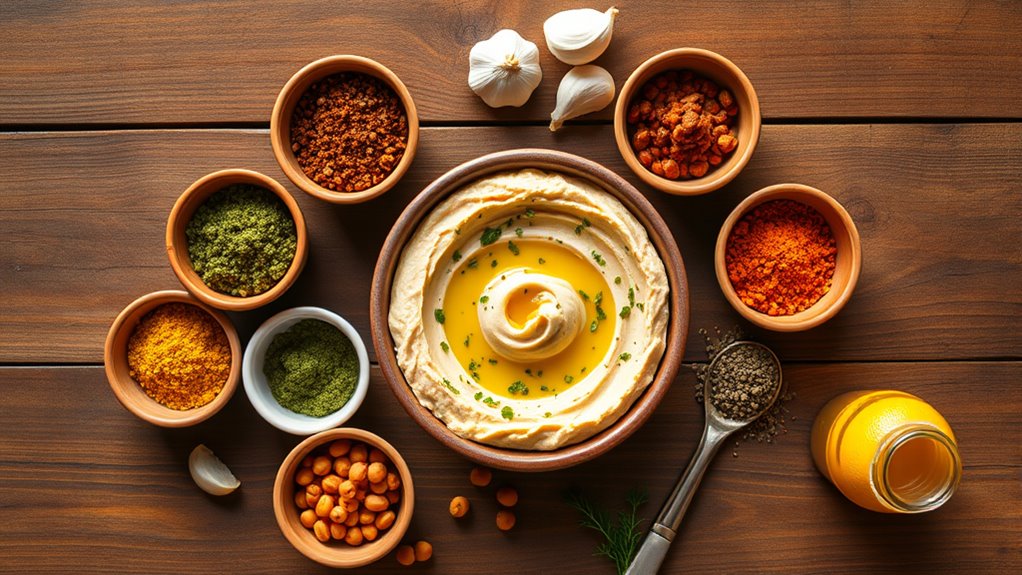
Slowly sprinkle the signature 40-spice mix into your hummus while the food processor runs, allowing the flavors to blend seamlessly. This mix, mainly turmeric and paprika with hints of cumin and oregano, should be added in stages.
Taste between additions since turmeric and paprika are potent and can quickly alter the flavor and color. Make certain your oil-garlic mixture is fully incorporated beforehand to help the spices bind well to the emulsion, preventing clumps.
Start with 1–2 teaspoons of the spice blend per 2 cups of cooked chickpeas, adjusting as needed to complement rather than overpower the base. After adding all the spices, blend briefly to make certain even distribution without over-processing, preserving the hummus’s smooth texture and balanced flavor.
Seasoning Hummus With Salt and Pepper to Taste
Once you’ve blended in the 40-spice mix, it’s time to fine-tune your hummus with salt and pepper. Start with about ½ teaspoon of fine kosher salt per cup of cooked garbanzo beans, adding more in ¼ teaspoon increments.
Add freshly ground black pepper sparingly, around ⅛ to ¼ teaspoon, since its flavor intensifies as the hummus rests. Keep salt and pepper separate from spices so you can clearly taste and adjust seasoning.
Remember, lemon juice and garlicky sesame oil reduce saltiness, so you might need a bit more salt after adding them.
- Season twice: during processing and after folding in olive oil
- Taste frequently to avoid over-salting
- Add pepper cautiously for balanced pungency
- Adjust salt based on other ingredients
- Keep salt and pepper adjustments independent of spice mix
Folding in Olive Oil for a Silky Hummus Finish
Once your hummus reaches the perfect smoothness, gently fold in olive oil by hand to keep its airy texture intact. This careful folding helps you achieve a silky, glossy finish without breaking the emulsion.
Using broad, lifting motions guarantees the oil blends evenly. It gives your hummus a creamy, luxurious mouthfeel you’ll love.
Benefits Of Hand Folding
Folding olive oil into your hummus by hand preserves its glossy emulsion and prevents the mixture from turning greasy. You’ll keep control over the texture by adding oil gradually, ensuring your dip stays silky and spreadable without thinning out.
Gentle folding also protects the light airiness whipped in earlier, giving your hummus a pleasant, lighter mouthfeel. Plus, you avoid heat buildup from blades, which helps keep the fresh flavors of your olive oil and spices vibrant.
Finally, hand folding lets you evenly blend the oil without breaking up chunkier bits or whole spices, maintaining a delightful textural contrast.
- Preserves glossy emulsion, avoiding greasiness
- Controls texture with slow, precise oil addition
- Maintains air for a lighter mouthfeel
- Prevents heat transfer, preserving flavor
- Keeps chunkier inclusions intact for texture
Achieving Silky Texture
Although your hummus may already be smooth, gently folding in high-quality olive oil is key to achieving that glossy, silky finish. Use 1–2 tablespoons of room-temperature extra-virgin olive oil per cup of hummus.
Add it slowly in a thin stream while folding with a rubber spatula, using broad, gentle strokes from the bottom up. This prevents greasy separation and helps the fat emulsify evenly.
Fold about 8–12 times, checking the texture as you go. If your hummus still feels dense, warm 1–2 teaspoons of reserved olive oil and fold it in gradually to loosen without diluting flavor.
Just avoid cold or hot oil to maintain the perfect consistency and keep the flavor balanced. It really makes all the difference!
Frequently Asked Questions
How to Cut Garlic Flavor in Hummus?
You can cut garlic flavor by cooking it gently in oil until golden, using less raw garlic, adding acid gradually, and balancing with baking soda or neutral oil.
This softens sharpness and creates a smoother hummus taste.
It’s all about finding that balance so the garlic doesn’t overpower the other flavors.
Try adjusting these little things, and your hummus will taste just right!
What Is the Healthiest Brand of Hummus to Buy?
You’ll find Sabra Classic, Cedar’s, and Hope Original offer the healthiest options with simple ingredients, heart-healthy oils, and good protein.
Look for low sodium, no additives, and tahini for the best nutritional profile.
These brands really keep it straightforward and nutritious. It’s all about clean ingredients that do your body good!
What Does Baking Soda Do to Hummus?
Baking soda cuts chickpea cooking time by up to 50%, making your hummus creamier and smoother.
Just don’t use too much, or you’ll risk a soapy taste and mushy texture in your delicious dip.
What Is the Original Recipe for Hummus?
You start with cooked chickpeas, tahini, fresh lemon juice, garlic, and salt. Blend these until smooth, adding cold water for creaminess.
Then, drizzle olive oil on top and garnish with paprika or parsley to finish. It’s super simple, but so delicious!
Conclusion
Congrats, you’ve just crafted the holy grail of hummus—40 spices, a garlic oil symphony, and a texture so smooth it could charm your toughest critic. Who knew blending legumes could feel like alchemy?
Now, resist the urge to hoard this masterpiece like a spice-obsessed dragon. Share it, savor it, and remember: hummus isn’t just food, it’s a lifestyle upgrade. Your taste buds will thank you, or at least send a polite thank-you card.
This ultimate 40 spice hummus recipe turns a simple dish into a flavorful adventure. With every bite, you’re enjoying a perfect blend of spices and creamy texture that elevates hummus to a whole new level. So go ahead, make this recipe your go-to for gatherings or a tasty snack. Trust me, once you try this spiced-up hummus, you’ll never look back. Your kitchen just got a whole lot tastier!