What Essential Ingredients Are in the Balbacua Cebu Recipe?
To make authentic Balbacua Cebu, you’ll need key ingredients like collagen-rich cow trotters, garlic, ginger, onions, and lemongrass for a flavorful base. These ingredients are essential for creating that rich and hearty stew everyone loves.
Add annatto powder and tomato sauce to get that rich reddish hue and depth. Don’t forget salted black beans for savory complexity and jalapeños for a mild spicy kick. These flavors blend perfectly to create the classic Balbacua taste.
Exploring the full process reveals how each element truly shines. It’s all about balancing these essentials to bring out the signature Cebuano flavor. Give it a try, and you’ll understand why Balbacua is such a beloved dish!
Key Takeaways
- Cow trotters are the main protein, providing rich collagen and tender texture after long simmering.
- Aromatics include garlic, crushed ginger, whole onion, and lemongrass for a fragrant flavor base.
- Annatto powder and tomato sauce give the dish its vibrant reddish-orange color and mild earthy, sweet-tangy notes.
- Salted black beans, Knorr Beef Cube, and fish sauce create deep savory umami seasoning in the broth.
- Vegetables like jalapeños, bell pepper, and green onions add mild heat, sweetness, and freshness to finish the dish.
Key Proteins and Aromatics
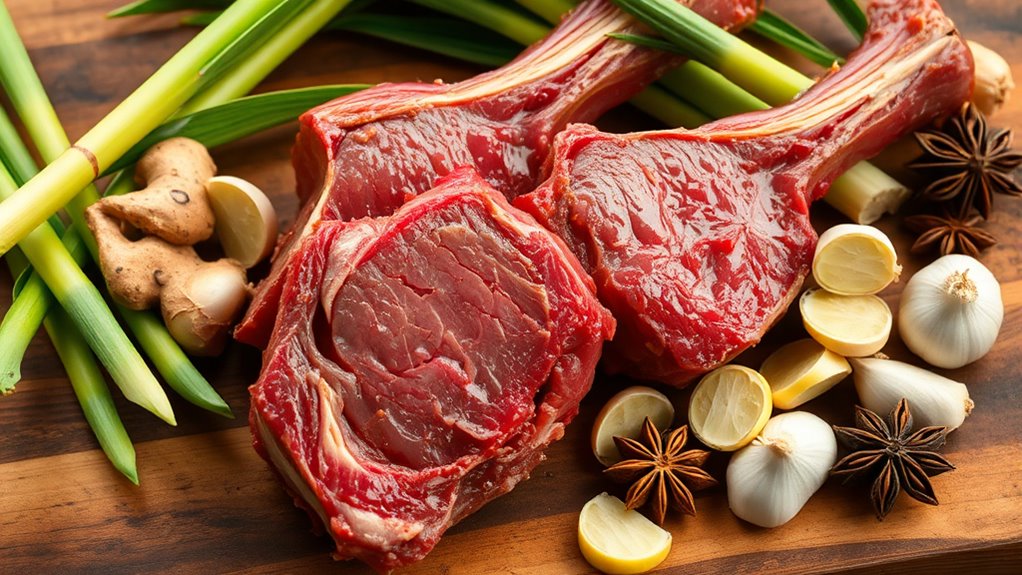
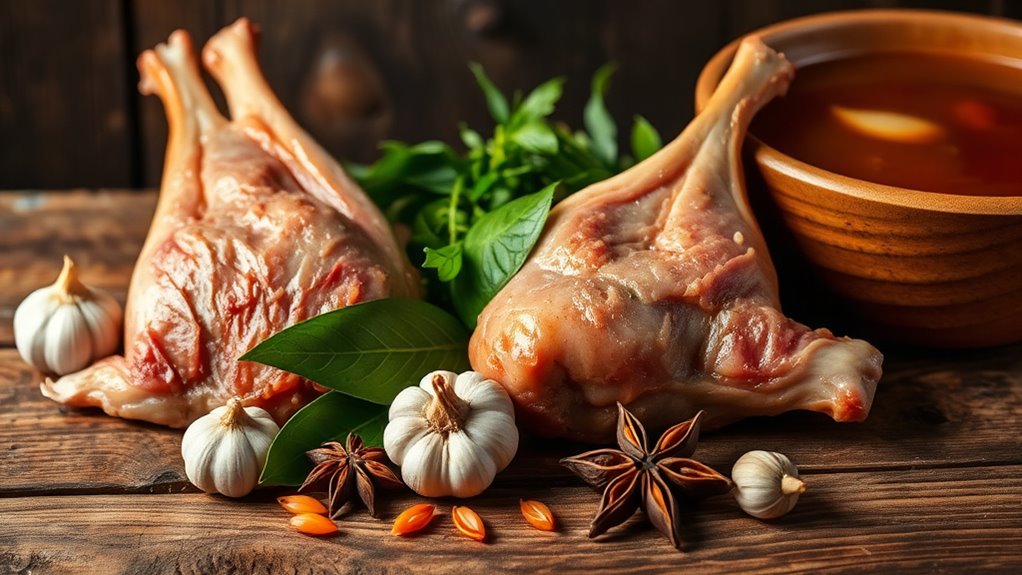
While cow trotters need about three hours of simmering to become tender, their rich collagen makes them the perfect protein base for balbacua. You’ll want about 5 pounds of trotters, cooked low and slow to release that melt-in-your-mouth texture.
To deepen the beefy flavor, add a Knorr Beef Cube during cooking. Before simmering, sauté aromatics like five garlic cloves, two crushed ginger knobs, and one whole onion. These build a savory foundation you can’t skip.
Don’t forget the lemongrass—the white part cut into 4-inch pieces—which infuses the broth with a subtle citrusy fragrance when simmered. Finally, three tablespoons of salted black beans give the stew its signature umami punch, balanced later with fish sauce or salt to taste.
Role of Annatto Powder and Tomato Sauce
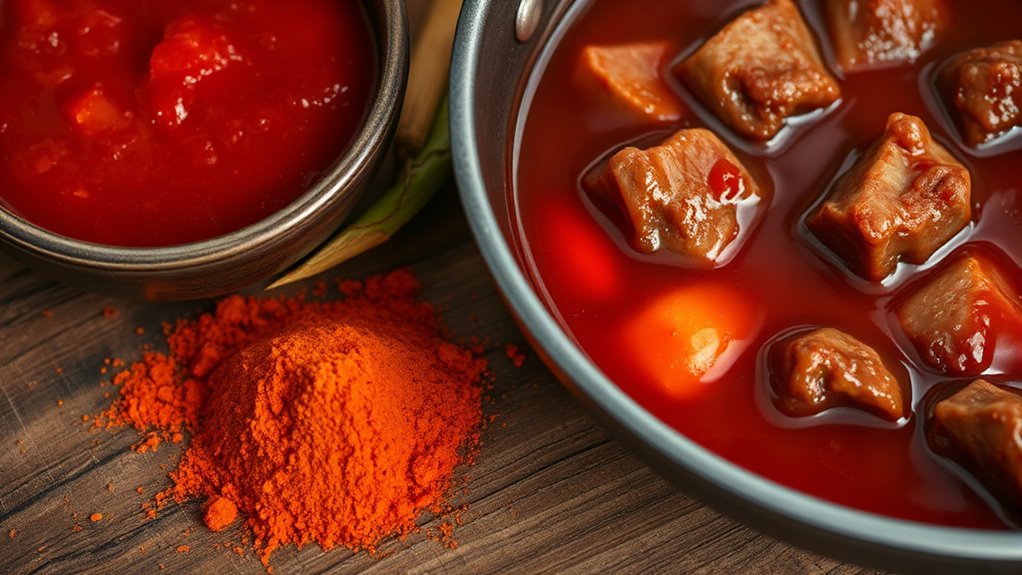
You’ll notice annatto powder adds a vibrant reddish-orange hue that brightens Balbacua Cebu without overwhelming its taste.
Tomato sauce, on the other hand, builds rich flavor depth with its sweet and tangy notes.
Together, they balance the dish’s appearance and savory complexity perfectly.
Color Enhancement Agent
Color plays a crucial role in making Balbacua Cebu visually inviting, and annatto powder along with tomato sauce are your go-to ingredients for achieving that. Annatto powder adds a warm orange-red hue to the broth, giving it that signature reddish-brown tone without changing the flavor.
It’s especially effective during the long simmering time, keeping the color stable as the cow trotters cook. Tomato sauce complements annatto by deepening the color and adding a savory richness with its natural umami and slight acidity.
Together, these ingredients create the dish’s characteristic look reminiscent of pochero and kare-kare hybrids common in Visayas and Mindanao. While annatto mainly boosts visual appeal, tomato sauce helps maintain a vibrant color and smooth mouthfeel throughout the cooking process.
Flavor Depth Contributor
Flavor plays an essential role in balancing Balbacua Cebu’s rich, slow-cooked broth, and annatto powder along with tomato sauce deliver this depth masterfully. When you add about 2 teaspoons of annatto powder after simmering, it lends a mild earthy and slightly peppery note that brightens the stew without overwhelming the tender meat.
Tomato sauce contributes rich savory depth and umami, anchoring Balbacua’s signature flavor that sits comfortably between pochero and kare-kare. The sauce’s acidity and subtle sweetness balance the broth’s richness derived from slow-cooked cow trotters.
While annatto enhances the dish’s vibrant color and adds a faint vegetal hint, tomato sauce rounds out the mouthfeel. Together, they maintain the core Balbacua profile, even as peanut elements nudge the Cebu version closer to kare-kare territory.
Vegetables and Peppers in the Recipe
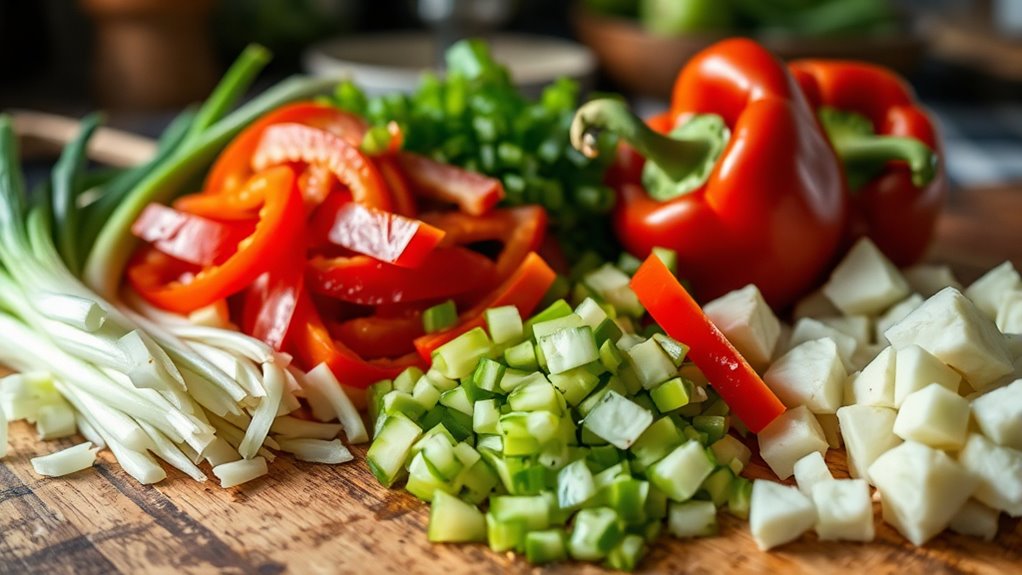
You’ll notice the recipe calls for jalapeño and bell peppers, each adding unique flavor and color.
Green onions are also included, but they’re added late to keep their fresh crunch.
When you prepare these vegetables, slicing and timing are key to preserving their texture and taste.
Types of Vegetables
Although the trotters and seasonings form the dish’s rich base, the vegetables bring balance and freshness to Balbacua Cebu. You’ll notice the vegetables are added near the end, cooked just 10 minutes to keep their texture and brightness intact.
Here are the key types you’ll work with:
- Jalapeño peppers – Add 3 for a mild-to-medium heat, stirred in toward the end.
- Bell pepper – Slice one and cook for about 10 minutes to bring sweetness and vibrant color.
- Green onions – Cut into 2-inch pieces and toss in during the final stage for a fresh, crisp finish.
These vegetables beautifully complement the hearty flavors, making the dish well-rounded and satisfying. It really ties everything together, don’t you think?
Pepper Varieties Used
Typically, the pepper varieties in Balbacua Cebu bring just the right amount of heat and brightness to the dish. You’ll use three jalapeño peppers, added near the end of cooking to deliver a fresh, spicy kick without overwhelming the flavors.
Alongside, one sliced bell pepper—color unspecified—cooks for about 10 minutes, contributing sweetness and a pleasing texture contrast. To finish, you stir in a bunch of green onions cut into 2-inch pieces, which add mild oniony brightness and vibrant color.
These peppers and vegetables go in after the trotters and seasonings are cooked, ensuring they retain a bit of their texture. While some Cebu-style variations include extras like peanuts, jalapeños remain the sole chili pepper in the standard Balbacua recipe.
Vegetable Preparation Tips
When preparing the vegetables for Balbacua Cebu, add them only after the trotters have become tender to preserve their texture and freshness. This approach guarantees the vegetables stay vibrant and retain their distinct flavors.
Here’s how to handle them:
- Add 3 whole jalapeño peppers toward the end and cook for about 10 minutes. This keeps their fresh heat and a bit of bite.
- Slice one bell pepper and stir it in with the jalapeños, letting them cook together for 10 minutes. This softens the bell pepper slightly while keeping its color and crunch.
- Cut green onions into 2-inch lengths and add them in the last 10 minutes for a bright onion flavor and crisp texture.
Following these steps will perfectly balance texture and flavor in your Balbacua Cebu.
Seasonings and Flavor Enhancers
To bring out Balbacua Cebu’s rich and complex flavors, you’ll rely on a blend of seasonings and flavor enhancers that balance earthiness, umami, and aromatic warmth. Start with annatto powder for its mild earthy taste and vibrant color.
Salted black beans add a salty, fermented depth that complements the trotters’ richness. A Knorr Beef Cube boosts the broth’s beefy umami, intensifying savoriness.
For seasoning, fish sauce is your go-to, lending a savory complexity; if you’re not a fan, salt will do. Aromatics like sautéed garlic, ginger, and onions form the flavor base, infusing the dish with a savory, slightly pungent aroma.
Together, these ingredients create the signature Balbacua Cebu taste that’s both hearty and deeply satisfying.
Step-by-Step Preparation Process
Now that you have your seasonings and aromatics ready, you can start building the rich base of Balbacua Cebu. Follow these steps to bring out its signature deep flavors:
First, sauté 3 tablespoons of cooking oil with chopped onion, crushed ginger, and garlic until the onion softens. Once done, set this mixture aside.
Start by gently sautéing onion, ginger, and garlic in oil until softened, then set aside.
Next, in a large pot, combine 5 lbs cow trotters, 10 cups water, ground black pepper, and lemongrass. Bring it to a boil, then let it simmer on low heat for about 3 hours until the trotters are tender.
After that, remove the lemongrass. Add annatto powder, the sautéed aromatics, salted black beans, and a beef cube. Cook everything together for 30 minutes.
Finally, stir in jalapeños, bell pepper, and green onions. Let it simmer for another 10 minutes, then season to taste. Serve it hot and enjoy!
Regional Variations and Optional Ingredients
Although the core ingredients of Balbacua remain consistent, you’ll find that the Cebu variation introduces unique touches like peanuts and pineapple juice. These add nutty richness and subtle sweetness to the dish.
Peanuts, either whole or ground into a paste, thicken the broth and give it a flavor reminiscent of kare-kare. Pineapple juice or chunks not only tenderize the meat but also balance the savory depth with a light sweetness.
Cebu versions often simmer longer to fully meld these flavors. You might also notice milder saltiness and the use of local peppers like jalapeños to suit regional palates.
These optional ingredients and tweaks make the Cebu balbacua distinct while honoring its traditional roots. It’s a delicious twist that’s definitely worth trying!
Nutritional Breakdown Per Serving
The unique ingredients in Cebu’s Balbacua don’t just enhance flavor—they also influence its nutritional profile. Each serving offers about 101 kcal, making it a modestly energy-dense dish.
You’ll find a balanced mix of macronutrients and essential micronutrients packed into every portion.
Here’s what one serving delivers:
- Protein and fats: Around 2 g of protein and 7 g of fat provide energy and support cell function.
- Carbohydrates and fiber: Approximately 9 g of carbs, including 2 g of dietary fiber, aid digestion and sustained energy release.
- Vitamins and minerals: You’ll get 883 IU vitamin A, 39 mg vitamin C, 35 mg calcium, 1 mg iron, plus 390 mg sodium and 259 mg potassium for electrolyte balance.
This breakdown helps you appreciate Balbacua’s nutritional benefits beyond its rich taste.
Frequently Asked Questions
What Are the Ingredients in an Authentic Balbacua Recipe?
You’ll need cow trotters, garlic, ginger, onion, annatto powder, lemongrass, salted black beans, beef bouillon cube, fish sauce, jalapeños, bell pepper, green onions, peanuts or peanut butter, and pineapple juice for authentic Balbacua.
These ingredients come together to create that rich, flavorful stew that’s so comforting. It’s all about layering the flavors and slow-cooking to get that tender, melt-in-your-mouth texture.
Is Balbacua Fat or Collagen?
Balbacua is rich in collagen, thanks to slow-cooked cow trotters that release gelatin into the broth.
While it has fat for richness, the silky, thick texture mainly comes from collagen, not grease or fat content.
What Are the Ingredients for Panlasang Pinoy Balbacua?
You don’t need a magic spell, just 5 lbs cow trotters, garlic, ginger, onion, annatto, black beans, Knorr cube, jalapeños, bell pepper, green onions, lemongrass, tomato sauce, fish sauce, and a splash of sweetness.
Easy!
What Are the Ingredients Needed to Make Ilonggo Balbacua?
You’ll need cow trotters, garlic, ginger, onion, and annatto powder. Salted black beans and a Knorr Beef Cube also come into play.
Don’t forget fish sauce, jalapeños, and bell pepper for that kick. Green onions, black pepper, lemongrass, and water round out the ingredients.
These all come together to make the rich and flavorful Ilonggo balbacua. It’s a dish worth trying!
Conclusion
Just like a symphony needs each instrument to create harmony, Balbacua Cebu thrives on its essential ingredients working together. Without the key proteins, aromatics, and seasonings, the dish would lose its soul.
So, when you cook Balbacua, think of it as crafting a masterpiece—each element plays its crucial part. It’s all about blending tradition and flavor into a delicious story that honors Cebu’s culinary heritage.
Your careful touch brings this legend to life. By using the right ingredients, you ensure that every bite of Balbacua Cebu delivers that rich, tender, and flavorful experience the dish is famous for. This recipe isn’t just food; it’s a celebration of Cebu’s unique flavors and culture.