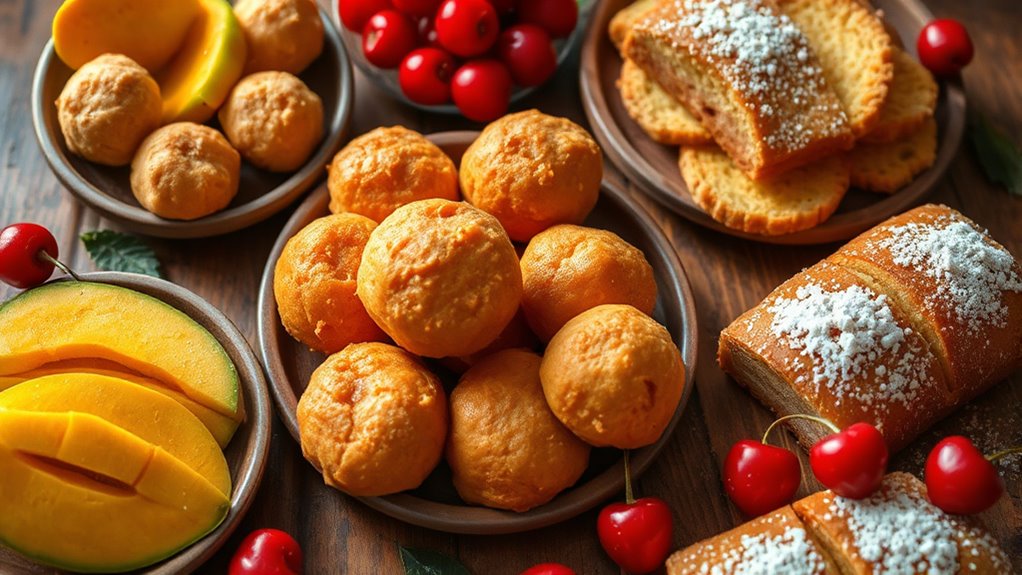
What Are the Best Bajan Bakes Recipes?
To make the best Bajan bakes, start with about 2 cups of all-purpose flour, 2.5 teaspoons baking powder, ½ teaspoon salt, and 2 tablespoons shortening for a tender, fluffy dough.
Gradually add ¾ cup lukewarm water, chill the dough, then roll into thick rounds.
Fry in medium-hot oil until golden on both sides, about 3 minutes per side. You can spice them up with cinnamon or add fillings like salted cod.
Keep going to discover how to master variations and frying tricks.
Key Takeaways
- Use about 2 cups flour, 2.5 teaspoons baking powder, ½ teaspoon salt, 2 tablespoons shortening, and ~¾ cup lukewarm water for authentic dough.
- Mix dry ingredients evenly, rub in shortening until crumbly, then gradually add water to form a slightly tacky dough; chill 15 minutes.
- Divide dough into six portions, roll into thick rounds, and fry in 2 cups neutral oil at 325–350°F for about 3 minutes per side.
- Optional variations include adding grated coconut, mashed sweet potato, or spices like cinnamon and nutmeg for sweeter or spiced bakes.
- Serve hot with traditional fillings such as saltfish, fish cakes, or cheese, or enjoy plain as a popular breakfast or street food.
History and Cultural Significance of Bajan Bakes
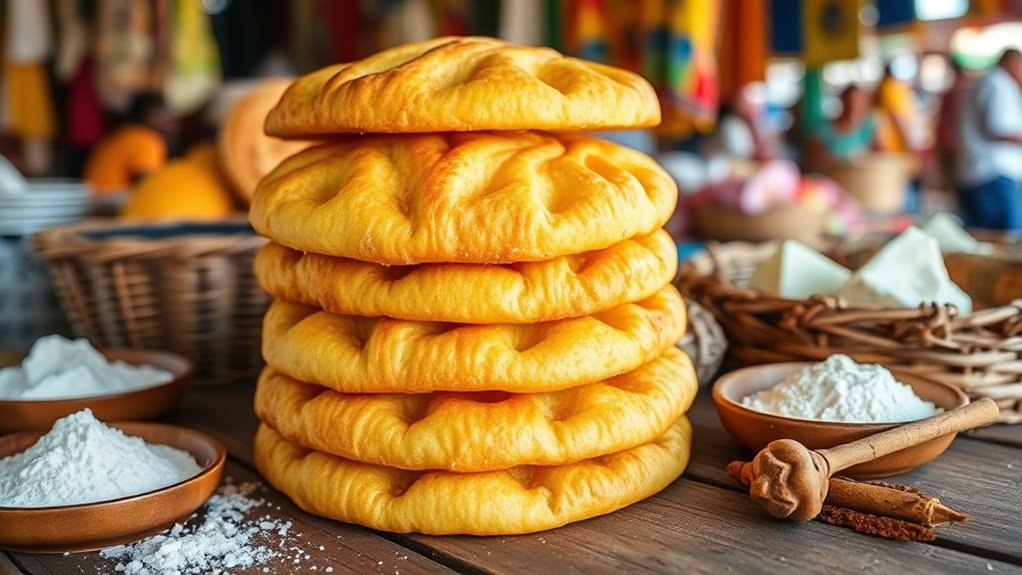
Although you might know Bajan bakes simply as delicious fried bread, they carry deep cultural roots in Barbados. These golden treats blend European wheat-based dough with West African frying techniques brought by enslaved peoples, reflecting the island’s colonial past and African heritage.
You’ll often find bakes served with saltfish, fish cakes, or cheese, making them a popular breakfast choice and street food staple across Barbados. Beyond their taste, bakes symbolize national identity and community spirit, appearing at festivals and gatherings where tradition thrives.
Variations like coconut or spiced bakes showcase how families add personal touches. So, when you bite into Bajan bakes, you’re not just enjoying food—you’re tasting a piece of Barbados’s rich cultural history.
Essential Ingredients for Authentic Bajan Bakes
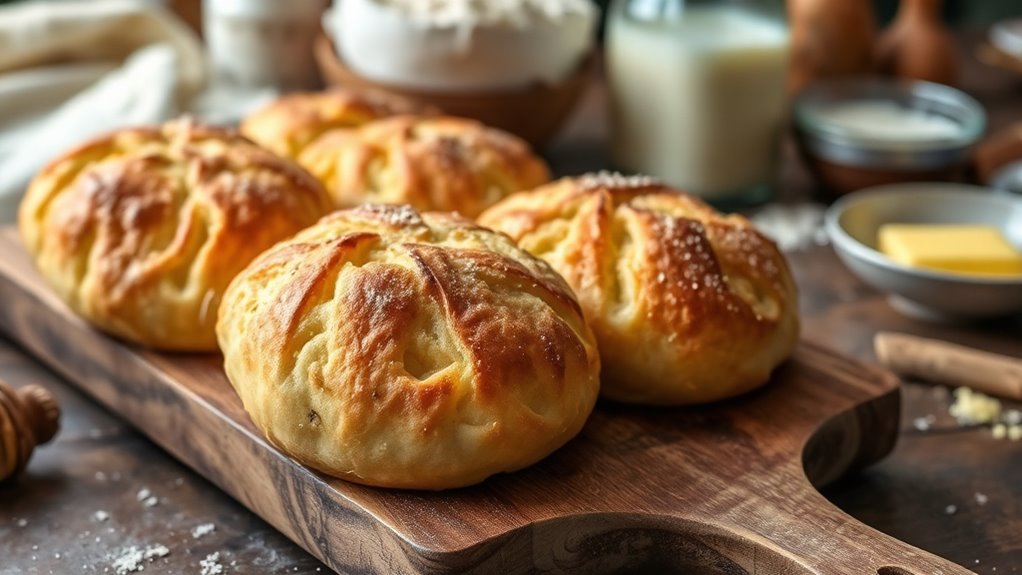
To capture the true flavor and texture of Bajan bakes, you need to start with the right ingredients. Begin with about 2 cups of all-purpose flour; it forms the chewy, structured base you’re aiming for.
Start with 2 cups of all-purpose flour for that perfect chewy, structured base in your Bajan bakes.
Add roughly 2.5 teaspoons of baking powder to give your bakes that light, puffed interior. You’ll mix in about 3/4 cup of lukewarm water and 2 tablespoons of shortening or butter-flavored Crisco to create a tender, pliable dough.
Don’t forget a pinch of salt and warm spices like 1/4 teaspoon cinnamon and nutmeg; these bring subtle sweetness and depth. Especially if you include 3 tablespoons of brown sugar for spiced varieties.
For frying, use about 2 cups of neutral oil heated to medium-low so your bakes brown evenly without burning. It’s all about that perfect golden crust!
Step-by-Step Preparation of Classic Bajan Bakes Dough
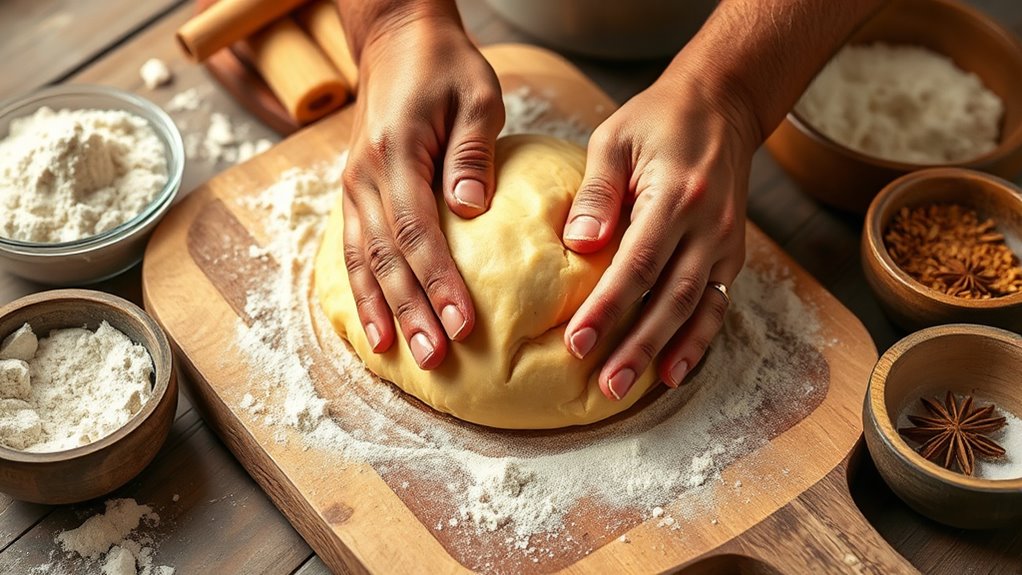
Start by mixing your dry ingredients thoroughly to make sure the leavening and spices are evenly spread. Then, gently work in the shortening until the mixture looks like coarse crumbs.
Next, add water to form a soft dough. Once chilled, divide and roll the dough into rounds that are thick enough to stay fluffy when fried.
Mixing Ingredients Properly
Begin by whisking together the dry ingredients—flour, baking powder, cinnamon, nutmeg, salt, and brown sugar. This helps guarantee even distribution of leavening agents and spices before adding the fat.
Next, cut in 2 tablespoons of Crisco using a pastry cutter or your fingertips until the mixture looks like coarse crumbs. This step is key for creating flaky layers in your bakes.
Then, gradually pour in about 3/4 cup of lukewarm water, mixing just until the dough comes together and feels slightly tacky. Be careful not to overwork it, or your bakes will turn tough.
Finally, wrap the dough tightly in plastic and chill it for 15 minutes. This resting period helps relax the gluten and makes rolling easier later on.
Rolling and Portioning Dough
Divide the chilled dough on a lightly floured surface into six equal portions by halving it once, then splitting each half into three. This guarantees even cooking for each bake.
Next, follow these steps:
- Lightly flour your rolling surface and pin, then roll each dough portion into a slightly thick round—aim for uniform thickness so the edges don’t brown faster than the center.
- If the dough feels dry or stiff, sprinkle a bit of water and knead briefly; if sticky, add a touch more flour until smooth and pliable.
- Keep the rounds slightly thick rather than paper-thin for that classic soft, fluffy texture of Bajan bakes.
Techniques for Perfectly Frying Bajan Bakes
Frying Bajan bakes perfectly often depends on maintaining the right oil temperature, ideally between 325 and 350°F (160–175°C). This way, they cook through without burning on the outside.
Heat about 2 cups of neutral oil in a heavy pot to medium-low or medium heat. Make sure the oil depth is 1–2 inches so the bakes can float and cook evenly.
Roll your dough into slightly thick rounds and lightly flour them to prevent sticking. This helps you get that crisp exterior and tender interior everyone loves.
Fry each side for roughly 3 minutes, flipping once the edges start browning. You might need to adjust the timing a bit until both sides turn golden.
Drain the fried bakes briefly on paper towels and let them rest a few minutes. This lets the steam finish cooking inside, keeping them fluffy and perfect.
Flavor Variations: Incorporating Coconut and Sweet Potato
Once you’ve mastered getting the perfect golden crust on your Bajan bakes, you can start experimenting with flavors to add a new dimension to this classic treat. Incorporating coconut and sweet potato creates delicious variations that enhance texture and taste.
Try these tips:
- Add 1/2 to 3/4 cup grated fresh or 1/2 cup desiccated coconut to your dry ingredients for chewiness and a pronounced coconut flavor without changing liquid amounts.
- Fold in 1/2 to 1 cup cooked, mashed sweet potato, reducing water by 1/4 cup to keep dough firm. Expect a softer crumb and increase frying time by 30–60 seconds per side.
- For balanced sweetness with sweet potato, mix in 3 tablespoons brown sugar and boost warm spices to 1/2 teaspoon cinnamon and 1/4–1/2 teaspoon nutmeg.
These tweaks add richness and complexity to your bakes. Give them a try—you might find a new favorite!
Savory Additions: Using Salted Cod and Other Fillings
Enhance your Bajan bakes by folding in savory fillings like salted cod, seasoned meats, or vegetables for a delicious twist. Start by soaking salted cod in cold water for 12–24 hours, changing the water several times to remove excess salt.
Debone and flake the cod, then sauté onion, garlic, bell pepper, thyme, and black pepper until soft. Fold this mixture with about a cup of cod into the dough. For creaminess, add grated cheddar and evaporated milk.
You can also use cooked minced pork or beef seasoned with allspice, scallion, and Scotch bonnet, or a vegetarian combo of sautéed callaloo and feta-like cheese. Make sure fillings are cool and drained to avoid sogginess.
Fry each bake in medium-hot oil until golden brown on both sides. Easy and tasty!
Serving Suggestions and Traditional Accompaniments
Savor Bajan fried bakes hot, traditionally paired with saltfish and cou-cou. Two bakes per person perfectly complement the savory salt cod and cornmeal dish.
For breakfast, try them warm with cheese or sliced avocado alongside pickled vegetables (chow). This adds a creamy, tangy touch that’s just right.
At lunch, bakes shine with flying fish fritters or stewed mackerel. They soak up rich sauces beautifully.
When serving at gatherings, let guests customize with chutneys and saltfish buljol. It’s a fun way to enjoy different flavors.
Here are some serving ideas:
- Breakfast: Cheese or avocado + pickled chow
- Lunch: Flying fish fritters or stewed mackerel + pepper sauce
- Party: Mango or pineapple chutney + hot pepper sauce + saltfish buljol
These pairings bring out the best in your Bajan bakes every time.
Common Challenges and Tips for Home Cooks
When frying Bajan bakes, you’ll want to keep the oil at a medium-low to medium heat. This helps avoid burning the outside while leaving the inside raw.
Handling hot oil safely is super important, so use a deep pot and keep an eye on the temperature.
For the perfect dough texture, remember to roll it slightly thick. Also, keep it chilled before frying to prevent greasiness.
Handling Hot Oil Safely
Although frying bakes at home can be rewarding, handling hot oil safely requires careful attention to prevent accidents. To keep things safe and smooth, follow these essential tips:
- Use a heavy-bottomed pot filled no more than one-third with oil. Heat it over medium-low to medium, aiming for 350–375°F (175–190°C) and monitor with a thermometer.
- Pat your dough dry and gently lower pieces into the oil with a slotted spoon or frying basket. Avoid overcrowding so the oil temperature stays steady.
- Stay prepared: keep a lid and metal baking sheet nearby. If a grease fire starts, turn off heat, cover with the lid to smother flames, and never use water.
Wear oven mitts, keep kids and pets away, and if you get burned, cool the area under lukewarm water right away.
Achieving Perfect Dough Texture
Getting the perfect dough texture requires balancing moisture and handling to avoid stickiness or toughness. Start with about 2 cups of flour, 2.5 teaspoons baking powder, ½ teaspoon salt, and add ~¾ cup lukewarm water gradually until the dough holds without sticking to your fingers.
Rub in 2 tablespoons shortening until the mixture looks like coarse crumbs—this prevents toughness and creates flaky layers. Chill the dough wrapped in plastic for 15 minutes to relax gluten, making it easier to roll and preventing spring-back.
Roll the rounds slightly thick; thin edges brown too fast, while a thicker center stays soft. If sticky, dust lightly with flour. Fry in medium heat oil for about three minutes per side, adjusting heat to avoid overbrowning edges and ensuring even cooking.
Regional Differences and Modern Adaptations of Bajan Bakes
While Bajan bakes share a basic dough recipe, you’ll find regional twists and modern takes that make each version unique. Across the Eastern Caribbean, some add warming spices like cinnamon or nutmeg, or swap oil for shortening to get a flakier texture.
Bajan bakes start with a simple dough but gain unique flair with spices or switching oil for shortening.
Modern cooks often bake instead of fry to cut oil use or pan-fry smaller rounds for quicker cooking. Here’s what you can try:
- Add 3 Tbsp brown sugar or substitute part of the water with milk to enrich flavor and color.
- Fold in butter or margarine for laminated, biscuit-like layers.
- Make thinner, larger bakes on a griddle for faster, consistent cooking—perfect for restaurants.
These variations help you enjoy Bajan bakes your way, whether classic or contemporary. Give them a go and see which style suits you best!
Frequently Asked Questions
Can Bajan Bakes Be Baked Instead of Fried?
Yes, you can bake Bajan bakes instead of frying them. Just brush them lightly with oil and bake at 375°F for about 15-20 minutes until golden.
This makes a healthier, less greasy option you’ll enjoy. Give it a try and see how tasty they turn out!
How Long Do Bajan Bakes Keep Fresh After Cooking?
Did you know homemade Bajan bakes stay fresh for about 2 days at room temperature?
You can keep them fresh longer, up to a week, by refrigerating or freezing them. Just reheat before eating!
Are There Gluten-Free Alternatives for Making Bajan Bakes?
Yes, you can make gluten-free Bajan bakes by substituting regular flour with gluten-free blends or almond flour.
Just remember to adjust liquid amounts slightly, and you’ll still enjoy that delicious, fluffy texture you love.
It’s pretty simple once you get the hang of it! Give it a try and see how tasty your gluten-free version can be.
What Drinks Traditionally Pair Well With Bajan Bakes?
You’ll love sipping on a cold Mauby or sweet sorrel alongside warm Bajan bakes.
The tangy spices and rich flavors dance together like a sunset over Caribbean waves.
It makes every bite and sip unforgettable.
Can Bajan Bakes Be Frozen and Reheated Later?
Yes, you can freeze Bajan bakes! Just let them cool completely first. Then, wrap them tightly and store in an airtight container.
When you want to eat them, just reheat in the oven or toaster. That way, you get a fresh, warm treat every time!
Conclusion
Now that you’ve explored the rich history and delicious variations of Bajan bakes, you’re ready to bring a taste of Barbados into your kitchen. Remember, practice makes perfect—don’t be discouraged if your first batch isn’t flawless.
With each fry, you’ll get closer to that golden, fluffy delight. As the saying goes, “Rome wasn’t built in a day,” so keep experimenting and enjoy the journey of mastering these beloved Caribbean treats!
Trying out the best Bajan bakes recipes is all about enjoying the process as much as the result. Whether you prefer them plain, stuffed, or served with fish, these bakes offer a unique blend of flavors that capture the essence of Barbados. So grab your ingredients, get frying, and soon you’ll be serving up authentic Bajan bakes that’ll impress friends and family alike!