
What Ingredients Make the Perfect Bavarian Seasoning Recipe?
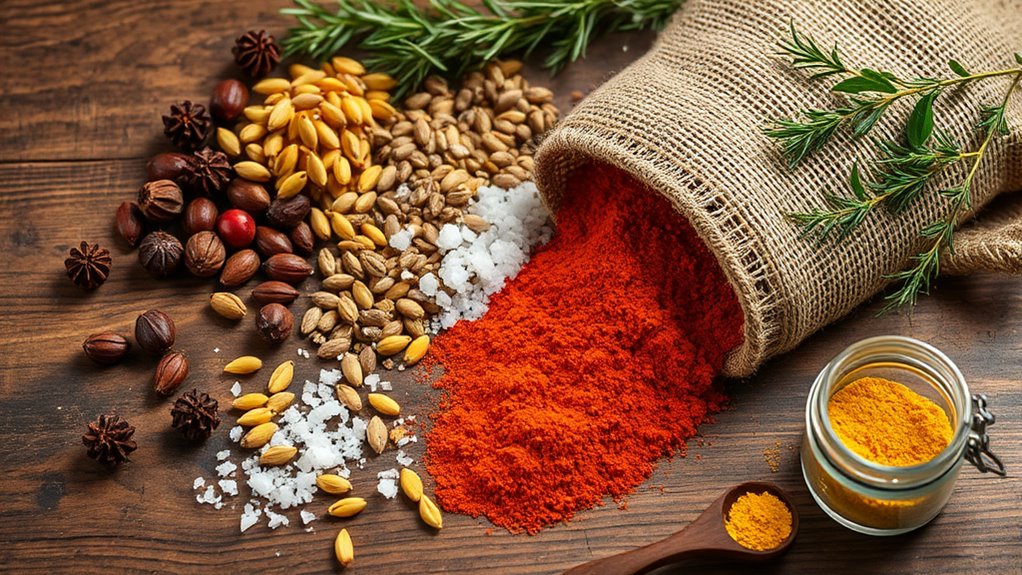
To create the perfect Bavarian seasoning, start with caraway seeds for a warm, sweet-anise flavor and add marjoram to bring floral brightness. These two are the heart of the blend and really set the traditional tone.
Next, incorporate crushed juniper berries and bay leaves to lend piney, herbal depth that’s unmistakably Bavarian. Don’t forget a touch of paprika—it adds not only a lovely color but also a mild heat that balances the spices nicely.
Coarsely ground black pepper and a pinch of allspice or cloves enhance the savory richness, giving the seasoning a complex, layered taste. Use these spices with traditional aromatics and liquids for an authentic flavor.
Feel free to experiment a bit—you’ll find that mastering this classic Bavarian seasoning recipe is both fun and rewarding!
Key Takeaways
– Essential Bavarian seasoning includes caraway seeds, marjoram, coarsely ground black pepper, and salt for balanced savory and aromatic flavors.
These ingredients create that classic taste you expect in Bavarian dishes.
– Whole cloves and allspice add warm, sweet-spicy undertones to gravies and roasts in traditional blends.
They really bring out cozy, comforting notes in the food.
– Juniper berries provide a sharp, piney note essential for seasoning game and pork dishes.
This gives the meat a distinctive, fresh flavor that’s hard to miss.
– Bay leaves contribute subtle herbal bitterness and depth, used in braising liquids and dumpling sauces.
They add complexity without overpowering the dish.
– Paprika and fried onions are commonly used to finish sauces, enhancing color and adding rich, smoky flavor.
These final touches make the dish look and taste even more inviting.
Essential Herbs and Spices in Bavarian Seasoning
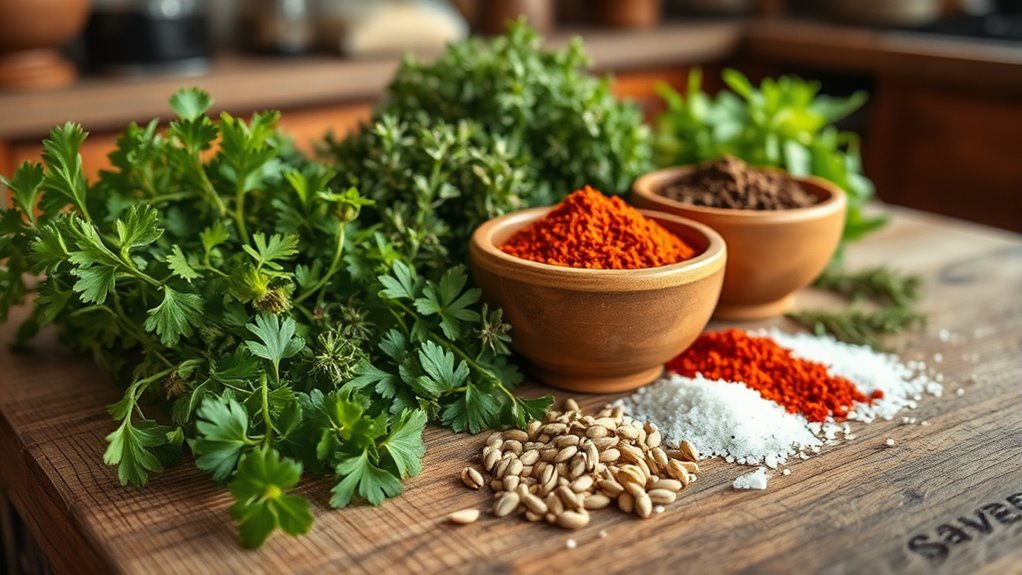
Reveal the authentic taste of Bavarian cuisine by mastering its essential herbs and spices. Start with caraway seeds, which bring a warm, slightly sweet anise flavor perfect for roasts, sausages, and sauerkraut.
Bay leaves add subtle herbal bitterness and depth—just 1 to 3 leaves for a roast or pot enhance dishes like Schweinebraten. Juniper berries deliver a sharp, piney note ideal for game and hearty meats; 6 to 10 berries work well in roasts or marinades.
Use allspice and whole cloves sparingly, with 3 to 5 cloves or up to a teaspoon of ground allspice to provide warm, sweet-spicy undertones in braises. Finally, finish with fresh or dried marjoram and parsley to add floral warmth and brightness to sauces and dumplings.
The Role of Aromatics and Vegetables
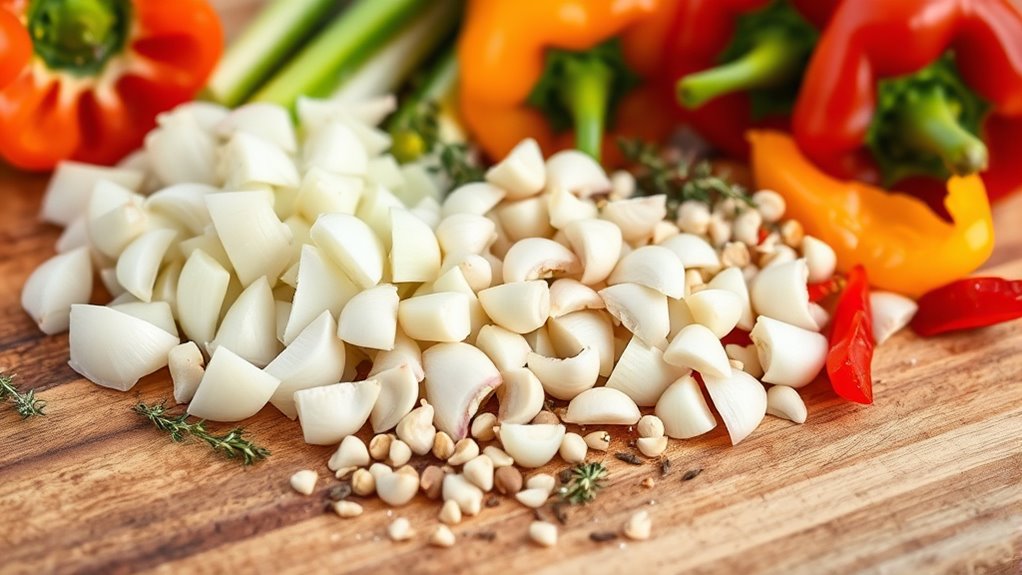
You’ll find that onions, carrots, and celery form the backbone of many Bavarian dishes, adding essential sweetness and depth. Balancing these veggies carefully helps you build rich, flavorful sauces and braises without overwhelming the meat.
Don’t forget to use aromatics like garlic and parsley sparingly to brighten and round out your seasoning. They add just the right touch without stealing the show.
Essential Aromatic Vegetables
Aromatic vegetables form the flavorful foundation of Bavarian seasoning, shaping the character of dishes from gravies to roasts. You’ll want to start with onions—yellow or sweet varieties—used raw, fried, or roasted to create a sweet, savory base that melds beautifully with gravies and braises.
Carrots add subtle sweetness and body, simmered until soft to balance acidity in dishes like Schweinebraten. Celery or celeriac brings a mild herbal bitterness and an aromatic backbone, enhancing broths and marinades.
Use garlic sparingly; its sharp, savory notes shine in meat rubs, pan sauces, and dumpling fillings. For richer dishes, leeks and root aromatics such as parsnip deepen flavor with layered sweetness and umami, rounding out the traditional Bavarian profile perfectly.
Balancing Flavors With Veggies
When you balance onions, carrots, and celery in roughly a 2:1:1 ratio, you create a sweet, savory base that enhances meat flavors without overpowering them. Adding garlic or leeks intensifies umami notes, while root vegetables like parsnips add natural sweetness and body.
Acidic aromatics, such as onions steeped in red wine and vinegar, brighten and tenderize. Fresh herbs and sturdy aromatics release piney, resinous hints, rounding out the profile.
| Ingredient | Role |
|---|---|
| Onions, Carrots, Celery | Sweet, savory, aromatic base |
| Garlic, Leeks | Pungent, umami enhancement |
| Bay Leaves, Juniper Berries | Resinous, piney notes |
Use these veggies thoughtfully to balance and elevate your Bavarian seasoning perfectly.
Incorporating Liquids for Depth and Tenderness
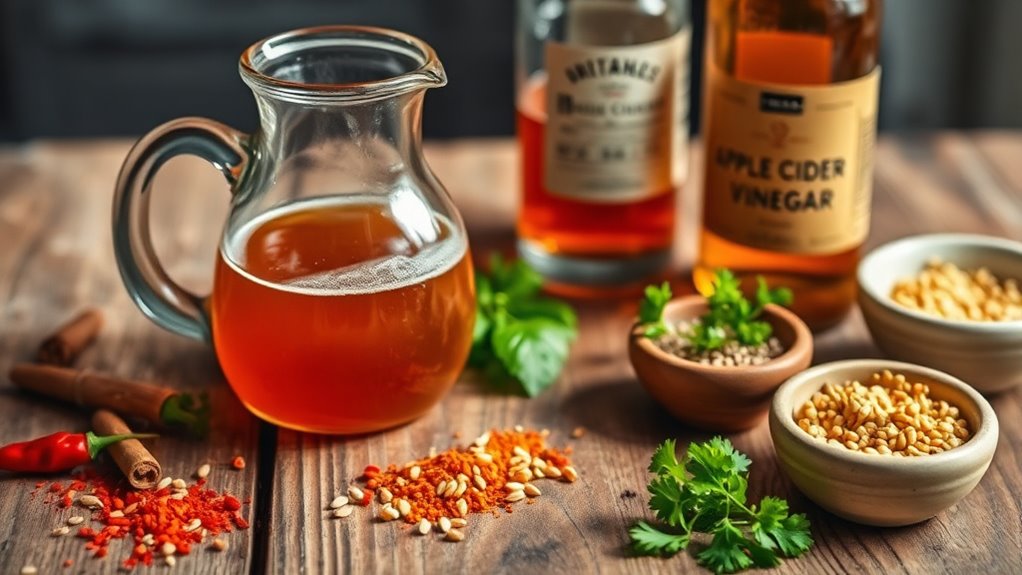
You’ll want to balance beer or dark lager with beef or vegetable broth to add rich, malty flavors without overpowering the meat. Adding a splash of red wine or red wine vinegar brightens the dish and helps tenderize the fibers.
Don’t forget to include water in your marinade to control concentration and guarantee even cooking throughout. It’s all about finding that perfect mix to bring out the best in your dish!
Wine and Vinegar Blend
Because balancing acidity and moisture is key, Bavarian marinades often combine equal parts red wine, red wine vinegar, and water. You’ll want to use full-bodied red wine to add tannin and savory depth, perfect for pork or game.
The red wine vinegar brings a fruity sharpness that tenderizes and enhances flavor without overwhelming the meat. Simmering this blend with aromatics like onion, carrot, and celery mellows the acidity and concentrates the flavors.
Always cool the mixture before adding the meat to avoid cooking it prematurely.
- Feel the rich aroma of simmered wine and spices fill your kitchen
- Watch the meat soak up a perfectly balanced, tenderizing marinade
- Savor the harmony of fruity brightness with deep, savory notes
- Enjoy effortlessly tender, flavorful dishes every time you marinate
Broth and Beer Usage
Although broth and beer might seem like simple liquids, they play a crucial role in deepening flavor and tenderizing meat in Bavarian dishes. Use about 200–400 ml each of dark beer—like schwarzbier or dunkel—and beef or vegetable broth to create a rich braising base for Schweinebraten or roasts.
Simmer this liquid with root vegetables, aromatics, and spices for 10–30 minutes before adding meat to concentrate flavors. As the meat cooks, the broth and beer break down collagen, making it tender.
When finishing sauces, reduce the braising liquid by two-thirds to intensify taste, then enrich it with butter or cream for a glossy finish. This method guarantees your dish has depth, moisture, and a luscious texture that highlights traditional Bavarian flavors.
Water’s Role in Marinade
In Bavarian marinades, water plays a vital role by balancing strong acidic components like vinegar and wine. This helps prevent your meat from becoming tough or overly denatured. It dilutes acidity and salt, making sure proteins stay tender.
Water also boosts volume, which lets the marinade evenly coat larger cuts like pork shoulder or venison. This means deeper flavor penetration for your meat. When simmered with aromatics, water extracts and suspends flavors, creating a rich, balanced base.
Since water has no flavor, it tames salinity and alcohol burn. This helps preserve delicate spices such as juniper and bay leaves.
- Keep your meat tender, never tough
- Enhance flavor absorption in big roasts
- Create a rich, aromatic, and balanced marinade
- Preserve subtle spice notes without harshness
Traditional Flavor Enhancers for Roasts and Dumplings
When seasoning Bavarian roasts and dumplings, you’ll want to reach for traditional ingredients like caraway seeds, bay leaves, and juniper berries that bring authentic warmth and depth. Use about ½ to 1 teaspoon of caraway seeds per kilogram of meat or just a pinch for dumplings to add a warm, slightly anise-like flavor.
Toss 1–2 bay leaves into your braising liquid or 2–3 into dumpling sauces for subtle herbal notes. Crushing 4–8 juniper berries gives pork or game a piney, fruity bite that’s really something special.
Enhance gravies with 2–4 whole cloves and coarsely ground black pepper for a bright heat. Don’t forget to start with a mirepoix base — onion, carrot, and celery — plus a splash of dark beer, red wine, or beef broth to carry these spices through your dish. It all comes together beautifully!
Techniques for Balancing Sweetness and Savory Notes
To balance sweetness and savory flavors in Bavarian dishes, you’ll want to carefully control the amount of sugar or sweet ingredients you add, keeping it to around 1–2% of your sauce or rub’s total weight. Use acid like vinegar or wine (5–10% by volume) to brighten the sauce and prevent it from becoming too rich.
Add umami-rich ingredients such as mustard or tomato paste to deepen savory notes. Layer aromatic spices early, then adjust salt and sugar in small amounts after simmering, because reductions intensify flavors.
Always taste your sauce both hot and at room temperature, as sweetness is more noticeable when warm.
- Feel the harmony as sweet and savory dance on your palate
- Experience the warmth of layered spices unfolding
- Savor bright, tangy notes that lift rich dishes
- Enjoy the subtle complexity that keeps you coming back
Using Bavarian Seasoning in Classic Meat Dishes
Balancing sweetness and savory notes sets the stage for using Bavarian seasoning to elevate classic meat dishes. When roasting pork like Schweinebraten, you’ll blend salt, coarsely ground black pepper, caraway seeds, and marjoram to enhance the meat’s richness.
Toss bay leaves, whole cloves or allspice, and crushed garlic into the roasting pan to deepen the gravy’s flavor. It really brings out a beautiful aroma.
For beef dishes such as Zwiebelrostbraten, finish your pan sauce with paprika, fried onions, and a knob of cold butter to create a glossy, well-rounded sauce without reheating. It’s a simple trick that makes a big difference.
Regional twists often add dark beer or tomato paste to the braising liquid, boosting color and umami. Gives it that extra kick you didn’t know you needed.
When working with game, include juniper berries and a splash of red wine or vinegar to tame gaminess and tenderize the meat beautifully. Trust me, it’s worth it!
Frequently Asked Questions
What Flavor Is Bavarian?
Bavarian flavor is savory and aromatic, blending caraway, mustard, and marjoram with hints of bay leaf and allspice. You’ll notice a balance of sweet-savory notes, earthy herbs, and a touch of peppery, piney sharpness.
It’s like a little flavor adventure for your taste buds. The spices work together to create something really unique and comforting. Perfect if you’re into bold but well-rounded tastes.
Can You Give Me a Recipe for German Green Beans?
You’ll simmer green beans until tender-crisp, then sauté them in butter with diced onions, salt, and white pepper.
Add broth, parsley, lemon juice, and optionally crispy bacon or Speck for a delicious German green bean dish.
What Is a Typical Bavarian Dish?
You’ll love lively, luscious Schweinebraten—a savory, slow-roasted pork paired perfectly with pillowy potato dumplings and tangy sauerkraut.
This traditional Bavarian dish blends bold, buttery flavors that bring hearty happiness to your hearty hunger.
How Do I Make Bavarian Seasoning?
To make Bavarian seasoning, combine caraway seeds, bay leaves, cracked black pepper, crushed garlic, sweet paprika, mustard, marjoram, and allspice or juniper berries.
Add a pinch of sugar and finish with fresh parsley for brightness.
It’s pretty straightforward and really brings out some classic flavors. Give it a try next time you want that authentic Bavarian taste!
Conclusion
Now that you’ve got the perfect Bavarian seasoning recipe, get ready to transform your kitchen into a magical flavor kingdom! Just a pinch of these herbs and spices will make your roasts sing and your dumplings dance with joy.
You’ll be the culinary wizard everyone envies, turning simple dishes into legendary feasts. Trust me, once you try this, bland food will be banished from your life forever—your taste buds will throw a party every single time!
With the right blend of traditional Bavarian ingredients, your meals will burst with authentic flavor. Whether it’s hearty meats or classic sides, this seasoning mix is your secret weapon for unforgettable dishes. So go ahead, sprinkle a little magic, and watch your cooking reach new heights with perfect Bavarian seasoning!