
What Ingredients Make the Perfect Bavarian Seasoning Recipe?
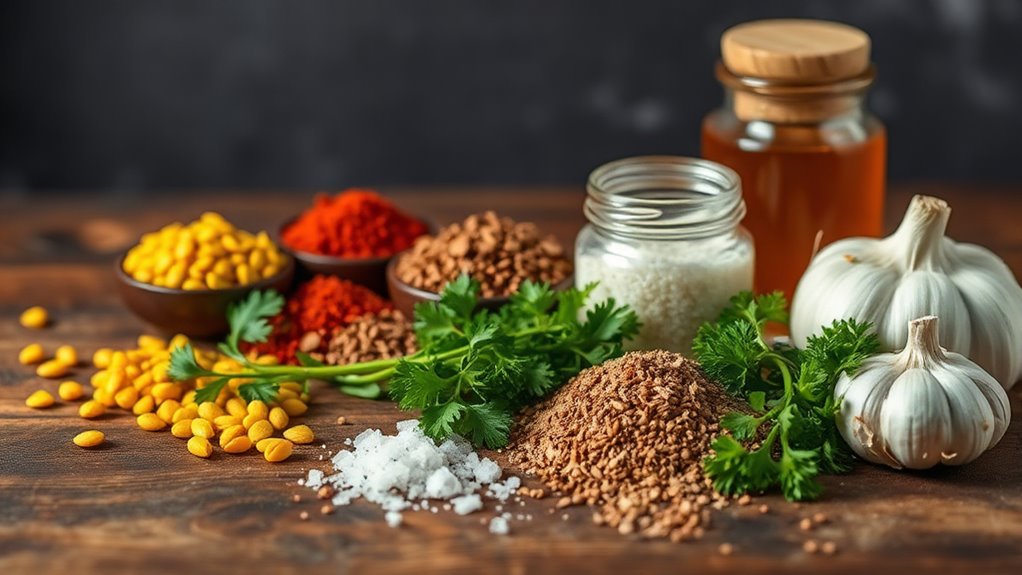
You’ll want coarse kosher salt and a mix of whole and cracked black pepper for seasoning depth. Add caraway seeds for warm earthy notes and a pinch of allspice for subtle sweetness. Bay leaves bring mild bitterness, while marjoram adds fresh brightness.
Sweet paprika colors and sweetens without heat. Garlic and German mustard balance flavors, complemented by dark beer and beef broth in your marinade for richness. A touch of tomato paste finishes sauces beautifully.
Explore more to master the full Bavarian flavor profile. This blend of spices and ingredients captures the essence of traditional Bavarian seasoning, perfect for adding authentic taste to your dishes.
Key Takeaways
- Use caraway seeds and allspice for warm, anise-like and peppery-sweet depth typical of Bavarian flavors. They really bring that authentic touch you want in your seasoning.
- Incorporate bay leaves early for mild floral bitterness and marjoram late for sweet, piney brightness. These herbs balance each other nicely, making the flavor profile more complex.
- Add sweet paprika and German-style mustard to enrich color, tang, and savory backbone in rubs and sauces. They give your dish that signature Bavarian punch.
- Combine dark beer and beef broth as liquid bases to impart malty sweetness and umami richness. This combo really enhances the overall savoriness.
- Include garlic, whole peppercorns, and a splash of wine vinegar or red wine to balance and brighten seasoning. These little extras help round out the flavors perfectly.
Essential Salt and Pepper Components
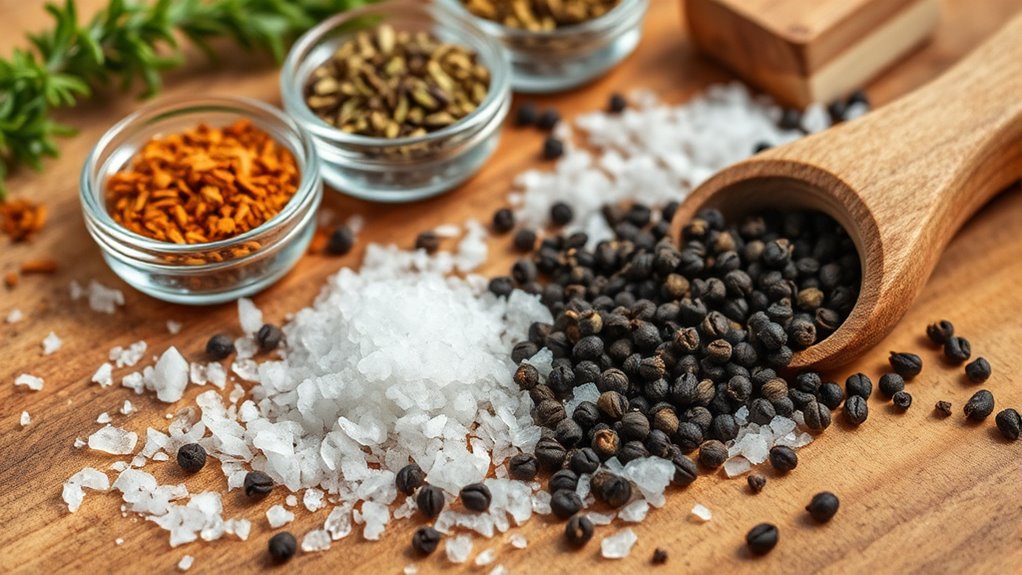
Although salt and pepper might seem simple, they form the backbone of Bavarian seasoning. You’ll want to use coarse kosher or sea salt liberally—about 1 to 1.5% of the meat’s weight—to make certain the seasoning penetrates deeply, especially on roasts.
Coarse kosher or sea salt, used generously at 1 to 1.5% of meat weight, ensures deep seasoning in roasts.
Whole black peppercorns, around 8 to 10 per liter of marinade or large roast, add robust flavor. Meanwhile, freshly cracked black pepper brightens pan sauces with pungent heat.
For finer dishes like dumplings and sauces, white pepper delivers a milder, earthy warmth without dark specks. Combining crushed and whole peppercorns gives your dish layered flavor and visual contrast.
Finally, a light sprinkle of coarse salt just before serving enhances crusts and balances rich gravies without over-salting. It’s the perfect touch to finish your Bavarian meal.
The Role of Caraway Seeds and Allspice
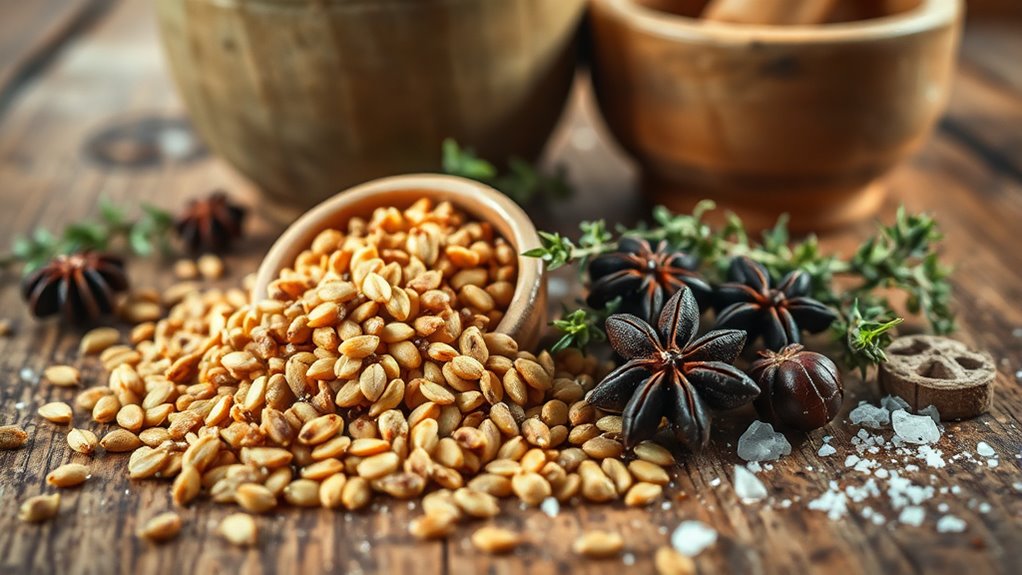
You’ll find caraway seeds bring a warm, slightly citrusy aroma that brightens rich dishes without overpowering them.
Allspice adds a subtle peppery-sweet depth, enhancing the overall complexity with hints of cloves and cinnamon.
Using both carefully helps balance and elevate classic Bavarian flavors in meats and sauces.
Flavor Profile of Caraway
Caraway seeds bring a distinctive warm, anise-like aroma with subtle citrus and earthy pepper notes that brighten rich Bavarian dishes like pork and cabbage. You’ll find caraway used both whole and ground: whole seeds add texture and release flavor slowly during long braises, while ground caraway seasons dumplings and sausages more evenly.
Use about 0.5 to 1 teaspoon per kilogram of meat or roast. Be cautious not to overdo it—too much can give a medicinal edge. Caraway’s bitterness and citrus lift balance savory richness brilliantly, especially in hearty recipes.
When paired with allspice, it creates a complementary flavor harmony, but for now, focus on caraway’s unique, warming profile that enhances classic Bavarian cooking without overwhelming your palate.
Allspice Usage Benefits
Pairing caraway with allspice elevates Bavarian dishes by combining their unique flavor strengths. Caraway seeds bring a savory, anisey-earthy note with a mild citrus finish that brightens fatty meats like Schweinebraten and complements cabbage perfectly.
Allspice adds warm, clove-like hints with cinnamon and nutmeg undertones, rounding out roasts and dumpling seasonings without overpowering. Using about 1–2 teaspoons of caraway and a pinch (¼–½ teaspoon) of ground allspice per kilogram balances tangy lift with rich depth.
Toasting caraway seeds before grinding intensifies their aroma, while grinding fresh allspice preserves its volatile oils. Together, they form the backbone of classic spice rubs, pickling mixes, and gravies.
This combo creates authentic, well-rounded Bavarian flavors that you’ll want to master. It’s really the secret to bringing those dishes to life!
Bay Leaves and Marjoram for Herbal Depth
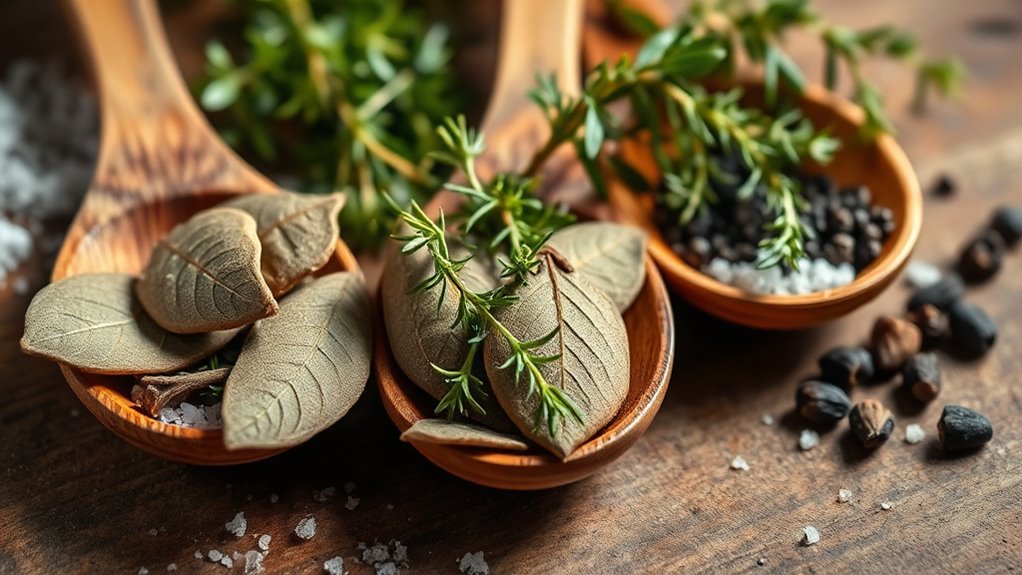
You’ll notice bay leaves bring a mild floral bitterness that adds warmth, while marjoram offers a sweet, piney brightness to your dish. Using them together balances rich gravies and meats without overwhelming the flavors.
Keep bay leaves in from the start to infuse, and add marjoram near the end to keep its fresh aroma intact. It’s a simple trick that really lifts your cooking. Give it a try next time you’re making something hearty!
Aromatic Qualities Comparison
Although bay leaves and marjoram bring distinct herbal qualities to Bavarian dishes, understanding their aromatic profiles helps you balance savory depth with bright sweetness. Bay leaves offer a subtle, floral-balsamic aroma dominated by cineole and eugenol, giving your long braises a resinous, savory weight without overpowering.
In contrast, marjoram delivers a warm, sweet-herb note rich in terpineol and linalool, which lightens rich pork and veal dishes and complements caraway beautifully. Since bay leaf flavors develop slowly, add them early in cooking, while marjoram’s more volatile aroma shines best when added in the last 15–30 minutes or as a finishing touch.
Use a 2:1 or 3:1 bay leaf to marjoram ratio by weight to achieve a classic, balanced Bavarian herbal backbone. It’s all about layering those flavors just right to get that perfect savory and sweet harmony in your dish.
Culinary Uses and Benefits
Balancing the floral bitterness of bay leaves with the sweet warmth of marjoram brings more than just aroma to your Bavarian dishes—it shapes their overall flavor and cooking experience.
Add 1–3 whole bay leaves per kilogram of meat or per 1–2 liters of braising liquid early on to infuse a subtle, tea-like bitterness that brightens rich meats and sauces.
Use 1–2 teaspoons dried or 1–2 tablespoons fresh marjoram per kilogram of meat, but add it later in cooking or as a fresh garnish to preserve its warm, sweet aroma.
Together, they create herbal depth that enhances beef, pork, game, and cabbage dishes.
Their volatile oils not only flavor but may aid digestion, making them both tasty and beneficial.
Paprika’s Contribution to Color and Flavor
Paprika often plays a pivotal role in giving Bavarian sauces like Zwiebelrostbraten and Schweinebraten their signature deep red color without adding heat. When you add 1–2 teaspoons of sweet paprika per 500 g of sauce, it brightens the dish visually while enhancing flavor.
Sprinkling paprika into the pan before deglazing helps caramelize its natural sugars, enriching the savory depth and thickening gravies. If you want subtle smoky or piquant notes, try adding 1/4–1/2 teaspoon of smoked or hot paprika, but use it sparingly to keep the classic Bavarian profile.
Always choose high-quality Hungarian or Spanish paprika for vibrant color and fresh taste. Pair it with caraway, marjoram, bay leaf, and tomato paste to balance sweetness and anchor the seasoning’s rustic charm.
Garlic, Mustard, and Sweet Balancing Agents
Enhance your Bavarian dishes by carefully blending garlic, mustard, and sweet elements to create a harmonious flavor profile. Use 1–2 cloves of garlic per 500–700 g of meat to add savory depth without overshadowing caraway and mustard.
Incorporate 1–2 tablespoons of robust German-style mustard per kilogram of meat or 300–400 ml sauce for a tangy backbone and to help bind rubs or glazes. Balance mustard’s sharpness with a teaspoon of sugar, a tablespoon of honey, or a small splash of dark beer or sweet red wine.
For braises and gravies, combine these with 50–150 ml of vinegar or wine to cut richness while preserving savoriness. When seasoning dumplings or meatballs, use preserved mustard or brine sparingly with a pinch of sugar or pickle brine to subtly lift flavors.
Using Dark Beer and Beef Broth in Marinades
To build on the flavors of garlic, mustard, and sweet elements, try using dark beer and beef broth in your marinades. Combine them in a 1:1 ratio—about 1 to 1.5 cups each per 4–5 lbs of meat—for malty sweetness, roasted barley notes, and umami richness that tenderize and flavor red meats deeply.
Add red wine or vinegar to break down connective tissue without overpowering the malt character. Include bay leaves, juniper berries, peppercorns, and cloves to enhance aroma.
Marinate your beef for 6 to 24 hours, then simmer the marinade before using it as a sauce. It’s a simple step but really brings all those flavors together beautifully.
| Ingredient | Emotional Impact |
|---|---|
| Dark Beer | Deep, comforting |
| Beef Broth | Rich, hearty |
| Red Wine Vinegar | Tangy, invigorating |
| Aromatics | Warm, nostalgic |
| Slow Marination | Patient, rewarding |
Enhancing Sauces With Tomato Paste
Bring out the deepest flavors in your sauces by stirring in a tablespoon of tomato paste early on. Cook it in hot fat for 1–2 minutes until it darkens slightly. This step eliminates rawness and adds caramelized, savory notes that enrich your sauce.
Use 1–2 teaspoons per cup of sauce as a guideline. You can add more for stronger color and body, but balance it with stock or wine to prevent excess sweetness.
For extra depth, combine tomato paste with a splash of red wine or beer. Reduce this mixture briefly before adding broth or cream.
When working with mushroom or pan-juice-based sauces, tomato paste enhances Maillard flavors. It also helps thicken and gloss the sauce when finished with butter or cream.
Frequently Asked Questions
What Flavor Is Bavarian?
You’ll find Bavarian flavor rich, savory, earthy, and mildly sweet, blending aromatics like onions, garlic, and root veggies with spices such as caraway and bay leaf.
It’s rounded by creamy, tangy, and slightly caramelized notes for depth. Makes for a really comforting and balanced taste!
Can You Give Me a Recipe for German Green Beans?
You’ll blanch 500g green beans, then sauté with diced onion and butter. Add bacon for smoky depth, splash broth to steam, finish with vinegar, toasted almonds, parsley, and a pinch of nutmeg.
Delicious side! It’s really easy to make, and tastes great with just about any main dish. Give it a try!
What Is a Typical Bavarian Dish?
You’ll love Schweinebraten, a roast pork shoulder with crispy skin, served alongside potato dumplings and sauerkraut.
It’s hearty, flavorful, and finished with a rich gravy made from beer and aromatic spices.
This dish really captures the essence of Bavarian cooking, don’t you think? It’s the kind of meal that sticks with you—in a good way!
How Do I Make Bavarian Seasoning?
Don’t worry about complexity; just mix caraway seeds, marjoram, bay leaves, and coarse salt.
Add crushed white pepper, paprika, and garlic powder for warmth.
Use mustard and dark beer to build flavor and carry the spices.
Conclusion
So, you’ve gathered your salt, pepper, caraway, and allspice like a seasoning superhero assembling a spice squad. Toss in bay leaves and marjoram for that herbal power-up, paprika for a fiery cape, and garlic with mustard as your trusty sidekicks.
Don’t forget dark beer and beef broth—because even heroes need a little liquid courage. Finally, a dollop of tomato paste seals the deal, turning your Bavarian seasoning into a flavor blockbuster worthy of a standing ovation!
When it comes to making the perfect Bavarian seasoning, the magic lies in balancing these key ingredients. Salt and pepper provide the essential base, while caraway and allspice add that distinctive Bavarian twist. Herbs like bay leaves and marjoram bring depth, and paprika introduces a subtle smoky heat.
Garlic and mustard punch up the flavor profile, complemented by the richness of dark beer and beef broth. The tomato paste rounds it all out, giving your seasoning a rich, savory finish. Together, these ingredients create the authentic taste that defines the best Bavarian seasoning recipes.