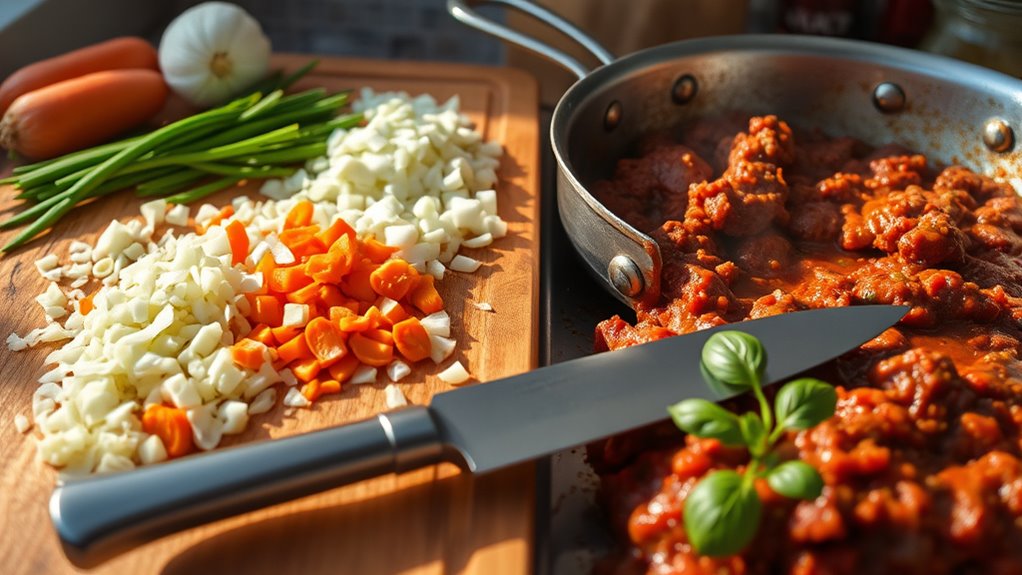
How to Make Anne Burrell’s Bolognese Recipe
To make Anne Burrell’s Bolognese, start with high-quality ground beef and pork for the best flavor.
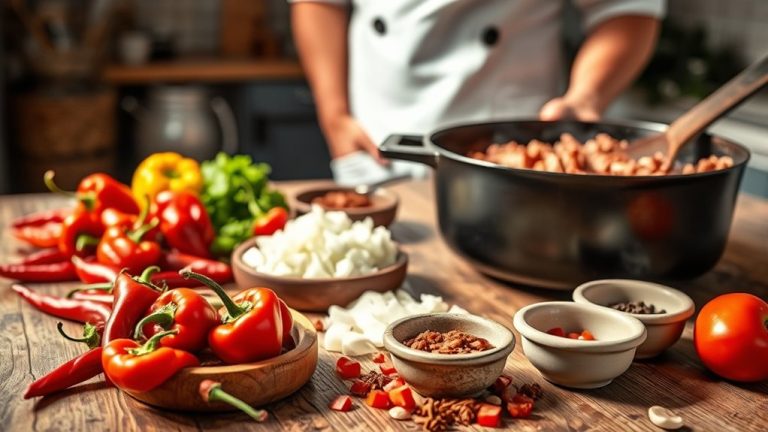
Sauté finely chopped onions, carrots, and celery until they’re soft and fragrant.
Then, add minced garlic along with the ground meat, browning it well to lock in those rich flavors.
Next, stir in tomatoes and a splash of red wine, letting everything simmer gently for 1-2 hours. This slow cooking really brings out the depth of the sauce.
Finally, finish with a touch of cream or milk to add richness and smoothness.
Don’t forget to taste and adjust the seasoning as needed.
Want to explore essential tips and common pitfalls? There’s more to discover!
Key Takeaways
- Use a mix of high-quality ground beef and pork for rich flavor, and consider adding veal or pancetta for depth.
- Sauté a soffritto of finely chopped onions, carrots, and celery until soft before adding minced garlic.
- Combine San Marzano and fresh tomatoes with a splash of robust red wine for a balanced sauce.
- Simmer the sauce for at least 1-2 hours, adjusting seasoning and acidity as needed for optimal flavor.
- Finish with cream or milk for a velvety texture and ensure the sauce reaches 165°F for food safety.
The Essential Ingredients for Bolognese Sauce
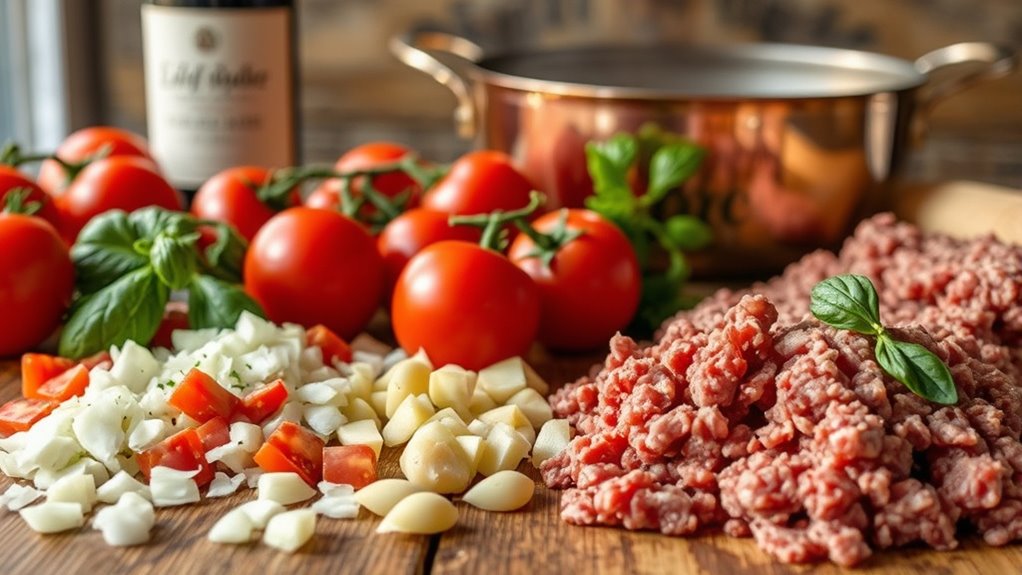
When crafting the perfect Bolognese sauce, quality ingredients are key. You’ll want to start with essential ingredients like high-quality meat—ground beef and/or pork are ideal.
Fresh vegetables, including onions, carrots, and celery, add depth, while garlic and tomatoes provide that rich flavor you crave.
A splash of red wine enhances the sauce, helping to deglaze the pan and incorporate all those tasty browned bits.
Don’t forget the milk or cream; adding it towards the end mellows the acidity of the tomatoes and results in a velvety texture.
Step-by-Step Guide to Sautéing the Base
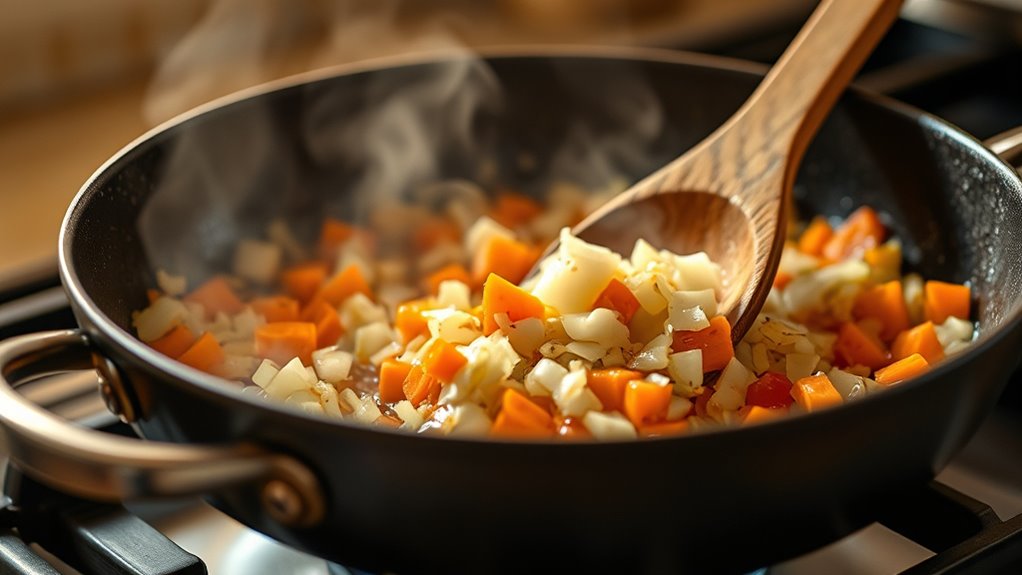
To create a flavorful foundation for your Bolognese sauce, start by heating olive oil in a large pot over medium heat until it shimmers. Next, add finely chopped onions, carrots, and celery. Sauté them for about 10-15 minutes until they’re soft and translucent.
This aromatic base is key to your sauce’s depth. Once your vegetables are ready, incorporate minced garlic and cook for an additional 1-2 minutes. This allows it to become fragrant without burning.
This step prevents bitterness in your dish. After that, pour in your chosen ground meat and brown it thoroughly, breaking it up with a wooden spoon. The sautéing process builds an incredible layer of flavor, setting the stage for the delicious Bolognese ahead.
Choosing the Right Meats for Depth of Flavor
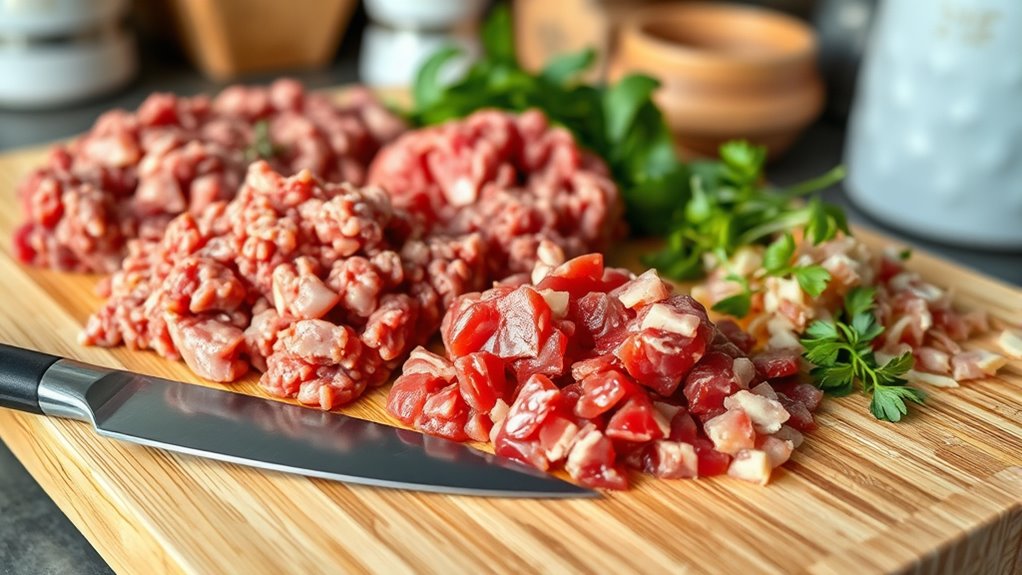
Choosing the right meats is essential for crafting a rich and flavorful Bolognese sauce. Start with a mix of ground beef and pork for balanced richness and depth of flavor.
Adding veal or pancetta can further elevate the taste and texture. Always opt for high-quality ingredients, as the freshness of the meat directly impacts your sauce.
Here’s a quick guide to meat selection:
| Meat Type | Flavor Profile |
|---|---|
| Ground Beef | Rich and hearty |
| Ground Pork | Slightly sweet, fatty |
| Veal | Delicate, tender |
| Pancetta | Savory, salty |
| Mixed Combo | Complex and satisfying |
Browning the meat thoroughly will also enhance the overall flavor depth, thanks to the Maillard reaction.
It’s a simple step that makes a big difference. Enjoy the process!
Add Tomatoes and Wine for Extra Flavor
To elevate your Bolognese, adding tomatoes and wine is key. Combining San Marzano and fresh tomatoes balances sweetness and acidity, creating a rich sauce.
Don’t forget to incorporate a robust red wine to deepen the flavor profile even further. It really makes a difference you’ll notice in every bite.
Enhance Flavor Profiles
As you enhance the flavor profiles of your Bolognese, adding tomatoes and wine can elevate the dish considerably. Start by incorporating crushed tomatoes or tomato paste, which adds acidity and depth, balancing the richness of the meat.
Next, choose a robust red wine, like Chianti or Sangiovese, to introduce complexity and a hint of sweetness. Let the wine reduce fully before adding other ingredients. This way, the alcohol cooks off while enriching the sauce’s flavor.
For an extra layer, toss in a bay leaf or fresh herbs such as thyme or rosemary during the simmering process. And don’t forget to taste and adjust the seasoning with salt and pepper.
That way, you’ll create a well-rounded, flavorful Bolognese that you’ll love.
Balance Acidity and Sweetness
How can you achieve the perfect balance of acidity and sweetness in your Bolognese? Start by adding crushed San Marzano tomatoes. They bring a bright acidity while their natural sweetness enhances the sauce.
A splash of red wine deepens the flavor, helping to balance the sweetness from the tomatoes. After adding these ingredients, let the sauce simmer longer. This melds the flavors and reduces excess acidity.
Taste frequently—if the acidity feels too sharp, a pinch of sugar can bring everything into harmony. By carefully adjusting these elements, you’ll create a rich, well-rounded Bolognese that’s bursting with flavor and perfectly balanced.
Enjoy the process, and don’t hesitate to tweak it to suit your taste!
Why Simmering Matters: Timing and Techniques?
Simmering plays an essential role in crafting a memorable bolognese sauce because it allows the flavors to meld and deepen over time. By gently cooking for at least 1 to 2 hours, you break down the meat and vegetables, resulting in a tender, cohesive sauce.
Using the right techniques, like stirring regularly, helps prevent sticking and guarantees even flavor distribution. As excess moisture evaporates, the sauce thickens and its flavors concentrate, enhancing the overall taste.
Simmering also allows aromatic ingredients, such as herbs and spices, to integrate gradually, creating a well-balanced dish. This patient process is key to achieving that rich, deep flavor you crave in a classic bolognese.
How to Balance Flavors in Your Bolognese
Balancing flavors in your bolognese is essential to achieving that rich, satisfying taste everyone craves. Start with finely chopped onions, carrots, and garlic, letting them caramelize to enhance sweetness.
Mix ground beef and pork, browning them well for added complexity. After that, deglaze the pan with a splash of red wine, incorporating those flavorful bits and adding acidity.
Stir in crushed tomatoes and let your sauce simmer for at least an hour; this melds the flavors beautifully. The longer you simmer, the richer the sauce becomes.
Finally, finish with a touch of cream or milk to round out the acidity and add a velvety texture, ensuring your bolognese is perfectly balanced. Easy, right?
Bolognese Serving Suggestions: Best Pasta Pairings
When it comes to serving Bolognese, pairing it with the right pasta can really take your dish to the next level. Wide noodles like pappardelle are perfect because their surface holds the sauce beautifully.
Tagliatelle is another great choice. Its flat shape means every bite gets coated in that rich, meaty sauce.
If you want something a bit heartier, rigatoni is the way to go. The ridges and hollow center are perfect for catching those delicious chunks of meat and sauce.
Feeling adventurous? Freshly made fettuccine adds a tender texture that pairs wonderfully with the robust flavors of Bolognese.
And don’t forget the finishing touch—a generous sprinkle of freshly grated Parmigiano-Reggiano. It adds creaminess and umami that’ll make your Bolognese experience truly unforgettable.
Enjoy your meal!
Storing and Reheating Your Bolognese
Once you’ve enjoyed your Bolognese, proper storage is key to keeping it fresh. You can easily store it in the fridge or freeze it for later use.
When it’s time to reheat, gentle methods will help maintain its delicious flavors. Just take your time warming it up, and it’ll taste just as good as when you first made it.
Best Storage Practices
Proper storage is key to keeping your bolognese sauce fresh and flavorful. First, let your sauce cool completely before transferring it to an airtight container. This prevents moisture buildup, which can compromise freshness.
You can refrigerate the sauce for up to 3-4 days, or for long-term preservation, freeze it for up to 3 months. Always label your containers with the date to track freshness and guarantee you use the sauce within safe timeframes.
If you plan to enjoy it later, these storage practices will help maintain its rich flavors. With the right approach, your bolognese will be ready to delight your taste buds whenever you’re in the mood for a comforting dish.
Reheating Methods Explained
After you’ve stored your bolognese sauce with care, it’s time to think about how to reheat it properly. You can use a saucepan over low to medium heat, gently warming the sauce while stirring occasionally to prevent sticking.
If you prefer the microwave, transfer the bolognese into a microwave-safe dish, cover it loosely, and heat in 30-second intervals. Stir in between for even warming.
If your sauce thickens during storage, just add a splash of water or broth while reheating. Always verify that your bolognese sauce reaches an internal temperature of 165°F (74°C) for food safety. This way, you’ll enjoy a delicious meal that’s both safe and satisfying!
Common Mistakes to Avoid With Bolognese Sauce
When making Bolognese sauce, it’s easy to overlook key elements that can make or break your dish. First, don’t rush the process; let your sauce simmer slowly for at least two hours to develop rich flavors.
Skipping the soffritto—onion, carrot, and celery—is a mistake. It’s the backbone of your sauce, adding essential depth.
Be careful with liquid; adding too much broth or wine can dilute the sauce’s intensity. Also, make sure you brown the meat properly. Undercooked or steamed meat won’t deliver the flavor you want, so let it caramelize well.
Finally, resist the urge to stir constantly. Allowing the sauce to sit undisturbed enhances flavor concentration and texture.
Avoiding these pitfalls will elevate your Bolognese sauce to new heights!
Frequently Asked Questions
Can I Use Ground Turkey Instead of Beef and Pork?
Yes, you can use ground turkey instead of beef and pork. Just keep in mind that turkey has a milder flavor, so you might want to adjust your seasonings to enhance the dish’s richness.
It’s really not a big deal, but a little extra seasoning can go a long way. Feel free to experiment until you get the taste just right!
How Long Can I Store Leftover Bolognese Sauce?
You can store leftover bolognese sauce in the fridge for about three to four days. Picture that rich, savory sauce bubbling gently.
It’ll still taste fantastic when you heat it up for a quick meal! Just make sure to keep it covered so it stays fresh.
What Type of Red Wine Is Best for Bolognese?
A medium-bodied red wine like Chianti or Sangiovese works best for Bolognese. Their acidity and fruitiness enhance the sauce’s flavors, making your dish richer and more complex.
Don’t skimp on quality! It really makes a difference in the final taste.
Can I Make Bolognese Sauce in a Slow Cooker?
Yes, you can make Bolognese sauce in a slow cooker. Just brown the meat first, then combine all ingredients in the cooker.
Let it simmer for several hours, allowing the flavors to develop beautifully. It’s super easy and the slow cooking really brings out the taste.
Is It Necessary to Use Milk in the Recipe?
No, it isn’t necessary to use milk in the recipe. However, adding it can enhance creaminess and flavor. It also helps balance the acidity of tomatoes.
If you prefer, feel free to skip it entirely! It’s totally up to your taste and what you have on hand.
Conclusion
In the grand tapestry of culinary delights, crafting Anne Burrell’s Bolognese is a warm embrace for your taste buds. As you simmer and stir, remember that patience is your ally, transforming simple ingredients into a comforting masterpiece.
Let the rich aromas fill your kitchen, inviting everyone to gather ’round. So, roll up your sleeves, savor the experience, and enjoy the luscious flavors that dance on your palate.
Your Bolognese journey is sure to be a heartwarming success! With Anne Burrell’s Bolognese recipe, you’re not just making a meal—you’re creating a delicious tradition. The slow cooking process melds hearty meat, fresh herbs, and tangy tomatoes into a sauce that’s rich and satisfying. Whether it’s a weeknight dinner or a special occasion, this recipe promises a comforting and flavorful experience that will have everyone asking for seconds. Get ready to enjoy every bite of this classic Italian dish that brings warmth and joy to your table.