Aku Recipe in 7 Simple Steps for Perfect Flavor
Choose fresh aku with bright eyes and firm flesh, then cut into 150–200 g portions using a sharp knife. Scoring the skin is key to getting that crispy texture we all love.
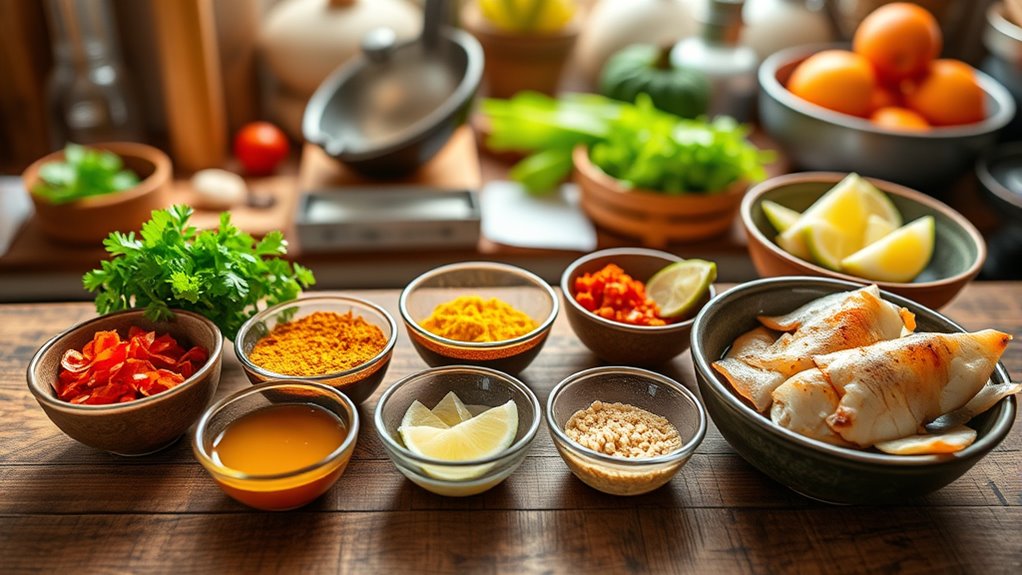
Season simply with smoked paprika, salt, pepper, and a squeeze of lime. These flavors really bring out the best in aku without overpowering it.
Next, sear the skin-side down until it’s nice and crispy. Add some aromatics for extra flavor, and deglaze with stock to keep the fish moist.
Finish by baking or parcel-cooking to lock in all those delicious juices. Let the aku rest briefly before serving—that’s the secret to juicy, perfectly cooked fish every time.
Follow these easy steps, and you’ll reveal perfectly flavorful aku with minimal fuss. Trust me, once you try this method, you’ll want to make aku this way every time!
Key Takeaways
- Select fresh aku with bright eyes, shiny skin, and firm flesh for optimal flavor and texture.
- Score the skin, season with smoked paprika, salt, pepper, and fresh citrus juice to enhance smoky umami.
- Sear skin-side down in hot oil until crisp and golden. Then, briefly flip to finish cooking.
- Add aromatics and deglaze the pan with stock or palm wine to create a rich, flavorful sauce.
- Rest cooked aku fillets 3–5 minutes loosely covered. This helps retain juiciness before serving.
Choose Fresh Aku With Bright Eyes and Firm Flesh
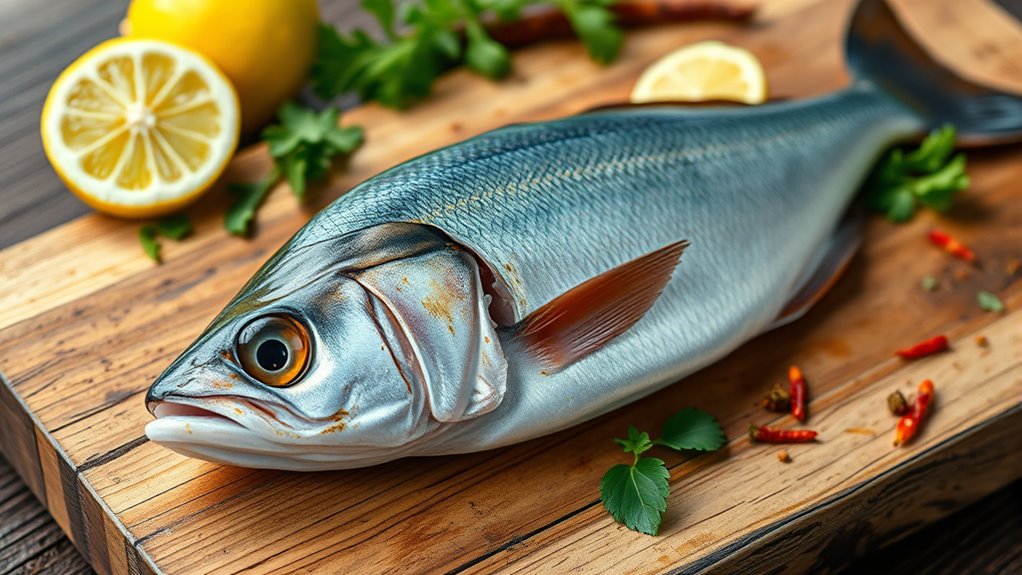
Start by selecting fresh aku with bright, clear eyes and shiny skin—these signs indicate peak freshness. Avoid fish with dull eyes or a milky film, as they’ve likely passed their prime.
Choose fresh aku with bright eyes and shiny skin for the best quality, avoiding dull or milky-eyed fish.
Gently press the flesh; fresh aku feels firm and springs back quickly without leaving an indent. If you’re buying whole fish, check the gills—they should be bright red or pink, not brown or gray.
Take a quick sniff near the belly; fresh aku smells clean and ocean-like, never strong or ammonia-like. When opting for frozen aku, choose individually quick frozen (IQF) fillets with no freezer burn.
Properly thawed, these fillets should have a solid, even texture. Following these tips guarantees you start your recipe with the best aku possible.
How to Cut Aku Into Perfect Portions
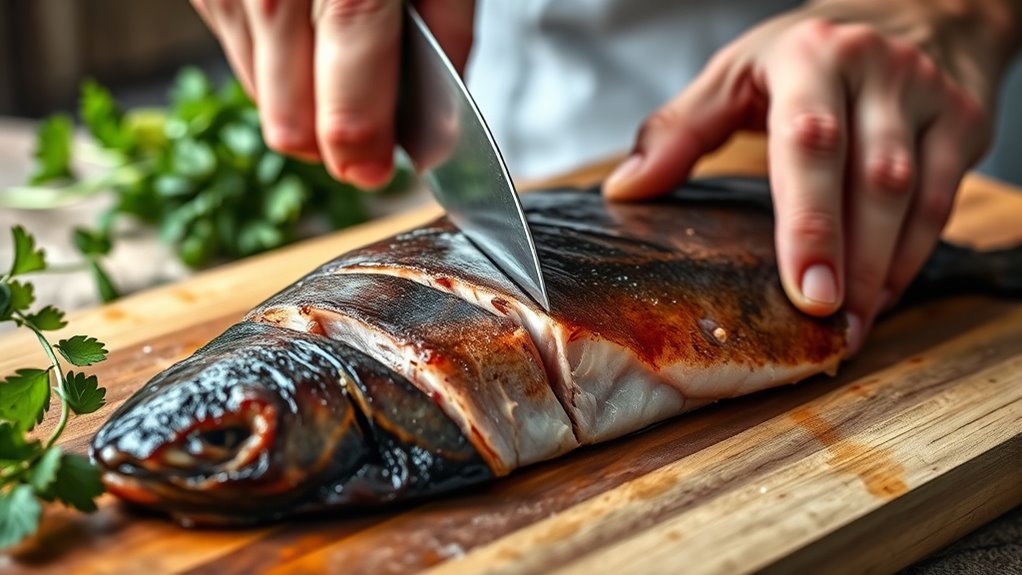
To cut aku into perfect portions, start with a sharp, flexible fillet knife for clean, precise cuts. Aim for 150–200 grams per piece to guarantee even cooking and easy serving.
Keeping your portions uniform really helps the flavors develop consistently throughout your dish. It just makes everything taste better and look nicer on the plate.
Choosing The Right Knife
Although aku’s firm, oily flesh might seem challenging to cut, using the right knife makes all the difference in achieving perfect portions. A long, sharp fillet or chef’s knife (20–25 cm blade) lets you slice cleanly without tearing.
Keep it sharp and lightly oiled to stop the skin from sticking and to get smooth, even cuts. Follow up with a small boning knife (12–15 cm) to remove pin bones and the dark bloodline for a tidier presentation.
Here’s what you should keep in mind:
- Use a sharp fillet or chef’s knife for clean cuts
- Oil the blade slightly to prevent sticking
- Cut perpendicular to the spine for uniform thickness
- Remove head and tail before filleting
- Use a boning knife to trim bones and bloodline
Portion Size Guidelines
When preparing aku for serving, aim for portions of 150–200 grams (about 5–7 ounces) per person. This usually corresponds to one standard fillet or half of a small to medium whole fish.
To portion aku evenly, cut across the grain into 1–1.5 inch (2.5–4 cm) thick steaks or fillet slices. This ensures each piece cooks uniformly and is easy to eat.
If working from a whole aku, remove the head and tail, split down the backbone, and trim rib bones to get two boneless fillets before slicing. Prefer bone-in steaks? Just slice perpendicular to the spine into 1–1.5 inch rounds that include the central bone for added flavor.
For bigger appetites or minimal sides, serve larger 250–300 g portions. Easy and satisfying!
Season Aku Simply to Enhance Natural Flavor
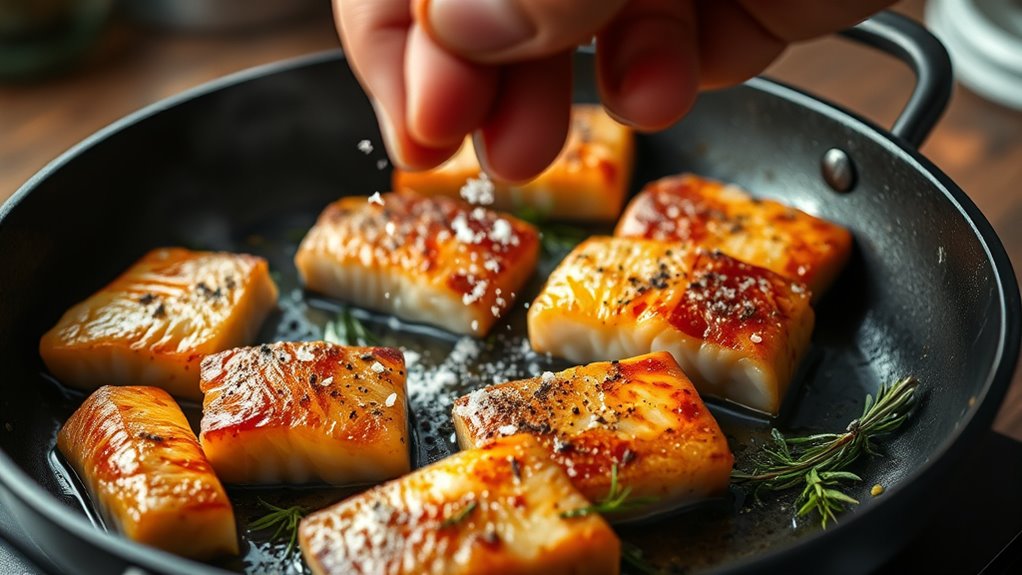
Since aku’s rich, smoky flavor is its star, you’ll want to season it in a way that enhances rather than overwhelms. Start by rinsing the aku under cold water, patting it dry, and scoring the skin to help seasonings soak in and prevent curling.
Aku’s smoky richness shines best when gently seasoned, starting with a rinse, dry, and skin scoring for perfect flavor absorption.
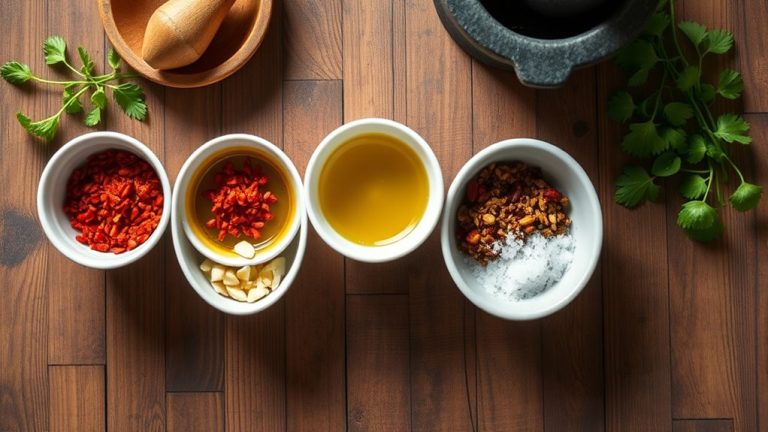
Then, lightly rub a blend of ground crayfish or smoked paprika, salt, and black pepper to boost the smoky umami. Before cooking, squeeze fresh lime or lemon juice over the fillets to brighten flavors and improve seasoning adhesion.
For added richness, brush on palm or neutral oil infused with garlic and a touch of scotch bonnet. Finally, after cooking, sprinkle chopped scent leaves or cilantro and toasted ground pepper for fresh herbal contrast.
- Rinse and score skin
- Rub with crayfish, salt, pepper
- Squeeze fresh citrus juice
- Brush with garlic-infused oil
- Garnish with fresh herbs and toasted pepper
Sear Aku Skin-Side Down for Crispy Texture
Score the aku skin in a crosshatch pattern and pat it dry to make sure it crisps perfectly when searing. Lightly salt the skin to prevent curling and help render fat.
Let the fish rest at room temperature for 10–15 minutes. Heat a heavy skillet over medium-high heat until shimmering, add high smoke point oil, and place the fish skin-side down.
Press gently for 20–30 seconds, then cook for 3–5 minutes until the skin is deep golden and crisp. Flip briefly, 20–60 seconds, to finish cooking the flesh without losing moisture.
| Step | Action | Result |
|---|---|---|
| Score skin | Crosshatch and salt | Prevents curling |
| Dry & rest | Pat dry, rest 10–15 mins | Even searing |
| Heat skillet | Medium-high, add oil | Perfect sear |
| Press & cook | Press 20-30s, cook 3-5 mins | Crispy golden skin |
| Flip briefly | 20-60s | Moist, cooked flesh |
Add Aromatics and Deglaze Aku to Keep It Moist
To build rich flavor and keep your aku moist, add a generous mix of aromatics like sliced onions, chopped garlic, diced fresh peppers, and grated ginger as it cooks. After searing the fish until lightly browned, deglaze the pan with hot stock, palm wine, or water to lift the flavorful browned bits.
Toss in acidic aromatics like chopped tomatoes or a splash of lime juice to brighten the dish and balance the oiliness. Reduce the liquid by half to concentrate the flavors, then finish with fresh herbs or green onions off heat.
This method locks in moisture and infuses your aku with delicious layers of taste.
- Sear aku 3–4 minutes per side before adding aromatics
- Use ¼–½ cup hot liquid for deglazing
- Add 1–2 tablespoons chopped tomatoes or 1–2 teaspoons citrus juice
- Simmer liquid until reduced by half
- Stir in fresh herbs off heat and spoon sauce over fish
Finish Cooking Aku by Baking or Wrapping in a Parcel
While searing and deglazing add flavor, finishing your aku by baking or wrapping it in a parcel locks in moisture and guarantees even cooking.
For baking, preheat your oven to 180°C (350°F) and bake fillets on a lined tray for 8–12 minutes until the flesh flakes easily.
To parcel-cook, wrap the aku in banana leaves or parchment with palm oil, onions, tomatoes, pepper, and a splash of stock. Seal tightly and bake for 15–20 minutes.
Check doneness by flaking the flesh with a fork; aim for an internal temperature of 60–63°C (140–145°F).
| Method | Temperature | Time |
|---|---|---|
| Baking | 180°C/350°F | 8–12 minutes |
| Parcel-cooking | 180°C/350°F | 15–20 minutes |
| Internal Temp | 60–63°C | Ready to serve |
Rest Aku Before Serving to Keep It Juicy
Although it’s tempting to serve aku immediately, letting it rest for a few minutes is essential to keep it juicy and tender. Resting allows the juices to redistribute evenly, preventing them from spilling out when you cut.
Resting aku briefly ensures juicy, tender results by allowing juices to redistribute before serving.
Here’s how to do it right:
- Cover aku loosely with foil to trap heat without steaming it.
- Place aku on a warmed plate or in an insulated container to maintain temperature.
- Rest whole aku for 10–12 minutes; fillets or smaller pieces need only 3–5 minutes.
- Remove aku from heat slightly before your target doneness to account for carryover cooking.
- Pat excess moisture away before resting, then baste with reserved sauce or oil to boost shine and flavor.
Following these steps guarantees your aku stays moist and flavorful every time. Give it a try—you’ll notice the difference!
Frequently Asked Questions
What Are Some Different Ways to Prepare Fish?
You can grill, stew, pan-sear, or cook fish in parcels to keep it moist.
Searing oil-rich fish adds a caramelized crust, which is super tasty. Simmering in curry with vegetables gently cooks the fish without it flaking.
What Is a Popular Fish Dish in Hawaii?
Craving something fresh and flavorful? You’ll love poke, a popular Hawaiian dish made from diced raw ahi tuna mixed with soy sauce, seaweed, nuts, and green onions.
Ready to try this delicious, vibrant fish dish yourself? It’s super easy to enjoy and perfect if you want a taste of Hawaii right at home!
How to Prepare Filipino Dried Fish?
You rinse Filipino dried fish briefly to remove salt, then soak it in cool water for 10–30 minutes.
Pat it dry, pan-fry gently in oil until crisp, and serve hot with rice, egg, and dipping sauce.
It’s pretty simple, but soaking helps mellow out the saltiness. Plus, frying it until crisp gives it that perfect texture. Enjoy!
What Is the Best Way to Cook Kahawai?
Oh sure, just overcook kahawai until it’s dry!
But seriously, pan-sear skin-side down for crispiness, then flip until opaque.
Marinate briefly, grill or cook en papillote to keep that firm, oily flesh perfectly moist and tasty.
Conclusion
You’d think cooking aku is tricky, but with these simple steps, it’s almost foolproof. Who knew that searing skin-side down and a little rest could turn this humble fish into a flavor superstar?
So go ahead, skip the complicated recipes—you’ve got all you need right here. Perfectly crispy, juicy aku is just a few steps away, proving sometimes the easiest path really is the best.
Ready to impress? With this easy aku recipe, you’ll get that perfect balance of crispy skin and tender, flavorful flesh every time. Whether you’re a beginner or a seasoned cook, these 7 simple steps make preparing aku straightforward and satisfying. Give it a try and enjoy delicious, restaurant-quality aku right at home!