Top 5 Pans Every Baker and Chef Should Own
You should own a versatile 9×13-inch rectangular baking dish for casseroles and brownies, plus 8- or 9-inch round cake pans for even-layered cakes.
A 9×5-inch loaf pan is essential for breads and meatloaf, while a 9-inch pie plate guarantees perfect crusts.
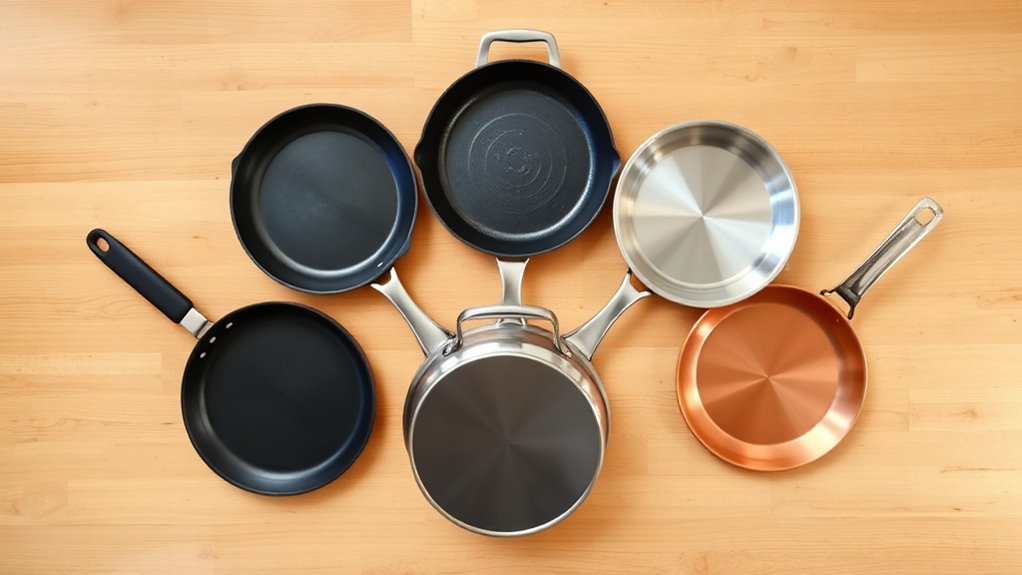
Consider nonstick sets for easy cleanup or cast iron for superior heat retention and versatility.
Keep these five pans ready, and you’ll master countless recipes with ease and precision.
Discover what makes each one indispensable next.
Key Takeaways
- A 9×13-inch rectangular baking dish is essential for versatile uses like casseroles, brownies, and lasagnas. It’s one of those pans you’ll find yourself reaching for again and again.
- Two 8- or 9-inch round cake pans enable baking uniform layered cakes with professional edges. Having a pair means you can bake multiple layers at once and save time.
- A 9×5-inch loaf pan is perfect for bread, meatloaf, and quick breads. It helps promote an even rise and a nice crust every time.
- A 9-inch glass or ceramic pie plate ensures even baking and attractive presentation for pies. Plus, it makes slicing and serving a breeze.
- A heavy-gauge cast iron skillet offers excellent heat retention and versatile stovetop-to-oven cooking. This pan is a true workhorse in any kitchen, perfect for everything from searing to baking.
Versatility of Rectangular Baking Dishes
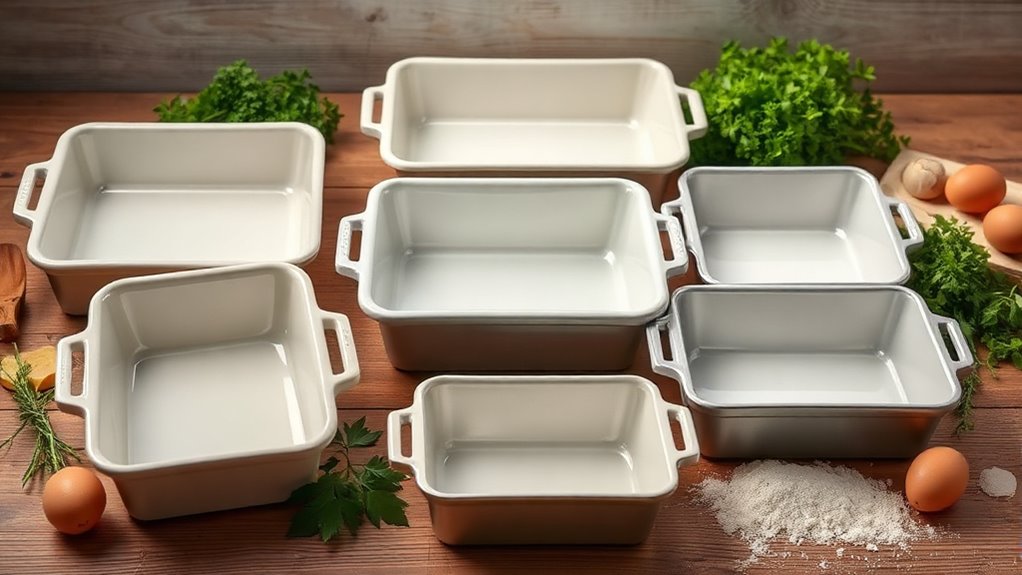
Rectangular baking dishes, especially the popular 9×13-inch size, offer incredible versatility for your kitchen. You can use them for everything from lasagnas and casseroles to brownies and sheet cakes.
The trusty 9×13-inch rectangular baking dish is perfect for everything from savory casseroles to sweet brownies.
While loaf pans handle bread and meatloaf well, the rectangular dish excels in family-size portions and easy slicing. Glass versions like Pyrex help you monitor browning and bake evenly, while metal pans brown faster, perfect for crispier edges.
Look for heavy-gauge steel pans with reinforced edges to avoid warping and improve handling at high oven temperatures. Nonstick coatings make cleanup a breeze, but you’ll want to hand-wash and avoid metal utensils to keep the surface intact.
Smaller rectangular pans are handy for leftovers and transport, rounding out this essential baking tool. They really do cover all the bases in your kitchen!
Advantages of Round Cake Pans
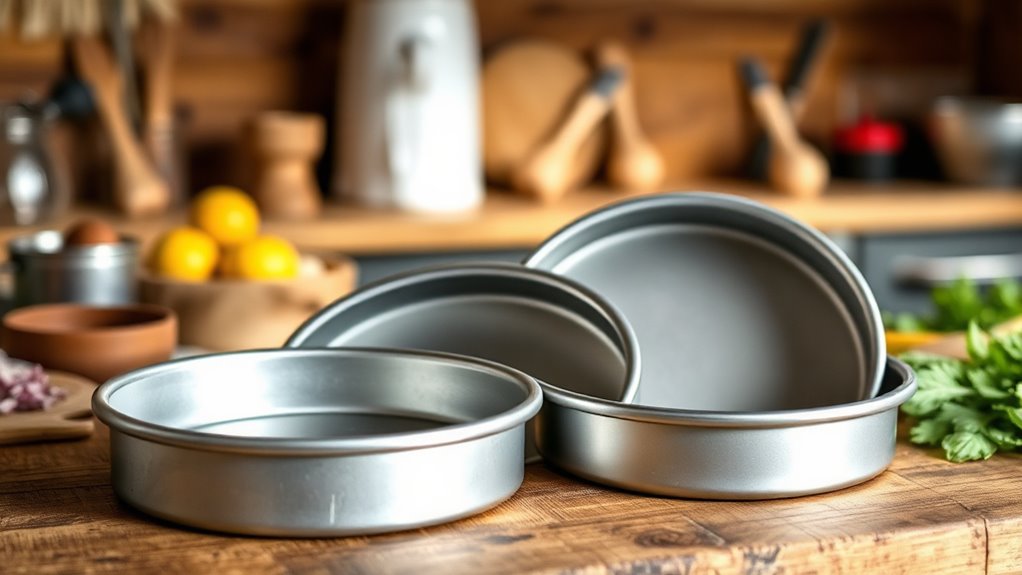
While you might already own a variety of baking pans, round cake pans truly stand out for their ability to create perfectly even layers, especially in 8- or 9-inch sizes. Using two same-sized cake pans helps you bake multiple layers simultaneously, ensuring uniform thickness and consistent oven spring.
Metal pans with right-angled sides give your cakes professional edges, and nonstick coatings make release and cleanup easier. Heavy-gauge metal pans distribute heat evenly and resist warping, making them a reliable choice.
- Bake evenly sized layers for flawless stacking
- Save time by baking multiple layers at once
- Achieve straight, professional-looking edges
- Use for versatile recipes beyond cakes, like quiches or tarts
- Choose heavy-gauge metal for durability and consistent baking
Benefits of Loaf Pans for Baking
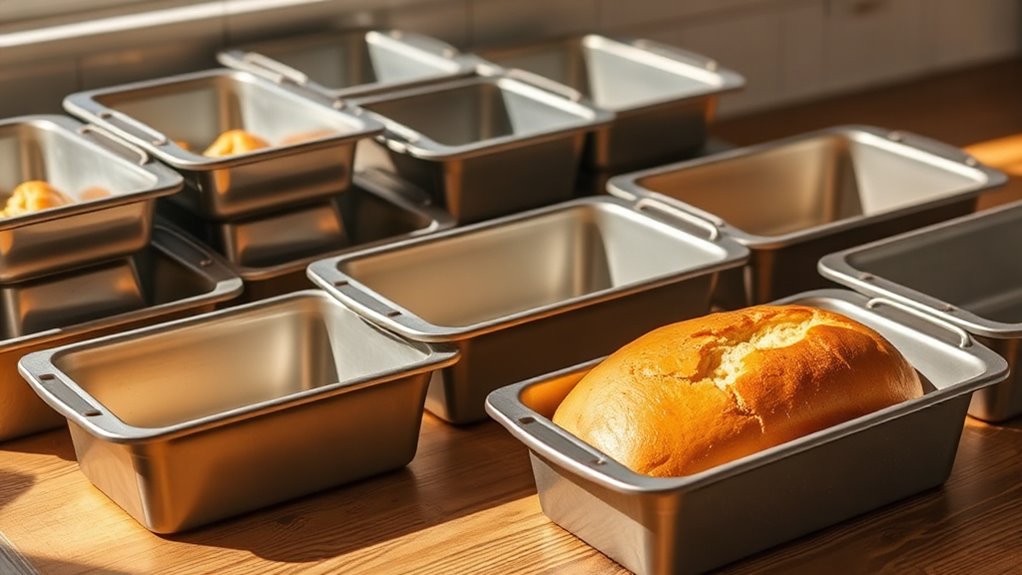
Round cake pans excel at creating uniform, layered cakes, but loaf pans bring their own unique advantages to your baking repertoire.
Standard loaf pans, typically 9×5 or 8½×4½ inches, offer versatility that goes beyond sweet quick breads. You can use a loaf pan for meatloaf, pâtés, terrines, and even semifreddos.
Metal pans are your best bet since they conduct heat quickly, ensuring a better rise and crust compared to glass. Because loaf pans are narrow and deep, they bake from the sides and ends, so expect longer baking times and test doneness with a skewer.
Don’t forget to grease or line your pan with parchment to prevent sticking, especially with sugary batters. This makes it easier to remove your baked goods without damage.
Essential Features of Pie Plates
Choosing the right pie plate can make a big difference in how your crust bakes and how your pie turns out. When selecting pie plates, consider size, material, and depth to match your recipe and baking style.
Standard 9 to 9½-inch plates suit most pies, offering even cooking. Glass pie plates like Pyrex let you watch crust color, while ceramic holds heat well and looks great for serving.
Depth matters too—shallow plates work for single-crust pies, while deeper ones fit rich fillings. Keep these in mind when picking pie plates:
- Diameter between 9 and 9½ inches for even baking
- Glass for heat distribution and visibility
- Ceramic for heat retention and presentation
- Depth from 1 to 2 inches based on pie type
- Oven-safe up to 425–450°F with nonstick or fluted edges for easy release
Comparing Nonstick and Cast Iron Bakeware Sets
If you want bakeware that balances performance with ease, understanding the differences between nonstick and cast iron sets is key. Nonstick baking pans, like those from Circulon and Calphalon, offer lightweight convenience, quick cleanup, and excellent release thanks to PFOA-free coatings.
They’re perfect for delicate cakes and cookies, and many feature design tweaks to prevent warping and improve durability. Cast iron pans, such as Lodge’s, excel in heat retention and even cooking, ideal for casseroles and quiches.
Though heavier and needing seasoning maintenance, they gain nonstick qualities over time and move seamlessly from stovetop to oven. Choose nonstick for dishwasher-friendly, transportable options, but rely on cast iron for lifetime durability and exceptional heat performance in your baking pans.
Frequently Asked Questions
How Do I Properly Season a Cast Iron Pan Before Baking?
You coat your cast iron pan with a thin layer of oil, then bake it upside down at 450°F for an hour.
Let it cool inside the oven to create a non-stick, seasoned surface perfect for baking.
This simple process helps your pan develop a durable, smooth coating that improves with use.
Just remember to use the right oil and clean it gently to keep that seasoning intact!
Can I Use Metal Pans in a Microwave Oven?
You shouldn’t use metal pans in a microwave because they can cause sparks and damage the oven.
Instead, choose microwave-safe glass or ceramic dishes to heat your food safely and evenly without any risk.
It’s a simple swap that keeps your microwave working well and your food tasting great!
What Is the Best Way to Clean Nonstick Bakeware Without Damaging It?
You should clean nonstick bakeware gently with warm, soapy water using a soft sponge. Avoid abrasive scrubbers and harsh detergents to prevent damage.
Let it air dry or wipe it with a soft towel to keep the coating intact. This way, your bakeware stays in great shape for longer!
Are Silicone Baking Molds Safe for High-Temperature Baking?
Silicone baking molds dance through heat like a seasoned performer—they’re safe up to about 428°F. You won’t have to worry about melting or warping, so go ahead and bake your masterpieces with confidence!
They really hold up well under high temperatures, which makes them perfect for all kinds of baking adventures. Just keep in mind not to push them beyond their limits, and you’re good to go!
How Do Different Pan Materials Affect Baking Times and Temperatures?
Different pan materials conduct heat uniquely, so you’ll notice baking times and temperatures vary. Metal pans heat quickly, glass heats slower but holds heat, and silicone requires adjustments.
Always check your recipes and adjust accordingly. It’s a bit of trial and error at first, but you’ll get the hang of it!
Conclusion
Think of your kitchen like a painter’s studio—each pan is a different brush, shaping your culinary masterpiece. Just like a painter wouldn’t limit themselves to one brush, you shouldn’t rely on just one pan.
Whether it’s the sharp edges of a rectangular dish or the cozy curve of a pie plate, having these five essential pans lets you create with ease and confidence.
Invest wisely in the top 5 pans every baker and chef should own, and watch your baking skills truly rise. These pans are the foundation of any great kitchen, helping you bake, roast, and cook with perfect results every time.
With the right pans, your recipes will turn out better, and your kitchen will become a place of creativity and delicious success.