
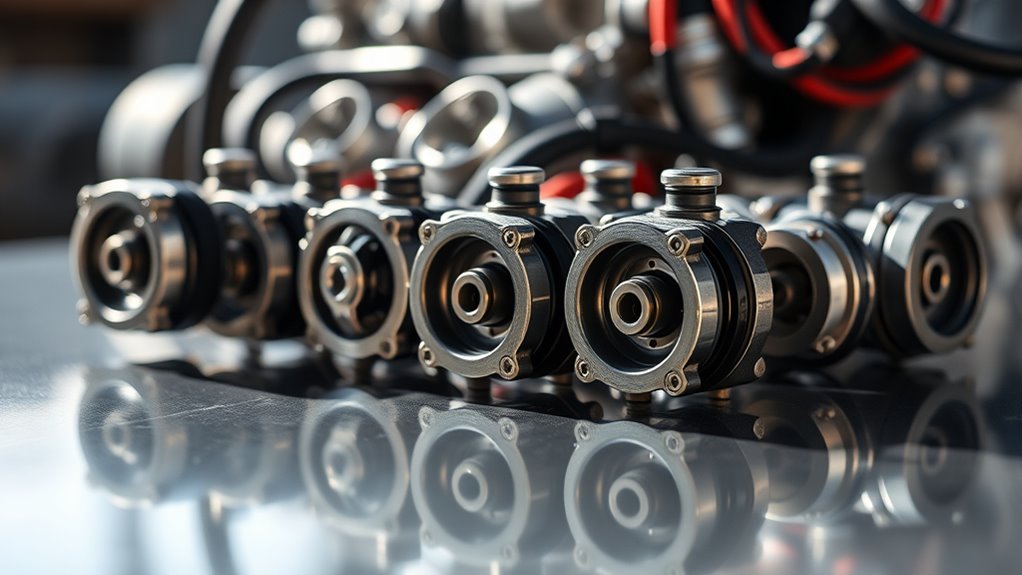
10 Key Components for a 24v Cummins 500 HP Recipe
To hit 500 HP with your 24v Cummins, you need a solid game plan. Start with a fully machined long block, upgraded pistons, and ARP head studs to keep those cylinders strong and reliable. These upgrades are crucial for handling the extra power without risking damage.
Next up, pair that with ported heads and a 62–64 series turbo for killer airflow and boost. A large bar-and-plate intercooler is also a must to keep intake temps low and performance consistent.
Don’t forget the fuel system—upgrade to a high-flow lift pump, a CP3 upgrade, and the right injectors to feed the beast properly. On the exhaust side, mandrel-bent pipes help reduce backpressure and improve flow. Finally, precision tuning ties it all together, making sure your build runs smooth and strong. Keep reading to get the full rundown on what makes this 24v Cummins build a powerhouse.
Key Takeaways
- Fully machined 5.9L 24V long block with upgraded pistons and ARP head studs ensures engine strength and cylinder integrity under boost. This setup really helps the engine handle higher pressures without breaking a sweat.
- Ported PDD Stage 2 cylinder heads with hot tank cleaning improve airflow and increase cylinder filling efficiency for higher power. Basically, it lets the engine breathe better, so you get more out of each combustion cycle.
- 62–64 series or HTB2 turbos matched with large front-mount bar-and-plate intercoolers reduce intake temps and optimize spool and power delivery. Cooler air means denser air, which translates to more power and quicker turbo response.
- Mandrel-bent 5″ turbo-back exhaust and high-flow CP3 fuel system with 150–200 hp injectors support consistent fueling and efficient boost control. This combo keeps fuel delivery smooth and helps the turbo spool just right.
- Upgraded cooling system, reinforced drivetrain components, and precise tuning with Smarty and TST controllers ensure reliability at sustained 500+ HP levels. So, you’re not just making power—you’re keeping it safe and steady for the long haul.
What It Takes to Build a Reliable 500 HP 24v Cummins
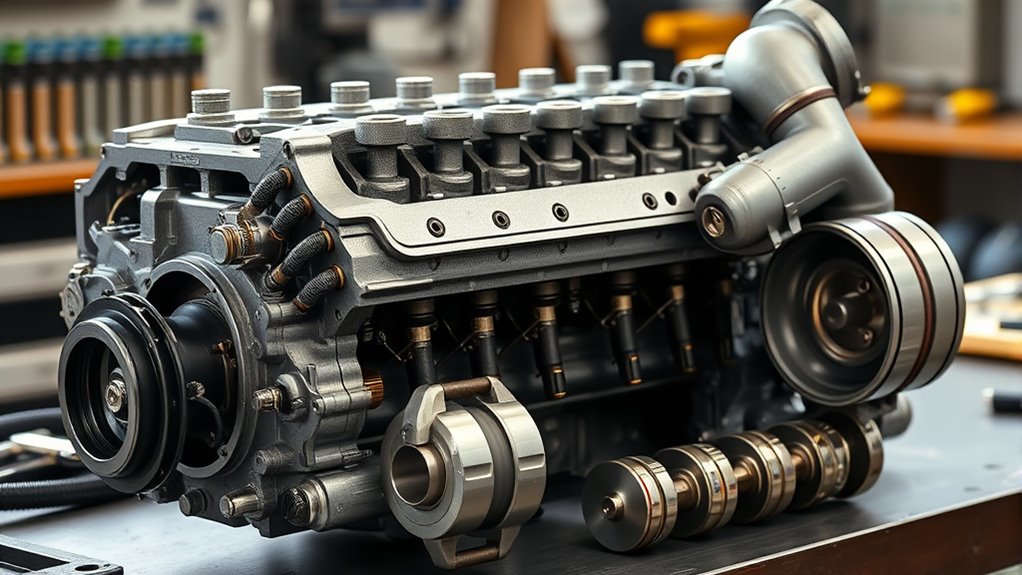
Building a reliable 500 HP 24v Cummins starts with a fully machined, CNC blueprinted 5.9L 24V long block equipped with upgraded pistons and a precision-balanced rotating assembly.
For your 500 HP build, focus on turbo selection—opt for a 62–64 series or HTB2 turbo to balance spool and peak power. Pair this with stage 2 ported heads to improve airflow and durability.
Choose a 62–64 series or HTB2 turbo with stage 2 ported heads for optimal power and durability.
Don’t skip the CP3 fueling upgrade for consistent fuel delivery, especially when pushing bigger rails. Use ARP head studs to maintain cylinder integrity under boost.
Finally, drivetrain reinforcement is critical; upgrade your transmission or clutch and make certain your gearing, intercooler, and exhaust support sustained power.
With these key components, your 24V Cummins will handle 500 HP reliably.
Cylinder Head Upgrades for 24v Cummins Boost Builds
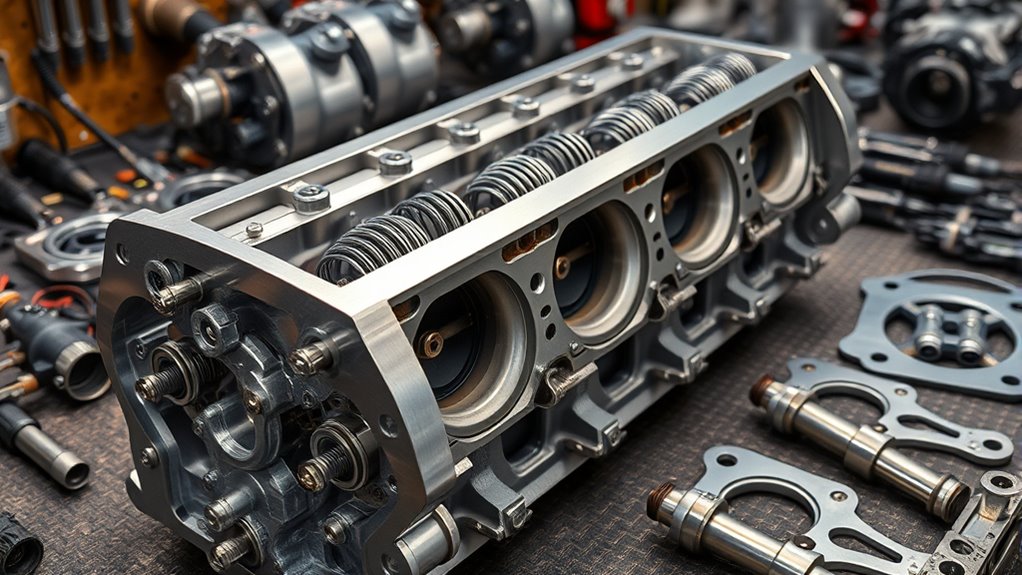
When pushing your 24v Cummins to 500 HP, upgrading the cylinder heads can unleash significant power gains. A ported PDD Stage 2 24v Cummins cylinder head enhances port efficiency and swirl, enabling better cylinder filling under higher boost.
Before porting, thorough hot tank cleaning is essential to remove intake valve soot, which severely restricts airflow. Flow bench gains after cleaning and porting can be dramatic, sometimes exceeding 20–38%.
To handle increased boost safely, upgrade head studs (ARP 2000 or A1) and install a boost-safe head gasket to prevent head lifting. These combined improvements create a solid foundation for your boost build, ensuring reliability and maximizing airflow for the fueling and tuning required to hit that 500 HP mark.
Intake and Exhaust Upgrades for 24v Cummins Engines
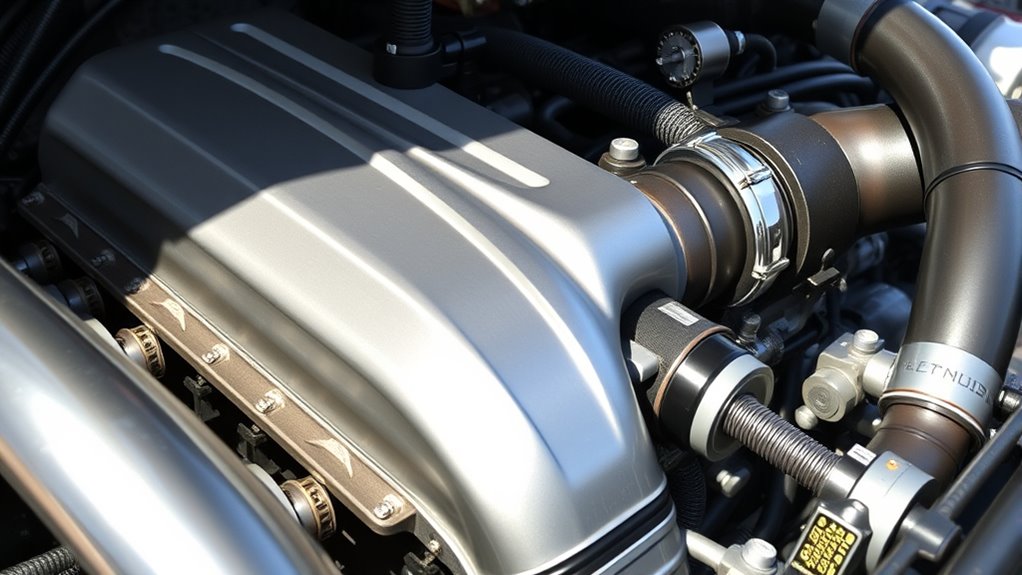
When upgrading your 24V Cummins for 500 HP, choosing the right turbocharger is key. 62-series turbos offer quicker spool and solid midrange power, while 64-series units push higher peak horsepower.
Pair that with a mandrel-bent 4–5″ turbo-back exhaust system to reduce backpressure and boost turbo efficiency. These upgrades work together to improve power delivery and overall engine performance.
Turbocharger Selection Tips
Although selecting the right turbocharger might seem intimidating, choosing a 62-series turbo like the HTB2 62/12 offers an excellent balance of quick spool and sufficient airflow for around 500–530 HP in your 24V Cummins.
The HTB2 and HT64/65 variants provide reliable spool time while supporting your power goals. You’ll want to complement this with a high-quality intake airbox, like the AFE Stage 2 Mega Cannon, to guarantee clean, unrestricted airflow.
Matching turbo selection to your fueling and tuning strategy is vital. And don’t overlook the importance of intercooler capacity to keep charge temps in check.
For exhaust, use mandrel-bent piping and a turbo-back exhaust of 5” or larger to minimize backpressure. This helps maintain turbo efficiency as power climbs.
Exhaust System Enhancements
To maximize your 24V Cummins’ performance, upgrading the exhaust system is essential. Start with a 4–5″ mandrel-bent turbo-back exhaust, with a 5-inch downpipe recommended for 500+ HP builds. This setup reduces exhaust backpressure, allowing your engine to breathe easier and produce more power.
Pair it with a free-flowing muffler to further minimize restrictions. Matching turbo housing sizing to your selected 62–64 series turbo prevents turbine choking and keeps spool times optimal.
Don’t forget to insulate your turbo and downpipe with heat wrap or insulation, or apply a thermal coating like cerakote. This lowers underhood temps, protects intake charge density, and enhances spool stability under sustained boost.
Together, these exhaust enhancements release the full potential of your 24V Cummins 500 HP build. It’s a straightforward way to get the most out of your setup.
Why Your 24v Cummins Needs a Good Intercooler
Because your 24V Cummins relies on cool, dense air to make power efficiently, a quality intercooler plays a critical role in keeping intake air temperatures (IATs) low after the turbo.
Lowering charge-air temperature helps prevent detonation and maintains consistent timing, which is essential for a 500 HP setup.
Here’s why a good intercooler matters:
- A larger core size with a bar-and-plate design improves heat dissipation. This reduces IAT by 40–80°F and minimizes heat soak on long pulls.
- Mandrel-bent piping and low-restriction end tanks cut pressure drop. That helps turbo spool quicker and preserves midrange torque.
- Efficient charge cooling increases air density. This boosts power recovery and tuning headroom, especially with 62–64mm turbos.
Investing in a quality intercooler optimizes performance and reliability for your 24V Cummins build. It’s definitely worth it if you want to get the most out of your setup.
Fuel Delivery Upgrades for 500 HP 24v Cummins
Upgrade your fuel delivery system to reliably hit around 500 HP on your 24V Cummins by installing a high-flow lift pump like a FASS or Walbro. This lift pump upgrade guarantees consistent fuel feed and prevents cavitation under heavy fueling.
Boost your 24V Cummins to 500 HP with a high-flow FASS or Walbro lift pump upgrade.
Pair this with a CP3 upgrade—Stage II or modded—to maintain about 50 PSI WOT rail pressure essential for your setup. For higher power goals, consider dual CP3s, though they’re typically for builds beyond 600 HP and cost around $3,000.
Use 150 or 180 hp injector sticks matched to your tune and turbo for peak fueling. Combine these with a timing box like Edge or Smarty to fine-tune performance.
Don’t forget fuel system supporting hardware, including upgraded LP and ARP head studs, to handle increased fueling and boost reliably.
Choosing Injectors That Match Your 500 HP Goals
Making sure your fuel delivery system can handle increased flow sets the stage for selecting the right injectors to hit your 500 HP target on the 24V Cummins. For this power level, choose injector sticks in the 150–200 hp range; closer to 200 hp offers headroom and better tuning flexibility.
Keep lift pump support solid—FASS or Walbro units work well for head pump models—to maintain stable rail pressure. Consider these key points:
- Stick with 150–200 hp injector sticks paired with proper tuning (Smarty or Edge) and head studs to make sure reliability under higher fueling.
- A CP3 upgrade is recommended if you push near or above 600 HP to avoid rail pressure drops.
- Balance drivability trade-offs: 150 hp sticks offer smoother street manners, while 200 hp sticks provide power margin.
Turbo Selection for 24v Cummins Builds
Selecting the right turbocharger for your 24V Cummins build plays a pivotal role in hitting that 500 HP mark efficiently. A 62-series turbo like the HTB2 or HT64/65 offers a solid balance of spool response and top-end flow, ideal for 500–530 HP.
Choosing a 62-series turbo hits the sweet spot for 24V Cummins builds targeting 500–530 HP.
If you prioritize quicker spool, consider small twin turbos (compressors) such as BD twins or HX35 setups. Just keep in mind, they require more fabrication.
Turbo sizing means balancing top-end power with spool—larger 64-series turbos boost peak power but sacrifice low-end response. Matching turbine/compressor sizes is vital: smaller combos spool fast but limit peak power, while larger ones extend top-end.
Don’t forget supporting mods—fueling, intercooler, and tune must align with your turbo choice to safely realize 500 HP performance. It all needs to work together for the best results.
Engine Management and Tuning for 500 HP Performance
To hit 500 HP reliably, you’ll want to focus on precise boost control combined with careful fuel tuning to maintain rail pressure and prevent starvation.
Adjusting timing with tools like a Smarty tuner can improve spool and response without sacrificing drivability.
Using quality gauges and considering remote-adjustable tuning boxes will help you monitor and tweak performance on the fly.
Boost Control Strategies
When you stack a Smarty timing controller with a TST boost controller on your 24V Cummins, you’ll sharpen spool response and bottom-end power while keeping precise boost adjustments for drivability and safety. A closed-loop boost controller like the TST guarantees your boost targets stay consistent, avoiding overboost that risks engine damage.
Pairing Smarty timing control with TST boost lets you manage turbos (HTB2/62 or HT64/65) efficiently. It’s all about working smarter, not harder, to get the most out of your setup.
Focus on these key points: Use closed-loop control to maintain safe, repeatable boost under varying conditions. Set boost targets conservatively based on turbos and supporting hardware for reliability.
Also, implement datalogging to monitor boost, EGTs, and timing for staged tuning and safe power increases. This way, you’re always in control and can make adjustments as needed.
This approach maximizes your 24V’s performance without compromising durability. It’s the best way to get power and peace of mind at the same time.
Fuel Tuning Essentials
Balancing fuel delivery with precise timing control keeps your 24V Cummins running strong at 500 HP without pushing the stock CP3 fuel pump beyond its limits. Effective fuel tuning combines a CP3 upgrade or modded unit with consistent rail pressure around 50 PSI WOT.
You’ll want to support that with an upgraded lift pump like FASS or Walbro to avoid fuel starvation. Injector sizing typically ranges from 150 to 200 hp, matching your power goals and drivability preferences.
Using a timing controller such as Smarty CR and stacking boost control devices (TST + Smarty) smooths spool response and bottom-end performance. This setup guarantees you manage fueling safely at high power without compromising reliability.
Don’t forget to monitor gauges closely and address any sealing concerns. That completes the strategy, keeping your 24V Cummins both powerful and durable.
Timing Adjustment Techniques
Advancing timing modestly—usually between 2 and 6 degrees before top dead center (BTDC)—can boost torque and spool on your 24V Cummins without pushing exhaust gas temperatures (EGTs) into unsafe territory.
Use a timing-only Smarty tune or stacked controllers, pairing a Smarty with a TST for boost control, to refine your timing map strategy. Focus on EGT monitoring and datalogging to keep peak EGTs below 1,200°F–1,300°F, protecting your turbo and exhaust.
Follow these steps for effective timing adjustment:
- Apply timing advance early for better spool and low-end torque.
- Retard timing at high RPM and boost to safeguard the engine.
- Balance conservative timing with upgraded fueling and proper intercooling for reliability and 500 HP performance.
Cooling Upgrades for 24v Cummins at 500 HP
Since pushing your 24v Cummins to 500 HP generates substantially more heat, upgrading the cooling system becomes essential to maintain reliability and performance. Start with a radiator upgrade paired with high-flow electric fans to boost heat rejection.
Add a front-mount intercooler with 30–40% more core volume to lower intake temps and reduce detonation risks. Use a high-flow water pump and a low-temp thermostat (160–180°F) to keep coolant circulating efficiently.
You might also want to incorporate water/methanol injection or an auxiliary oil cooler to manage intake air temperature (IAT) and control EGT spikes. These upgrades help keep everything running smooth when things get hot under the hood.
| Component | Purpose | Benefit |
|---|---|---|
| Radiator Upgrade | Increased cooling capacity | Prevents heat soak |
| Front-Mount Intercooler | Lowers intake temps | Reduces detonation risk |
| Water/Methanol Injection | Intake temp management | Controls EGT spikes |
| High-Flow Water Pump | Improves coolant flow | Avoids hot spots |
Reinforcing the Drivetrain and Balancing Driveability
Strengthen your drivetrain by upgrading key components like the transmission and clutch to handle the immense torque produced by a 500+ HP 24V Cummins. Stock parts won’t cut it, so opt for an upgraded transmission and heavy-duty clutch to prevent premature failure.
Upgrade your transmission and clutch to reliably manage the high torque of a 500+ HP 24V Cummins.
Don’t forget heavy-duty head studs to maintain cylinder integrity under boost. Reinforce driveshafts and related components for a torque-handling drivetrain that can withstand higher loads.
To balance driveability and performance, focus on tuning balance through precise boost control and timing management. Also, fuel and cooling upgrades support consistent operation and protect your drivetrain.
Here’s a quick checklist:
- Upgraded transmission and heavy-duty clutch
- Heavy-duty head studs and reinforced driveshafts
- Tuning balance with boost control plus fuel and cooling upgrades
Frequently Asked Questions
How Many Quarts of Oil Does a 24V Cummins Take?
A 24V Cummins takes about 13 quarts of oil during a full change, including the filter. For rebuilt engines, expect up to 15 quarts.
Always check the dipstick after warming the engine to avoid overfilling. It’s a simple step but super important to keep things running smoothly.
How to Tell if a 24V Cummins Is a 53 Block?
You can tell if your 24V Cummins is a 53 block by checking for “53” stamped on the block deck. Another way is to inspect the casting codes near the starter.
You might also want to compare the deck thickness and webbing to known 53-block specs. These little details can really help confirm if it’s a 53 block or not.
What Is Better, a 12 or 24 Valve Cummins?
Choosing between 12 or 24 valve Cummins is like picking your battle gear—you’ll want the 12-valve for simple, budget-friendly power and raw torque.
But if you crave smoother drivability and higher horsepower potential, the 24-valve is the way to go.
It really depends on what you need from your engine.
How Many Cylinders Are in a 12V Cummins?
A 12V Cummins has six cylinders arranged inline. You’ll find two valves per cylinder—one intake and one exhaust—making twelve valves total.
This setup gives you a simple, reliable engine perfect for heavy-duty use. It’s built to last and handle tough jobs without much fuss.
Conclusion
Building a bold, bulletproof 500 HP 24v Cummins demands dedication, detail, and deliberate decisions. From cylinder head choices to cooling components, every element enhances engine endurance and efficiency.
Fuel flow, forced induction, and flawless tuning fuel fierce performance, while drivetrain durability drives dependable daily use. You can conquer challenges and create a powerhouse that performs perfectly with precise parts and passionate preparation.
Stay sharp, stay strong, and keep your Cummins commanding the road. Remember, selecting the right components is key to unlocking the full potential of your 24v Cummins 500 HP build. With the right blend of durability and performance parts, your engine will not only deliver power but also reliability for the long haul. So, focus on quality and precision, and watch your Cummins dominate every mile with confidence and strength.