Americano Vs Cappuccino – 10 Key Differences You Should Know
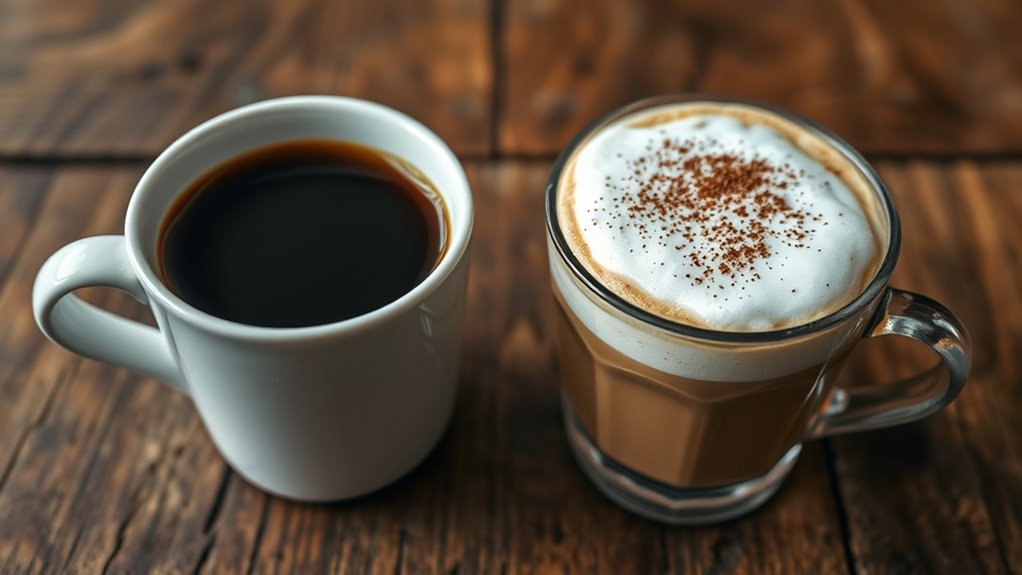
You’ll find Americano is espresso diluted with hot water, giving a bold, clean taste and thin texture, while cappuccino blends equal parts espresso, steamed milk, and foam for a creamy, velvety mouthfeel.
Americano has almost no calories, served larger, with a coffee-forward punch; cappuccino is smaller, richer, and often topped with cocoa.
Both have espresso origins but offer distinct experiences and ideal occasions. Keep exploring and you’ll understand how their unique histories and preparation shape your favorite cup.
Key Takeaways
- Americano is espresso diluted with hot water; cappuccino combines espresso with equal parts steamed milk and milk foam.
- Americano is served in larger cups (8–12 oz) while cappuccino is served in smaller cups (5–6 oz) with foam topping.
- Americano has a thin, watery texture preserving espresso’s sharp flavors; cappuccino offers a creamy, velvety mouthfeel with mellowed espresso intensity.
- Americano contains almost zero calories without milk; cappuccino has 80–120 calories due to milk content and provides a slightly sweet taste.
- Americano originated from WWII American soldiers in Italy; cappuccino evolved from Italian café tradition inspired by Capuchin friars’ habits.
Definition and Composition of Americano and Cappuccino

While both Americano and cappuccino start with espresso, they differ markedly in composition and texture. When you order an Americano, you get one or two espresso shots diluted with hot water, usually in a 1:2 to 1:4 ratio. This results in a thin, clean black coffee.
It contains no milk or foam unless you add it yourself. On the other hand, a cappuccino combines equal parts espresso, steamed milk, and milk foam. Typically, that’s around 1–2 oz of espresso, 2–3 oz of steamed milk, and 2–3 oz of milk foam in a 6 oz cup.
This mix creates a creamy, velvety mouthfeel with a mellowed, slightly sweet flavor that contrasts the more coffee-forward Americano. You’ll notice the cappuccino’s milk foam softens espresso’s intensity without reducing caffeine content. It’s like getting a little softness with every sip.
Origins and Historical Background

You’ll find the Americano’s roots in World War II, when American soldiers in Italy watered down espresso to resemble the coffee they knew.
Meanwhile, the cappuccino grew from Italian café traditions, shaping its classic form throughout the mid-20th century.
Understanding these origins helps you see how coffee culture evolved into what it is today.
Americano’s WWII Origin
Because American soldiers stationed in Italy during World War II missed the drip coffee they were used to, they started diluting local espresso with hot water. This simple adaptation gave birth to the Americano, also known as Caffè Americano.
Unlike a single creator or café, the drink emerged from a cultural need during the 1940s U.S. military presence. By adding hot water to espresso, soldiers enjoyed a longer, milder cup while preserving the rich espresso flavor.
This practice quickly became popular and endured beyond the war.
Here’s what makes the Americano unique:
- Originated from American soldiers’ preference during World War II.
- Combines espresso with hot water to mimic drip coffee.
- Named Caffè Americano to reflect its American-inspired style.
This simple drink still honors its WWII roots today.
Cappuccino’s Italian Roots
Although the cappuccino you know today took shape in early 20th-century Italy, it evolved from earlier milk-and-coffee drinks like the cappuccino-modificato and the Viennese Kapuziner.
You’ll find the cappuccino’s name traces back to the Capuchin friars—their brown habits inspired the drink’s color, and their distinctive hood inspired its name.
After Italy embraced the espresso machine between the 1930s and 1950s, the modern cappuccino was standardized with equal parts espresso, steamed milk, and milk foam.
Traditionally, Italians serve cappuccinos in small cups (150–180 ml) and enjoy them mainly in the morning.
While international variations have shifted its texture and style, the cappuccino’s Italian roots remain clear every time you sip this balanced blend of espresso, creamy steamed milk, and airy milk foam.
Evolution of Coffee Culture
When you explore the origins of popular coffee drinks like the Americano and cappuccino, you’ll see how World War II and Italian espresso culture shaped their evolution. The Americano began when American soldiers added hot water to espresso, creating a milder brew.
Meanwhile, the cappuccino, named after Capuchin friars, gained popularity with its signature mix of espresso, steamed milk, and milk foam. Today, both drinks reflect global coffee culture shifts.
Key points include:
- Americano’s wartime origin as a diluted espresso for American tastes.
- Cappuccino’s Italian heritage emphasizing precise espresso and milk foam proportions.
- The mid-20th-century espresso machine improvements that popularized both drinks worldwide.
Understanding this history helps you appreciate each drink’s unique character and cultural significance. It’s pretty cool to know the stories behind your coffee, right?
Ingredients and Preparation Methods
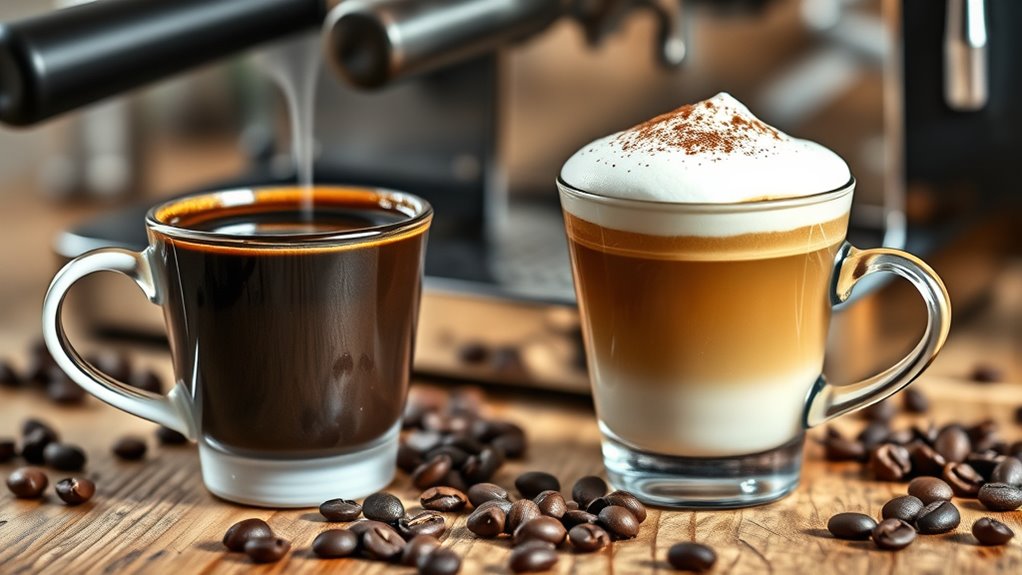
If you want a straightforward coffee, an Americano combines one or two espresso shots with 4–6 oz of hot water. You pour the water carefully over the espresso to keep the crema intact.
In contrast, a cappuccino blends one espresso shot with equal parts steamed milk and milk foam. This creates a creamy texture that’s pretty delightful.
The preparation differs: making an Americano involves diluting espresso with hot water, while a cappuccino requires skillful steaming to produce velvety microfoam.
| Beverage | Ingredients |
|---|---|
| Americano | Espresso shot + hot water |
| Cappuccino | Espresso shot + steamed milk + foam |
Both use espresso shots, but only the cappuccino includes steamed milk and foam. So, the preparation is pretty distinct between the two.
Flavor Profiles and Taste Differences
When you sip an Americano, you’ll notice the espresso’s bold, concentrated flavors shine through with a clean, intense finish. It’s like getting the pure essence of espresso, just mellowed out with hot water.
In contrast, a cappuccino softens that intensity by blending espresso with steamed milk and foam. This adds sweetness and a creamy texture that really changes the vibe of the drink.
Understanding how milk influences taste will help you appreciate the distinct roles espresso plays in shaping each drink’s flavor profile. It’s pretty cool how just a little milk can make such a big difference!
Flavor Intensity Comparison
Coffee lovers often debate the flavor intensity between an Americano and a cappuccino, as each offers a distinct taste experience. An Americano, made with espresso shots diluted by hot water, delivers a coffee-forward taste with pronounced acidity and aromatic notes.
In contrast, a cappuccino combines espresso shots with steamed milk and foam, creating a creamier, sweeter profile that softens bitterness.
Here’s how their flavor intensity compares:
- Americano’s hot water dilution preserves espresso’s concentrated flavors but results in a lighter body.
- Cappuccino’s steamed milk and foam dilute espresso more, mellowing acidity and enhancing sweetness.
- Both have similar caffeine, but Americano tastes stronger per sip due to less dilution by milk.
Choosing depends on whether you prefer bold coffee or smooth creaminess. So, what’s your pick?
Milk Influence on Taste
Understanding how milk influences taste reveals why an Americano and a cappuccino offer such different flavor experiences. An Americano blends espresso with hot water, preserving the bold, bitter, and sometimes chocolatey or acidic notes of the espresso without dilution from milk.
In contrast, a cappuccino mixes equal parts espresso, steamed milk, and microfoam. This softens espresso’s bitterness and adds sweetness and creaminess. The milk rounds out the acidity and brings out malty or caramel flavors, creating a velvety mouthfeel that changes the overall profile.
Because Americano lacks milk, it maintains espresso’s concentrated flavor compounds and aromatics. Meanwhile, the cappuccino’s milk content means you’ll taste less strength despite having the same caffeine per shot.
Also, small changes in milk texture and temperature can dramatically shift the cappuccino’s flavor, unlike the more straightforward Americano. It’s pretty interesting how milk can change things so much, right?
Espresso’s Role in Flavor
Espresso sets the foundation for both an Americano and a cappuccino, but it plays a distinct role in shaping their flavor profiles.
When you sip an Americano, the espresso’s concentrated flavor shines through, diluted only by hot water, preserving its acidity and crema aromatics. In contrast, a cappuccino mellows espresso’s intensity with steamed milk and foam, adding sweetness and creaminess.
Here’s how espresso influences each:
- Americano highlights espresso’s sharp, coffee-forward notes like chocolate and citrus.
- Cappuccino softens espresso’s bitterness with lactose and fats from steamed milk.
- Crema and oils are more pronounced in an Americano’s clean mouthfeel, while cappuccino blends them into a velvety texture.
Your espresso’s extraction quality impacts both, but flaws stand out more in an Americano than in a cappuccino.
Texture and Mouthfeel Comparison
While both drinks start with espresso, you’ll notice a stark difference in texture and mouthfeel between an Americano and a cappuccino. The Americano has a thin, watery texture because espresso is diluted with hot water, giving it a light mouthfeel similar to brewed coffee.
Espresso forms the base, but Americano’s watery texture contrasts sharply with the richer mouthfeel of a cappuccino.
Its crema and oils sit visibly on the surface, enhancing that coffee-forward sensation. On the other hand, a cappuccino offers a velvety, creamy mouthfeel from equal parts espresso, steamed milk, and thick microfoam.
This frothy foam masks the crema beneath, creating a tactile, airy texture that coats your palate. The cappuccino feels smoother and sweeter, while the Americano tastes sharper yet lighter in viscosity.
Each drink’s texture truly shapes your overall coffee experience.
Caffeine Content and Strength
The texture and mouthfeel of your coffee can shape how strong it feels, but caffeine content tells the real story. Both Americano and cappuccino use the same espresso shot, so their caffeine content is effectively equal per shot.
However, the perceived strength differs because Americano is diluted with hot water and served larger, often making it feel stronger despite equal caffeine content. On the other hand, cappuccino’s milk softens bitterness, mellowing perceived strength without reducing caffeine.
Also, if you order double shots in either drink, that doubles the caffeine, making shot count the true caffeine driver. So, it’s really about how many shots you get, not just the type of drink you choose.
Caloric and Nutritional Differences
You’ll notice a big difference in calories when choosing between an Americano and a cappuccino. An Americano, made with espresso and hot water, contains almost zero calories if you skip milk and sugar.
In contrast, a typical 8 oz cappuccino, which combines about 2 oz espresso with 6 oz of milk and foam, packs roughly 80–120 calories depending on the milk’s fat content. Most calories in the cappuccino come from milk—whole milk adds about 150 kcal per cup, while skim milk lowers that to around 80 kcal.
Nutritionally, an Americano offers negligible protein, fat, or carbs, whereas cappuccinos provide 5–8 g protein, 4–8 g fat, and 6–12 g carbohydrates. Adding sugar or syrups can boost cappuccino calories markedly, while an Americano stays low unless you add extras.
Typical Serving Styles and Presentation
Understanding the calorie and nutritional differences between an Americano and a cappuccino helps set the stage for how each drink is typically served and presented. When you order an Americano, expect a larger serving size (8–12 oz) with espresso diluted by hot water. It’s topped with a smooth crema layer but no milk foam.
An Americano offers a larger, smooth crema-topped espresso diluted with hot water—no milk foam included.
A cappuccino, on the other hand, comes in a smaller cup (5–6 oz) and features equal parts espresso, steamed milk, and thick milk foam. It’s often garnished with cocoa or cinnamon.
Here’s what you’ll notice about their presentation:
- Americano is served plainly or with sugar on the side, emphasizing its black, crema-topped surface.
- Cappuccino boasts visible, textured milk foam and sometimes latte art.
- Cappuccino is served on a saucer with a small spoon, highlighting its specialty status.
Popular Variations and Customizations
When you want to switch up your Americano or cappuccino, flavor enhancements like vanilla or caramel syrups can add a tasty twist. You can also customize with milk options or toppings like foam, cinnamon, or cocoa to suit your mood.
These simple changes let you enjoy a personalized coffee experience every time. Why stick to the usual when a little tweak can make your cup way more exciting? Give it a try and find your perfect combo!
Flavor Enhancements
How can you customize your Americano or cappuccino to better suit your taste? Both drinks offer flexible flavor enhancements that let you tailor your coffee experience.
Add flavored syrups like vanilla, hazelnut, or caramel to cappuccinos for a sweet, creamy boost that complements the milk’s natural sweetness. Americanos usually stay unflavored to preserve espresso’s clarity.
You can also adjust espresso shots to increase strength—doubling espresso amps caffeine by about 60–80 mg in either drink.
And if you like, modify milk ratios in cappuccinos, opting for a “wet” version with more steamed milk and less foam to soften the espresso’s bite. Simple tweaks like these make your coffee just how you like it!
Milk and Toppings
Milk and toppings bring distinct character to cappuccinos and Americanos, shaping both flavor and texture. Cappuccinos feature equal parts espresso, steamed milk, and thick milk foam, creating a rich, creamy experience.
Popular milk toppings like cocoa, cinnamon, or chocolate shavings really boost its boldness. If you use non-dairy milk, just keep in mind some varieties—like certain almond or oat milks—don’t steam well and can mess with foam stability and texture.
Americanos, usually served black, offer a cleaner slate. You can customize yours with sugar, flavored syrups, or a splash of milk for a “misto.”
Iced versions highlight these differences too: iced cappuccinos have less foam and a milk-forward taste. On the other hand, iced Americanos stay crisp and low-calorie, and they’re easy to flavor with syrups or milk additions.
Ideal Occasions and Consumer Preferences
Although both Americano and cappuccino share espresso as their base, you’ll find they suit different moments and preferences. The Americano is your go-to for a low-calorie, hot coffee experience with bold espresso flavor—perfect for mornings or work sessions when you want a clean, dairy-free caffeine boost.
On the other hand, the cappuccino fits relaxed, indulgent occasions, offering a creamy texture and a sweeter profile from equal parts espresso, steamed milk, and foam.
Consider these ideal scenarios:
- Choose Americano for iced drinks, portability, or hot days when you want crispness without calories.
- Opt for cappuccino during breakfast, café socializing, or dessert time for warmth and latte art.
- Pick based on texture and flavor rather than caffeine, as both have similar espresso content.
Frequently Asked Questions
What Is the Difference Between a Latte Americano and a Cappuccino?
You’ll find an Americano is espresso diluted with hot water.
A latte blends espresso with steamed milk and light foam.
While a cappuccino balances espresso, steamed milk, and thick foam for a frothier, stronger taste.
What Is the Main Difference Between Americano Coffee and Regular Brewed Coffee?
You might think Americano and brewed coffee are similar, but the main difference is Americano dilutes espresso with hot water, preserving espresso’s flavor.
Brewed coffee, on the other hand, extracts flavors slowly through ground beans, creating a milder taste. So, while they might look alike, the way they’re made really sets them apart.
Is Latte Just Americano With Milk?
No, a latte isn’t just an Americano with milk. You get espresso with steamed milk and microfoam in a latte, while an Americano is espresso diluted with hot water.
What Is the Difference Between a Macchiato and an Americano?
If you crave a bold espresso hug, a macchiato offers a tiny, velvety milk kiss atop concentrated coffee.
An Americano, however, gives you a gentler, longer sip with diluted espresso and hot water.
Conclusion
Whether you reach for an Americano or a cappuccino, you’re choosing more than just a drink—you’re embracing a moment. Both start with espresso but take you down different paths of flavor, texture, and tradition.
It’s funny how two simple combinations of coffee and water or milk can shape your day so differently. So next time, let your mood decide, because sometimes the best choice is simply the one that surprises you most.
When deciding between an Americano and a cappuccino, consider what you’re craving: the bold, diluted espresso taste of an Americano or the creamy, frothy delight of a cappuccino. Each offers a distinct coffee experience that fits different moments and preferences.
In the end, understanding the key differences between Americano vs cappuccino helps you pick the perfect cup. Whether you want a lighter, smooth coffee or a rich, textured treat, both bring their own charm to your coffee break. So go ahead—embrace the unique flavors and enjoy your coffee moment!