
Americano Vs Latte – 10 Key Differences Explained
When you choose between an Americano and a latte, you’re picking different coffee experiences that cater to distinct tastes. An Americano is essentially espresso diluted with hot water, resulting in a thinner, more bitter drink topped with a light crema.
On the other hand, a latte combines espresso with steamed milk and foam, offering a creamy, sweeter, and smoother texture that many find comforting.
Both drinks pack a similar caffeine punch, but they vary a lot in flavor intensity and sweetness. So, whether you crave a bold, robust cup or a mellow, creamy one, understanding these key differences can help you pick your perfect coffee moment. Keep exploring, and you’ll discover even more nuances between these classic coffee choices!
Key Takeaways
- Americano is espresso diluted with hot water, creating a thin, bitter, and bright coffee; latte combines espresso with steamed milk for a creamy, smooth texture.
- Americano ratios range from 1:3 to 1:6 espresso to water, while latte ratios are about 1:3 to 1:7 espresso to milk.
- Both have similar caffeine content per shot, but Americano tastes stronger and more bitter due to lack of milk dilution.
- Latte’s steamed milk adds sweetness and softens acidity, producing caramel-like notes, whereas Americano highlights espresso’s natural bitterness.
- Americano has thin crema visible and a watery mouthfeel; latte masks crema with microfoam, giving a velvety, rich mouthfeel.
Definition and Basic Composition
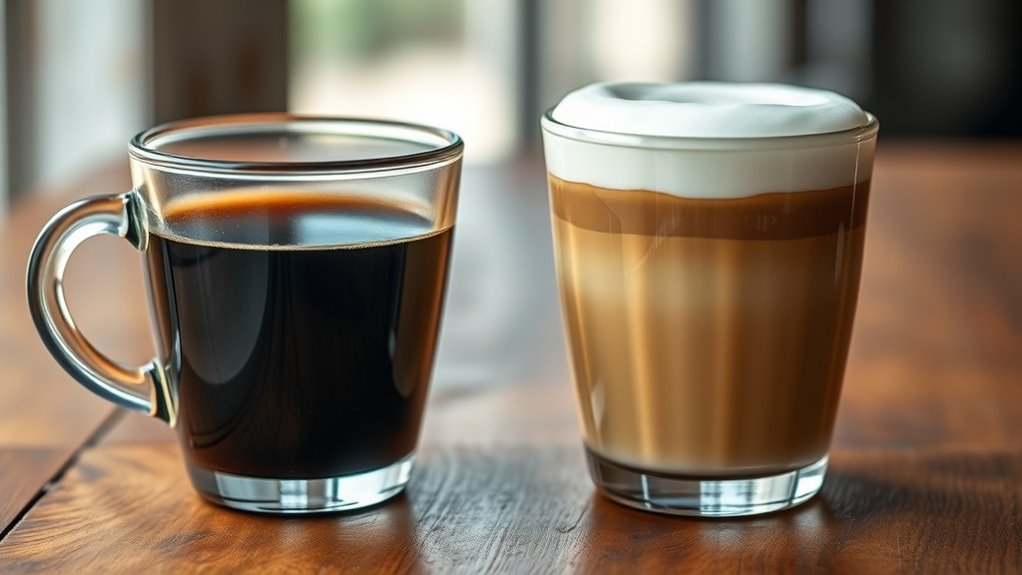
While both start with espresso, an Americano dilutes one to two shots with hot water. This gives you a longer, less creamy drink that keeps the espresso’s bold flavor. The Americano highlights the espresso’s crema and intensity, offering a straightforward taste.
An Americano blends espresso with hot water for a bold, longer, and less creamy coffee experience.
Its typical espresso-to-water ratio is around 1:2 to 1:6. You can enjoy it hot or as an iced Americano, usually without milk unless you ask.
On the other hand, a latte mixes one to two shots of espresso with a larger amount of steamed milk and a thin layer of milk foam. This creates a smooth, velvety texture. The latte’s ratio generally leans toward one part espresso to three to five parts steamed milk.
This mutes the espresso’s acidity and bitterness for a creamier experience. So, if you want something rich and smooth, a latte’s your go-to.
Espresso to Water Ratio
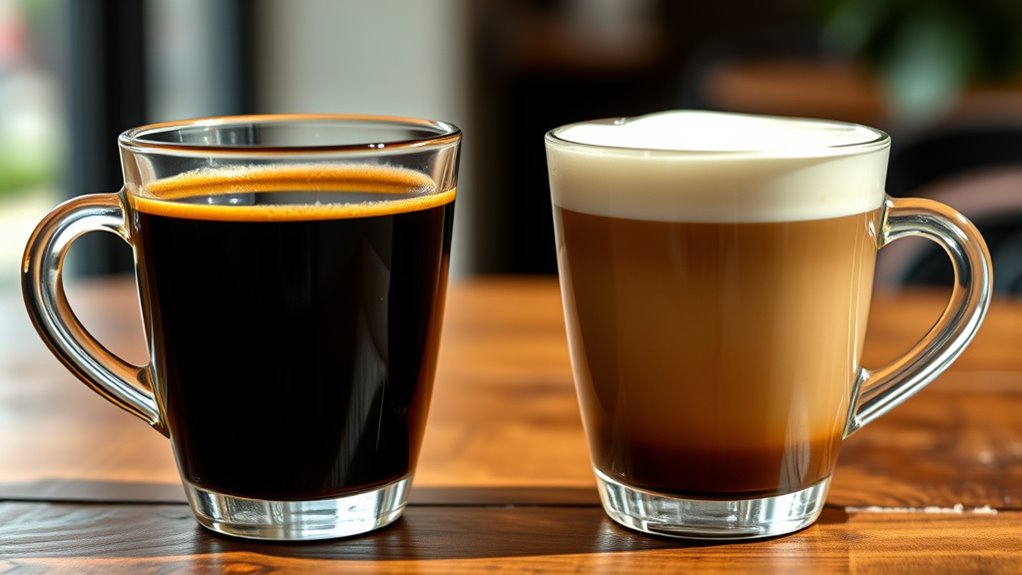
When you make an Americano, the amount of water you add changes how strong the espresso tastes—more water means a milder flavor. You’ll find espresso-to-water ratios typically range from 1:6 to 1:12,
so you can adjust based on how intense you want it. Understanding this dilution helps you control the balance between boldness and smoothness in your cup.
Espresso Strength Variations
Because an Americano mixes one to two shots of espresso with a larger volume of hot water, you get a drink with a lower caffeine concentration per sip but a more pronounced espresso flavor and acidity. The espresso to water ratio in an Americano usually ranges from 1:4 to 1:8, preserving the espresso’s boldness.
In contrast, a latte blends the same espresso shots with steamed milk, with a typical espresso to milk ratio around 1:5 to 1:7. This softens the caffeine concentration and creates a creamier texture.
When comparing water vs milk dilution, the Americano keeps espresso’s intensity clearer, while the latte smooths it out. Even iced Americano versions follow similar ratios, maintaining espresso strength without the milky dilution you get in iced lattes.
Water Volume Impact
If you want a longer, milder coffee, an Americano’s higher espresso-to-water ratio delivers just that by mixing one shot of espresso with three to six times its volume in hot water. This larger water volume preserves the espresso’s aromatics but reduces its intensity and body and mouthfeel compared to milk-based drinks.
In contrast, a latte uses a much lower espresso-to-water ratio, combining espresso with steamed milk rather than water. The steamed milk not only mutes bitterness but also adds sweetness and creaminess, enhancing body and mouthfeel.
Additionally, Americanos are served hotter and in larger, more diluted volumes, while lattes arrive slightly cooler due to the steamed milk. This difference in espresso-to-water ratio and serving temperature defines the distinct experience each drink offers.
Dilution and Flavor
Although both Americano and latte start with espresso shots, their dilution methods drastically shape your coffee’s flavor profile.
The espresso-to-liquid ratio defines the Americano latte difference: an Americano dilutes espresso with hot water around 1:3 to 1:6, preserving bitterness and acidity while softening intensity. This water vs milk dilution keeps crema preservation prime, especially when espresso is poured over hot water at the right brewing temperature.
Conversely, a latte’s high milk dilution (1:10 to 1:20) mutes bitterness and acidity, boosting milk sweetness and body, creating a creamy texture with higher calories. Steamed milk at 60–65°C blends smoothly with espresso, changing the texture and flavor.
Milk Content and Texture

Both an Americano and a latte differ markedly in milk content and texture, which shapes their distinct drinking experiences. An Americano contains espresso diluted with hot water and typically no milk, giving it a thin, coffee-forward texture with a watery mouthfeel.
You’ll notice the crema and bitterness stand out more here. In contrast, a latte features a much higher milk content, usually a 1:3 to 1:5 espresso-to-milk ratio, with steamed milk and a thin layer of microfoam.
This steamed milk creates a creamy, velvety texture that smooths out the bitterness and acidity. While an Americano feels lighter and sharper, the latte’s emulsified milk delivers a rich, silky mouthfeel that transforms the espresso into a milk-forward beverage.
Crema Presence and Quality
When you sip an Americano, you’ll often notice a thin layer of crema that adds a distinct texture and aroma. In a latte, the steamed milk usually masks that crema but keeps some of its flavor beneath the surface.
The way crema interacts with water or milk changes how you experience bitterness and sweetness in each drink. To get the best crema quality, you need fresh beans and the right brewing technique.
Whether you’re aiming to preserve it on top or blend it smoothly with milk, the right approach makes all the difference.
Crema Texture Differences
Since an Americano is made by diluting espresso with hot water, you’ll notice its crema is thinner and patchier compared to a latte or straight espresso.
The added water breaks up the crema, reducing crema persistence, especially if you pour water over espresso rather than pulling espresso over hot water.
In contrast, a latte’s crema quickly blends with steamed milk and microfoam, which hides the crema beneath a velvety, emulsified surface.
The milk proteins and fat bind with espresso oils, softening the crema’s texture and color.
Freshness and extraction also play a pivotal role: double shots and freshly extracted espresso yield thicker, longer-lasting crema in both drinks.
But you’ll see the most crema in pure espresso and the least in milk-forward lattes.
Impact on Flavor
The presence and quality of crema markedly shape the flavor experience in both Americano and latte. When you savor these drinks, consider:
- Americano’s crema thins due to hot water dilution, lessening visible texture but preserving espresso’s aromatic intensity per sip.
- Water-first Americano methods retain more crema, enhancing flavor intensity compared to pouring water over espresso.
- Latte’s crema is masked by steamed milk and microfoam, so it mainly influences the base flavor rather than aroma or texture.
- Crema quality hinges on fresh beans, precise extraction pressure and temperature, and a double shot, affecting both drinks before dilution or milk addition.
Understanding crema’s role helps you appreciate how extraction and dilution shape aroma and flavor in your Americano or latte.
It’s pretty neat how such a thin layer can make a big difference in taste!
Preservation Techniques
Although crema forms naturally during espresso extraction, preserving its presence and quality demands careful technique. For optimal crema preservation, follow the espresso-first Americano technique by pouring espresso over hot water, not the reverse.
Avoid very hot water and aggressive agitation; instead, use a milder water temperature and gentle pouring to keep crema intact longer. Shot freshness and correct extraction parameters—like pressure, grind, and fresh beans—are essential for producing thick crema.
In contrast, latte microfoam results from milk integration, where steamed milk’s fats and proteins collapse the crema, creating a creamy texture without visible foam. So, while you can preserve crema in an Americano by controlling water temperature and pouring method, the latte’s milk integration naturally masks crema despite fresh extraction parameters.
Flavor Profile and Intensity
When you sip an Americano, you’ll notice its cleaner, more diluted taste that highlights the espresso’s bitter, earthy, and acidic notes without the interference of milk. It gives you a straightforward coffee experience that’s all about those sharp, bold flavors.
In contrast, a latte softens those sharp edges with steamed milk, creating a creamy mouthfeel and a sweeter, caramel-like flavor profile. It’s like a gentle hug for your taste buds, smoothing everything out nicely.
Here’s what to expect:
- Americano emphasizes espresso’s bitterness and acidity with a lighter, more intense coffee perception.
- Latte blends espresso with steamed milk, reducing perceived intensity and bitterness.
- The creamy mouthfeel of a latte rounds out acidity, accentuating sweetness from lactose.
- Americano’s flavor stays bright and crisp, while latte offers a mellow, smooth experience.
Your choice depends on whether you prefer espresso’s pure intensity or a milder, creamier drink. Either way, you’re in for a tasty treat!
Typical Serving Size and Presentation
When you order an Americano, expect a smaller cup holding mostly espresso and hot water. It’s served piping hot with a clear, dark look.
A latte comes in a larger cup, topped with steamed milk and often finished with delicate latte art. This makes it creamier and cooler by comparison.
These differences in size, temperature, and presentation really shape your entire drinking experience. It’s pretty interesting how much the cup and the look can affect what you taste!
Standard Cup Volumes
You’ll find that Americanos typically come in cups ranging from 8 to 12 ounces. They’re made by mixing one to three shots of espresso with hot water.
In comparison, lattes are served in larger cups, usually between 8 and 16 ounces. They combine espresso shots with steamed milk and a delicate layer of foam.
When iced, both drinks increase in volume.
- Hot Americano: 8–12 oz, espresso + hot water, minimal foam
- Hot Latte: 8–16 oz, espresso + steamed milk + foam, often in taller cups
- Iced Americano: 12–16 oz, espresso + cold water + ice, more diluted
- Iced Latte: 12–16 oz, espresso + cold milk + ice, creamier and higher volume
Cup size and presentation really highlight the Americano’s simplicity. Meanwhile, the latte’s creamy texture stands out.
Serving Temperature Variations
Although both Americano and latte start with espresso, their serving temperatures and presentations create distinctly different experiences.
Americano is served hot or iced with water, preserving crema and a thinner mouthfeel. Hot latte arrives warmer due to steamed milk, offering a creamier, fuller texture. Iced latte combines ice and cold milk, making it colder and creamier than an iced Americano.
| Drink | Serving Temperature | Typical Presentation |
|---|---|---|
| Americano | Hot (8–12 oz), crema visible | Thin, black-coffee-like |
| Iced Americano | Cold, poured over ice (12–16 oz) | Clear, dilutes slightly as ice melts |
| Hot latte | Hot, with steamed milk (8–16 oz) | Opaque, creamy, microfoam layer |
| Iced latte | Cold, with ice and milk (12–20 oz) | Creamier, colder than iced Americano |
Visual Presentation Styles
How do Americano and latte differ in visual presentation? When you order an Americano or latte, their look and serving style tell you a lot about the drink inside.
Americano typically comes in larger cups (8–12 oz hot, 12–16 oz iced) with a thin crema layer and clear dark liquid. This highlights the espresso strength.
Latte serves in 8–16 oz ceramic cups for hot drinks, featuring a creamy, opaque look from steamed milk and 0.5–1 cm of microfoam.
Iced Americanos use tall clear cups showing translucent layering. On the other hand, iced lattes appear uniformly milky, thanks to cold milk.
Latte art or cocoa dusting often adorns lattes, emphasizing milk texture and foam. Meanwhile, Americanos stay simple, focusing on espresso and water balance.
This visual presentation highlights their unique identities.
Caffeine Strength and Perception
When you compare an Americano and a latte with the same number of espresso shots, their total caffeine content is quite similar, but their perceived strength differs markedly.
The Americano, diluted with hot water, has a lower caffeine per ounce but preserves espresso’s bitterness and body, making it taste stronger. The latte’s steamed milk adds volume without caffeine, softening its texture and flavor, so it feels milder despite equal caffeine.
Your perception hinges on drink texture and bitterness more than caffeine alone.
| Drink | Dilution Method | Perceived Strength |
|---|---|---|
| Americano | Hot water | Stronger, bitter |
| Latte | Steamed milk | Milder, creamier |
| Both | Same espresso shots | Similar caffeine total |
Sweetness and Add-In Potential
If you want a naturally sweeter coffee experience, a latte will usually deliver more than an Americano because the steamed milk adds lactose sugars that soften espresso’s bitter edge.
For a naturally sweeter cup, choose a latte—the steamed milk’s lactose smooths espresso’s bitterness.
Here’s how sweetness and add-in potential differ:
- Lattes use steamed milk with lactose, boosting sweetness and creaminess; plant milk like oat or sweetened almond can add even more natural sugars.
- Americanos, diluted with hot water, taste less sweet since water thins the brew, leaving flavors unmasked.
- Syrups, sauces, and cold foam blend better in lattes, enhancing sweetness and texture, while in Americanos, sweeteners dissolve but don’t integrate as smoothly.
- Iced lattes maintain a sweeter, fuller mouthfeel compared to iced Americanos, which stay sharper unless syrup is added.
Choose based on your sweetness preference and how you like to customize your iced coffee.
Common Drinking Occasions
You’ll often reach for an Americano in the morning to kickstart your day with a hot, longer-lasting espresso that keeps calories low. It’s a great way to get your caffeine fix without any extra fuss.
A latte tends to be your go-to for mid-morning or afternoon moments when you want something creamier and more satisfying alongside a snack. The Americano’s bold flavor lets you appreciate the bean nuances, making it ideal for a morning pick-me-up without added milk.
When it’s warm, an iced Americano refreshes you with a low-calorie caffeine boost. On the other hand, the latte’s smooth milk texture pairs perfectly with pastries and suits on-the-go sipping.
Iced lattes offer a thirst-quenching, indulgent option for commuters craving a milder, milk-tempered espresso throughout the day. So, whether you’re after something bold or creamy, there’s a perfect drink for every moment.
Preparation Techniques and Variations
Although both drinks start with espresso, their preparation techniques create distinctly different experiences. When making an Americano, you dilute one or two shots of espresso with hot water, maintaining a brew ratio of about 1:2 to 1:4.
Starting with espresso, an Americano blends shots with hot water for a smooth, balanced brew.
For a latte, you combine espresso with steamed milk and top it with microfoam for a creamy texture. Key steps include:
- For Americano, add espresso to hot water to control crema preservation.
- Steam milk to 140–155°F for a latte, using a steam wand to create silky microfoam.
- Adjust shot count or milk ratio to modify strength in both drinks.
- Explore iced versions: espresso over ice and cold water for Americano, espresso mixed with cold milk and ice for latte.
These techniques shape their unique flavors and textures. It’s pretty cool how just a few simple tweaks can make such a difference.
Frequently Asked Questions
What Is an Americano vs. Latte?
An Americano is espresso diluted with hot water, giving you a bold, coffee-forward drink.
A latte mixes espresso with steamed milk and foam, creating a creamy, smooth beverage that’s milder than the Americano.
Do Italians Drink Cafe Americano?
You won’t find Italians flocking to order a café Americano; it’s a rare bird there.
They prefer straight espresso or a caffè allungato, savoring tradition rather than watering down their coffee experience.
Is Americano Stronger Than Espresso?
No, an Americano isn’t stronger than espresso. You get the same caffeine if shot counts match, but the added water dilutes flavor and intensity.
This makes espresso taste bolder and more concentrated than an Americano. It’s all about that rich, intense kick you get from straight espresso. So, if you’re looking for a punchy coffee, espresso’s the way to go!
What Are the Differences Between a Cappuccino, Latte, Macchiato, and Americano?
You’ll notice cappuccino balances espresso, foam, and steamed milk; latte’s creamier with more milk.
Macchiato highlights espresso with a dash of milk. And Americano dilutes espresso with hot water for a milder, larger drink.
Conclusion
Picture yourself savoring a smooth Americano, its bold espresso mingling with warm water like morning mist over a quiet lake. It’s simple, strong, and refreshingly clear.
Now, imagine the creamy, velvety texture of a latte, steam swirling as milk froths into a soft cloud atop rich coffee. The latte feels cozy and indulgent, perfect when you want something soothing.
Whether you crave the Americano’s sharp clarity or the latte’s comforting embrace, knowing these differences helps you pick just the right drink.
So, when deciding between an Americano vs latte, think about what you want: the Americano offers a lighter, more intense coffee flavor, while the latte brings smoothness with steamed milk. Both are delicious, but your mood and taste will guide you to the perfect cup every time.